





 DogsYour New Puppy’s First Week: A Calm Survival GuideSleep, potty breaks and the art of saying “no” to a very cute face.
Written by
Dana Ruiz
Dana is a certified trainer and the human of two rescue mutts named Pickle and Waffles.
12Articles
2026Writing since
Puppies chew a lot while their adult teeth come in. Give them the right things to chew. If your new puppy has already sampled the corner of the coffee table, the laces of your favorite sneakers and the fringe of a rug, welcome to teething season. It is one of the most trying stages of puppyhood, and also one of the most normal. Chewing is how puppies soothe sore gums, explore the world and burn off energy. You cannot stop it, and you should not try. What you can do is guide it toward safe, satisfying choices and protect your home, and your puppy, while those sharp little baby teeth make way for adult ones. Here is what helps, what to avoid and when to call your vet.
The teething timeline
Puppies are born without teeth. Their baby teeth, sometimes called milk teeth, start coming in at around three to four weeks of age, and a puppy usually has a full set of 28 tiny, needle-sharp teeth by about eight weeks. That is roughly when most families bring a new puppy home, which is part of why those first weeks can feel so bitey.
Around three to four months of age, the baby teeth begin to fall out as adult teeth push through. By about six to seven months, most puppies have their full set of 42 adult teeth. During this stretch, gums can be sore and swollen, and the urge to chew peaks. You may find tiny teeth on the floor or in toys, though many puppies simply swallow them, which is usually harmless.
Chewing does not end when teething does. Many dogs go through a second chewing phase in adolescence, between about six months and a year, as adult teeth settle into the jaw. Good habits built now will pay off then.
Safe chews
Cold, soft chew toys can soothe sore gums. The cold numbs discomfort and reduces swelling, and soft textures are gentle on baby teeth. Here are some of the options puppy owners and trainers like best:
- Rubber chew toys that can be chilled in the freezer
- Puppy-specific rubber toys stuffed with soaked kibble or plain yogurt and frozen
- A clean, wet washcloth twisted and frozen, offered under supervision
- Soft rope toys for gentle tug games
- Textured teething rings made for puppies
- Puzzle toys that dispense small pieces of food
Choose toys sized for your puppy, large enough that they cannot be swallowed whole. Inspect toys regularly and throw out any that are cracked, torn or small enough to be a choking hazard. Always supervise with new chews until you know how your puppy handles them.
Chews to skip
Some popular chews are too hard for puppy teeth, and others carry other risks. Many vets suggest avoiding cooked bones, which can splinter, along with very hard items such as antlers, hooves and hard nylon bones for young puppies. A good rule of thumb many vets share: if you cannot press a fingernail into it, it may be too hard. Ask your vet which chews they recommend for your puppy’s size and breed.
Redirect
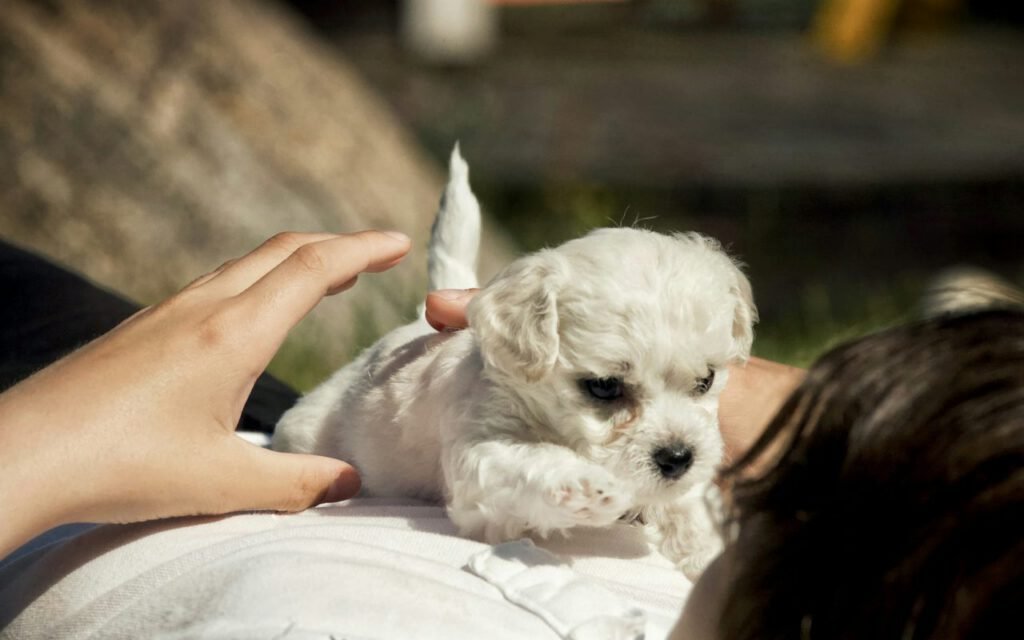
Swap a shoe for a toy and praise the switch. This simple trade is the foundation of teaching a puppy what is okay to chew. Puppies do not know the difference between a squeaky toy and a slipper until we show them, and scolding does not teach the lesson nearly as well as redirection.
When you catch your puppy chewing something off-limits, stay calm. Offer a toy right in front of its nose, make it wiggle and sound exciting, and when your puppy lets go of the forbidden item to grab the toy, praise warmly. Quietly remove the off-limits item. Then let your puppy enjoy the toy. If your puppy will not give something up, offer a treat in exchange rather than chasing it, which can turn into a game of keep-away.
When teeth meet skin
Puppies also mouth hands, arms and pant legs. When this happens, stop moving and calmly offer a toy instead. If the nipping continues, step away for a short break. Over time, your puppy learns that teeth on skin end the fun, while teeth on toys keep it going. Be consistent, and make sure everyone in the family follows the same approach.
A tired puppy chews less. Play first, then nap.
Dana Ruiz, certified dog trainer
Puppy-proofing and routine
The easiest way to save your shoes is to keep them out of reach. Puppy-proofing during teething season is less about strict rules and more about setting your puppy up to make good choices.
- Pick up shoes, socks, kids’ toys and remote controls from the floor.
- Tuck away or cover electrical cords and chargers.
- Use baby gates to keep your puppy in puppy-safe rooms.
- Keep a few chew toys in every room your puppy uses.
- Use a crate or exercise pen for times when you cannot supervise.
A predictable routine helps, too. As Dana Ruiz points out, a tired puppy chews less. Many overly mouthy puppies are actually overtired, much like a cranky toddler. Build in short play sessions, gentle training and sniffy walks, followed by plenty of naps in a quiet spot. Young puppies need a lot of sleep, and a nap after play can head off a chewing frenzy before it starts.
When to call your vet
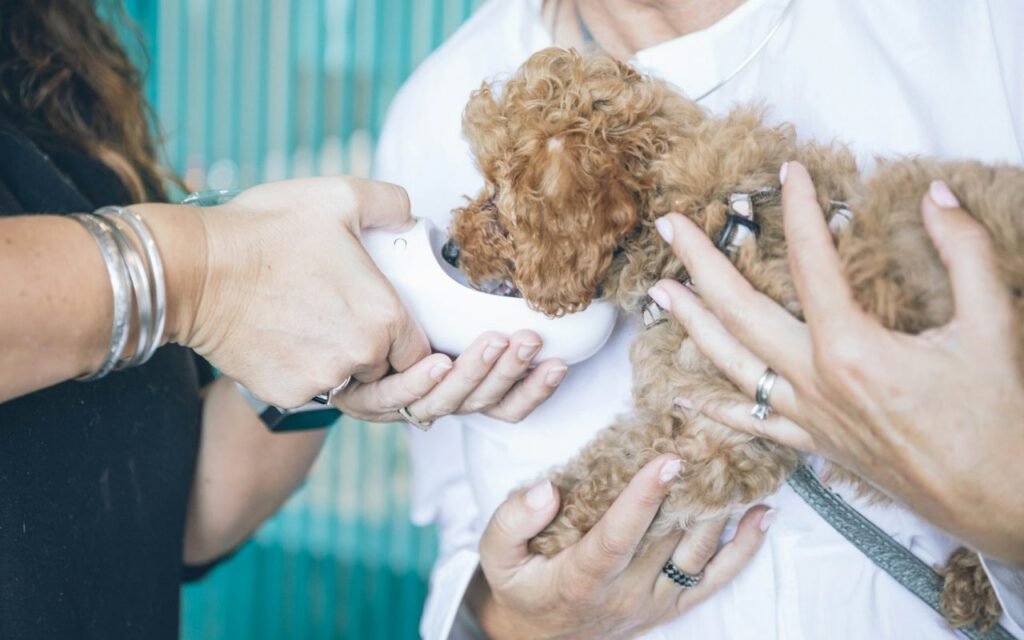
Teething is normal, but a few signs deserve a call to your vet. Some puppies end up with retained baby teeth, where the baby tooth does not fall out even after the adult tooth has come in next to it. This can lead to crowding and other dental problems later, so your vet may recommend removing it.
Also call your vet if your puppy stops eating, has bad breath that seems unusual, bleeds heavily from the mouth, seems very lethargic or develops a fever. And of course, call right away if your puppy may have swallowed something it should not have, such as a sock, a toy part or anything toxic.
Teething is also a great time to start a dental care routine. Gently touching your puppy’s mouth and lips, then slowly introducing a soft toothbrush and dog-safe toothpaste, can make lifelong tooth brushing much easier. Never use human toothpaste on dogs.
Key takeaway: Cold, soft chews, calm redirection, plenty of naps and a puppy-proofed home will get you through teething with your shoes, and your sanity, mostly intact.
This too shall pass
Teething can feel endless while you are in the middle of it, but it is a phase. By the time your puppy is six or seven months old, those needle teeth will be gone, replaced by a full adult set, and the worst of the chewing will usually be behind you. The patience you show now, trading shoes for toys and choosing naps over scolding, teaches your puppy lessons it will keep for life.
Keep a stash of chilled chew toys in the freezer, a basket of safe chews in every room and a good sense of humor close at hand. Your puppy is not being naughty. It is just growing up.
General pet-care information, not veterinary advice. Call your own vet with any health question.
Written by
Dana Ruiz
Dana is a certified trainer and the human of two rescue mutts named Pickle and Waffles.
12Articles
2026Writing since
Read next
DogsYour New Puppy’s First Week: A Calm Survival GuideSleep, potty breaks and the art of saying “no” to a very cute face. DogsDog Park Manners: The Unwritten RulesHow to keep play fun for every dog (and every human).
 DogsPuppy Socialization: The 12-Week WindowGentle new experiences that shape a confident adult dog.
 DogsTeaching “Leave It” in Five Short SessionsThe one cue that can keep your dog safe.
 CatsKitten Playtime: Games That Build a Confident CatWand toys, boxes and why hands are not toys.
 DogsLeash Walking: Turning Pulling Into StrollingStop, turn, reward — and repeat.PuppiesCrate Training Without TearsA cozy den, short steps and lots of treats.
 DogsRecall Training: Teaching Your Dog to Come Every TimeThe most important cue — and how to make it irresistible.
 DogsGolden Retrievers: Everything You Need to KnowFriendly, food-motivated and very, very hairy.
2 Comments
Sharing this with my friends.
Saved this one for later. Really useful.