

 DogsYour New Puppy’s First Week: A Calm Survival GuideSleep, potty breaks and the art of saying “no” to a very cute face.
Written by
Dana Ruiz
Dana is a certified trainer and the human of two rescue mutts named Pickle and Waffles.
12Articles
2026Writing since
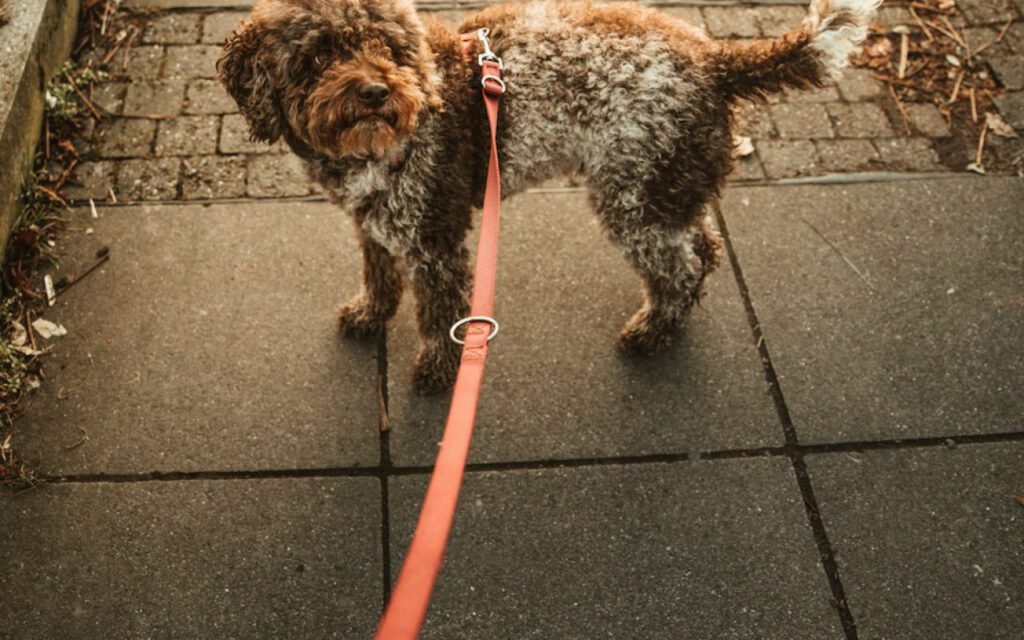
Pulling on the leash is one of the most common complaints from dog owners. Patience fixes it. If your daily walk feels more like waterskiing than strolling, you are in good company. Big dogs drag owners toward every tree, little dogs strain at the end of the leash like sled huskies, and teenage puppies of every size seem to forget that a person is attached to the other end. The fix is not a stronger arm or a tighter grip. It is a clear, consistent message that a loose leash makes good things happen and a tight leash makes everything stop. Stop, turn, reward — and repeat. Here is how to put that into practice, along with the gear, games and mindset that make the process easier.
Why dogs pull
Dogs walk faster than people. They are excited about the world, and the world is full of smells, squirrels, other dogs and interesting trash. When a dog leans into the leash and gets a step closer to the good stuff, it learns that pulling works. Every time an owner follows a pulling dog to the hydrant it wanted to sniff, the lesson gets stronger.
There is also a reflex at play. When something pulls against a dog, many dogs naturally lean the other way. So a person who hauls back on the leash can accidentally make the dog pull harder. That is why tug-of-war walks rarely improve on their own and why the solution is about changing what pays off rather than out-muscling your dog.
Your dog pulls because pulling works. Make it stop working.
Dana Ruiz, certified dog trainer
Be a tree
When the leash goes tight, stop. Move forward only when it’s loose again. This is the core of loose-leash training, and it works because it is perfectly clear to the dog. Tight leash means the walk freezes. Loose leash means the walk continues.
How to do it
Hold the leash close to your body with both hands so you are not being pulled off balance. The moment you feel tension, plant your feet and stand still. Do not jerk the leash or say anything. Just wait. Most dogs will eventually look back to see why the fun stopped, or take a step back toward you. The instant the leash goes slack, say “yes” and step forward again.
The first few walks with this method can be slow. You may only make it to the end of the block. That is normal and it is progress. Your dog is learning a new rule, and it needs to see the rule applied every single time. If you let pulling work sometimes, the dog will keep trying it.
Add a turn
For dogs who simply stand at the end of the leash waiting, try turning and walking the other way. Your dog will have to catch up, and when it arrives at your side, reward it. Changing direction keeps your dog paying attention to where you are going, which is the whole point.
Reward the position
Treat your dog when it walks beside you. Make that the best place to be. Stopping when the leash is tight tells your dog what does not work. Rewarding the right spot tells it what does.
Choose which side you want your dog on and keep treats in a pouch on that side. As you walk, reward your dog often for being near your leg with a loose leash. Deliver the treat right at your pant seam, not out in front of you, so your dog learns that the reward lives right there. In the early days, you might reward every few steps. Over time, stretch the gap.
A few habits help the rewards land:
- Use small, soft treats your dog can eat in a second.
- Reward the moment your dog is in the right place, not a few seconds later.
- Praise in a happy, quiet voice as you walk.
- Gradually replace some food rewards with real-life rewards, such as “go sniff.”
- Keep the first practice walks in quiet places before tackling busy streets.
That fourth point is important. Sniffing is a huge reward for dogs. Letting your dog sniff a patch of grass after a stretch of nice walking turns the environment into a teammate instead of a competitor.
Gear that helps (and what to skip)
The right equipment will not train your dog for you, but it can make practice safer and more comfortable. A standard 6-foot leash gives you control while letting your dog move naturally. Retractable leashes tend to reward pulling, since the line extends when a dog leans, so many trainers suggest saving them for open fields, if you use them at all.
A front-clip harness, where the leash attaches at the chest, can reduce pulling by gently turning your dog toward you when it leans. Head halters work for some dogs but take careful introduction. Many trainers and veterinary groups recommend avoiding tools designed to cause pain, such as prong or shock collars, which can create fear and other behavior problems. If you are unsure which option is right for your dog’s size, age or health, ask your vet or a certified trainer.
Burn energy before the walk
A dog bursting with energy will struggle to walk calmly no matter how good your technique is. Try a few minutes of tug, fetch in the yard or a food puzzle before you head out. Some owners also break long walks into two parts: a short “training walk” focused on manners and a separate “sniff walk” on a long line in a park where the dog can explore more freely.
Be realistic about distractions. If your dog loses its mind every time a squirrel appears, practice at a distance where it can still notice you. Reward any glance in your direction. As your dog improves, you can gradually move closer to the exciting stuff.
Get the whole family on board
Loose-leash walking falls apart quickly when one person follows the rules and another lets the dog drag them to the park. Before you start, gather everyone who walks the dog and agree on the basics: which side the dog walks on, what word marks a good moment, where the treat pouch lives and what happens when the leash goes tight. Kids can help too, though a strong puller should be walked by an adult until the habit is solid, for everyone’s safety. A short practice walk together, with each person taking a turn holding the leash, helps everyone see what consistency looks like. Dog walkers and pet sitters should get the same instructions. Write the rules on an index card and keep it by the leash hook so nobody has to guess. When every walk follows the same pattern, your dog learns far faster.
Key takeaway: Stop when the leash goes tight, move when it goes slack and reward your dog for walking beside you. Consistency matters more than any single walk.
From pulling to strolling
Loose-leash walking is a skill, not a switch. Most dogs improve noticeably within a few weeks of consistent practice, but distractions, new routes and exciting days will test the habit for months. That is fine. Every walk where you stay calm, stand still when the leash goes tight and reward the good moments moves your dog closer to the relaxed stroll you have been dreaming about.
If your dog’s pulling comes with lunging, barking or growling at other dogs or people, that is a different challenge. A certified trainer or a veterinary behaviorist can help you understand what is behind it and build a plan that keeps everyone safe.
Written by
Dana Ruiz
Dana is a certified trainer and the human of two rescue mutts named Pickle and Waffles.
12Articles
2026Writing since
Read next
DogsYour New Puppy’s First Week: A Calm Survival GuideSleep, potty breaks and the art of saying “no” to a very cute face. DogsDog Park Manners: The Unwritten RulesHow to keep play fun for every dog (and every human).
 DogsPuppy Socialization: The 12-Week WindowGentle new experiences that shape a confident adult dog.
 AdoptionBringing Home a Senior DogWhy older dogs make wonderful, mellow companions.
 Care & GearThe Best Dog Beaches Are Also the Best-Behaved OnesEtiquette, safety and how to keep sand out of your car (mostly).
 DogsTeaching “Leave It” in Five Short SessionsThe one cue that can keep your dog safe.PuppiesCrate Training Without TearsA cozy den, short steps and lots of treats.
 AdoptionAdopting From a Shelter: What to Ask Before You CommitQuestions that help you find the right match.
 Care & GearHow to Give Your Dog a Bath Without a Wrestling MatchWarm water, lots of treats and the right towel.
Start the conversation