The credits roll for minutes for a reason: making a movie takes hundreds of specialists. Most of us stay in our seats long enough to see the director’s name and maybe the lead actors, then reach for our coats as a wall of unfamiliar titles scrolls by. Gaffer. Best boy. Dolly grip. Greensman. Foley artist. They sound like inside jokes, and in a way they are, a vocabulary built up over more than a century of moviemaking. But every one of those titles belongs to a real person who did a real job, and many of them shaped the film you just watched in ways you never noticed.
We spent a few days on the set of a mid-size independent drama shooting in Georgia this fall, and we talked to as many crew members as would stop for coffee. Here are twelve of the jobs that surprised us most, what they actually involve, and why a movie would fall apart without them. Titles and duties vary a bit from production to production, but these are the roles you will find on most professional sets in the United States.
The light crew
The gaffer leads the electrical team; the key grip shapes light and moves heavy gear. On a busy set, these two departments work so closely that they can feel like one big family, and the vocabulary between them can be bewildering to outsiders.
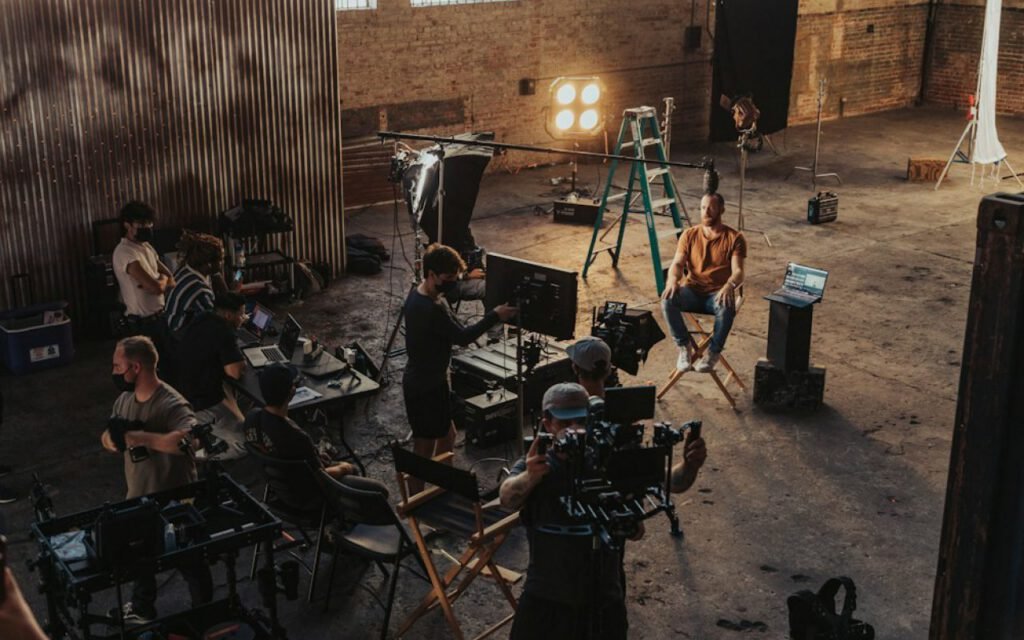
1. Gaffer
The gaffer is the chief lighting technician. Working closely with the director of photography, the gaffer designs how each scene will be lit and leads the team that makes it happen. If a shot looks like golden hour but was filmed at noon, thank the gaffer.
2. Best boy
Despite the name, the best boy can be anyone, and many are women. The best boy electric is the gaffer’s second in command, handling scheduling, equipment orders and the crew. There is a best boy grip, too, who does the same for the grip department.
3. Key grip
Grips do not touch the lights themselves. Instead, they handle everything that shapes, blocks or bounces light, from giant fabric frames to flags that cast a shadow exactly where the camera needs it. The key grip leads that team and also oversees rigging, which can mean mounting a camera on the hood of a speeding car.
4. Dolly grip
When the camera glides smoothly down a hallway or circles two actors at a kitchen table, a dolly grip is usually pushing it. It is a job that demands timing as precise as any dancer’s. A good dolly grip hits the same mark, at the same speed, take after take.
Every shot you love is a small miracle of teamwork.
Marcus Lee, film crew veteran
Marcus Lee has worked as a grip and later a camera operator for more than twenty years, and he told us the best compliment a crew can receive is that nobody in the audience noticed their work. “If you see the craft,” he said, “we probably did something wrong.”
Continuity
The script supervisor makes sure the coffee cup is in the same hand in every shot. That sounds simple, until you remember that a single scene might be filmed over two days, from six angles, with dozens of takes, and then cut together in a different order months later.
5. Script supervisor
The script supervisor sits close to the director with a heavily annotated script and tracks everything: which lines were changed, which takes the director liked, where every prop was and how much of each drink was left. Their notes become a road map for the editor. A good script supervisor saves productions enormous amounts of time and money.
6. Prop master
Every object an actor touches is a prop, and the prop master is responsible for all of them. That includes keeping duplicates. If a character breaks a plate in a scene, the prop master may need a dozen identical plates ready for retakes.
7. Greensman
Need a forest in a parking lot or a garden that blooms in December? The greensman, or greens department, handles all the plants on set, real and artificial. On a period film, they may need to remove modern landscaping and replace it with trees and shrubs appropriate to the era.

The camera department
The director of photography gets most of the credit for how a film looks, but the camera department behind them is a tight, highly skilled team.
8. First assistant camera
Often called the focus puller, the first AC keeps the image sharp while actors and camera are both moving. They do it largely by measurement, memory and instinct, adjusting focus with a wheel while watching a monitor. It is widely considered one of the most stressful jobs on set.
9. Digital imaging technician
Most films today are shot digitally, and the DIT manages that data. They check footage for problems, adjust color on the fly and make sure every shot is safely backed up, often in several places, before the day ends.
The person in charge of rain
Yes, this is a real job, or at least part of one. Some of the most delightful titles on any set belong to the people who make the impossible look ordinary.
10. Special effects technician
Practical effects technicians handle physical effects on set: rain, wind, snow, fog and smoke. Rain towers can drench a city street on a perfectly sunny afternoon. The same team handles any controlled fire or breakaway furniture, always under strict safety rules.
On the set we visited, the effects crew spent most of a morning building a rainstorm for a single two-minute scene on a front porch. They tested the spray height, adjusted for a light breeze and even warmed the water slightly so the actors could get through several takes without shivering. On screen, it simply looks like a rainy night in Georgia. Nobody watching will ever guess it was a sunny Tuesday.
11. Foley artist
Most of the small sounds you hear in a movie, like footsteps, rustling coats or a cup set down on a table, were recorded later by a Foley artist in a studio. They walk, tap, crunch and pour in perfect sync with the picture. Celery snapped in front of a microphone, they told us, makes a very convincing broken bone.

12. Craft services
Last but not least, crafty. Craft services keeps the crew fed between meals with snacks, coffee and the occasional miracle sandwich at 2 a.m. Ask anyone on a set which department matters most for morale, and many will point straight at the snack table.
If you want to remember the twelve, here they are in one place:
- Lighting and grip: gaffer, best boy, key grip, dolly grip
- Story and objects: script supervisor, prop master, greensman
- Camera: first assistant camera, digital imaging technician
- Effects and sound: special effects technician, Foley artist
- Everyone’s favorite: craft services
Key takeaway: A finished film is the work of hundreds of specialists, and most of their best work is designed to be invisible.
Stay for the credits
Next time you see a movie in a theater, try staying until the very end. Watch for the gaffer and the key grip, the script supervisor and the Foley artists, the drivers, caterers and greens crew. Every name on that list spent weeks or months making two hours of story feel effortless. They rarely get interviews or red carpet photos. The least we can do is sit still for a few more minutes and read their names.