Miami is hard on paint. UV, salt air and summer bugs all take a toll. A car that would look new for years in a mild, cloudy climate can start to fade, spot and lose its shine within a couple of seasons here if nobody looks after it. We see it every week at Shine Lab Detailing: a two-year-old car with chalky trim, a hazy hood and tiny etched rings where bugs and water spots were left to bake in the afternoon sun.
Here is the schedule we recommend. It is not built around perfection or around making you spend more. It is built around what Florida weather actually does to a vehicle, and the simplest routine that keeps your paint, trim and interior in good shape for the long haul. Use it as a starting point and adjust for how you drive and where you park.
Why Florida is different
Three forces work on your car here almost every day. The first is ultraviolet light. Strong sun breaks down the clear coat over time, the thin protective layer on top of your paint. As it weakens, paint looks dull, and in bad cases it starts to peel. Plastic trim and rubber seals fade and crack for the same reason.
The second is salt. If you live anywhere near the coast, salt in the air settles on your car as a fine film. Mixed with humidity, it clings to paint, glass and metal, and over time it can contribute to corrosion on exposed parts, especially underneath the vehicle.
The third is bugs, and Florida drivers know exactly which season we mean. In late spring and late summer, lovebugs swarm along highways, and their remains are acidic. Left on paint in the heat, they can etch the clear coat in just a few days. Add in pollen, tree sap, bird droppings and afternoon rain that dries into hard water spots, and you have a climate that keeps your paint under constant pressure.
Wash every two weeks
Salt and bug guts etch clear coat if they sit. That is the core reason we recommend a proper wash at least every two weeks for most Florida drivers. If you park outside near the beach or drive the highway daily during bug season, once a week is even better.

A proper wash means more than a quick spray at a coin-op bay. Use a pH-balanced car shampoo, two buckets, a soft wash mitt and clean microfiber towels for drying. Wash in the shade or early in the morning, never on hot paint in direct sun, which dries soap and water onto the surface and leaves spots. Rinse the wheel wells and lower panels well to clear away salt and road grime.
Bug season gets its own rule
Bugs off within 48 hours. Every time.
Andre, lead detailer
Andre has been detailing cars in South Florida long enough to have strong opinions about lovebug season, and this is the rule he gives every client. Within two days, most bug residue wipes away safely with a dedicated bug remover and a soft towel. After that, it starts to harden and bond to the paint, and removing it can take more effort and sometimes polishing.
Keep a bottle of bug remover and a couple of microfiber towels in the trunk during the peak months. Spray, let it soak for a minute, and gently wipe. Never scrub with a dry paper towel or a stiff brush, which will scratch the paint.
Protect twice a year
A sealant in spring and fall, or a ceramic coating once. Washing removes the bad stuff. Protection gives your paint a barrier so the bad stuff has a harder time doing damage in the first place.
A paint sealant is a synthetic layer that bonds to the paint and typically lasts several months. Applied in spring, it shields your car through the brutal summer sun and bug season. Applied again in fall, it carries you through the winter months and the second round of lovebugs. Many drivers book a full exterior detail with a sealant at those two points in the year.
A ceramic coating is a longer-term option. It forms a harder, more durable layer that can last years with proper care, and it makes washing much easier, since dirt and bug residue release more readily. It costs more upfront and needs proper paint preparation first, but for many Florida drivers who keep their car a long time, it pays off in time saved.
Is your protection still working?
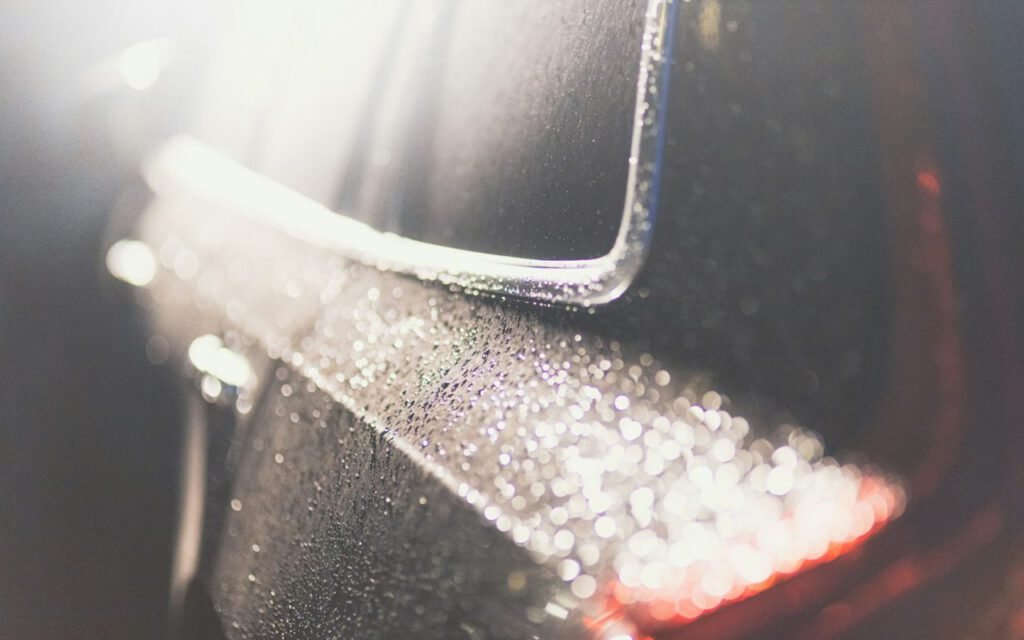
Spray some water on the hood after a wash. If it forms tight, round beads that roll off easily, your sealant or coating is doing its job. If the water spreads out in flat sheets and clings, it is time to reapply or have your coating checked.
Interior and the parts you do not see
Florida heat is tough on interiors, too. Dashboards, leather seats and door panels sit under hot glass all day, which can cause fading, drying and cracking. Humidity adds another challenge: damp carpets and floor mats can develop musty odors, especially after a rainy week or a beach day.
Here is a simple interior schedule we suggest:
- Every two weeks: vacuum seats and floors, shake out mats, wipe high-touch surfaces.
- Monthly: clean and protect the dashboard and door panels with a UV-protective interior product.
- Every three months: condition leather seats and deep clean floor mats.
- Twice a year: full interior detail, including vents, seat rails and door jambs.
A windshield sunshade is one of the cheapest ways to protect an interior here. Use it whenever you park outside. And do not forget the underside of the car: a rinse of the undercarriage after beach trips or coastal drives helps clear salt from places you will never see.
Your Florida detailing calendar
Putting it all together, here is the year at a glance for a typical daily driver in South Florida:
- Every week or two: a proper hand wash, with extra attention to lower panels and wheels.
- Within 48 hours: remove bugs, bird droppings and sap whenever they appear.
- Monthly: interior wipe-down and UV protection for the dash and trim.
- Spring: full exterior detail and paint sealant before summer.
- Fall: second sealant application and a full interior detail.
- Once, if you choose: paint correction and ceramic coating for long-term protection.
Key takeaway: In Florida, regular washing and fast bug removal prevent most damage, and protection twice a year (or one ceramic coating) handles the rest.
Sun, salt and lovebugs
Florida will always be tough on cars, but a steady routine keeps it from winning. Wash every two weeks, take bugs off within 48 hours, and protect your paint with a sealant in spring and fall or a ceramic coating once. Look after the interior with shade and regular cleaning, and rinse away salt after trips to the coast.
If you would like help building a schedule for your car, stop by Shine Lab Detailing or book a free inspection. We will look at your paint, talk about how and where you drive, and recommend a plan that fits your car and your budget. Your car works hard in this weather. A little care keeps it shining.
Thanks for explaining this so clearly.
Great reporting — please keep following this story.