





 DogsYour New Puppy’s First Week: A Calm Survival GuideSleep, potty breaks and the art of saying “no” to a very cute face.
Puppies learn what’s normal and safe mostly in their first few months. Positive experiences now pay off for life. Many trainers and vets point to a sensitive period that runs from roughly three weeks to about twelve to fourteen weeks of age, when puppies are especially open to new sights, sounds, people and places. What a puppy encounters during that window, and how those encounters feel, helps shape whether they grow into a relaxed, curious adult dog or one who finds the world worrying. That doesn’t mean you need to rush your puppy everywhere at once. It means the gentle, everyday experiences you offer in these weeks matter more than at almost any other time.
What socialization really means
Socialization is often misunderstood as “meeting lots of dogs.” In reality, it is much broader. It is about helping your puppy feel comfortable with the many ordinary things they will meet throughout life: different people, surfaces, sounds, places, handling and, yes, other animals. The goal isn’t to expose them to as much as possible. It is to make each new experience feel safe, or even fun.
That is why the quality of each experience matters more than the quantity. A puppy who has twenty calm, positive encounters will usually do better than one who has a hundred overwhelming ones. If a puppy is frightened again and again, they may learn that new things are scary, the opposite of what you want.
If your puppy came from a breeder, ask what socialization they have already done, such as handling, household sounds and car rides. If they came from a shelter or rescue, the staff may know which experiences your puppy has already had and which they seem unsure about.
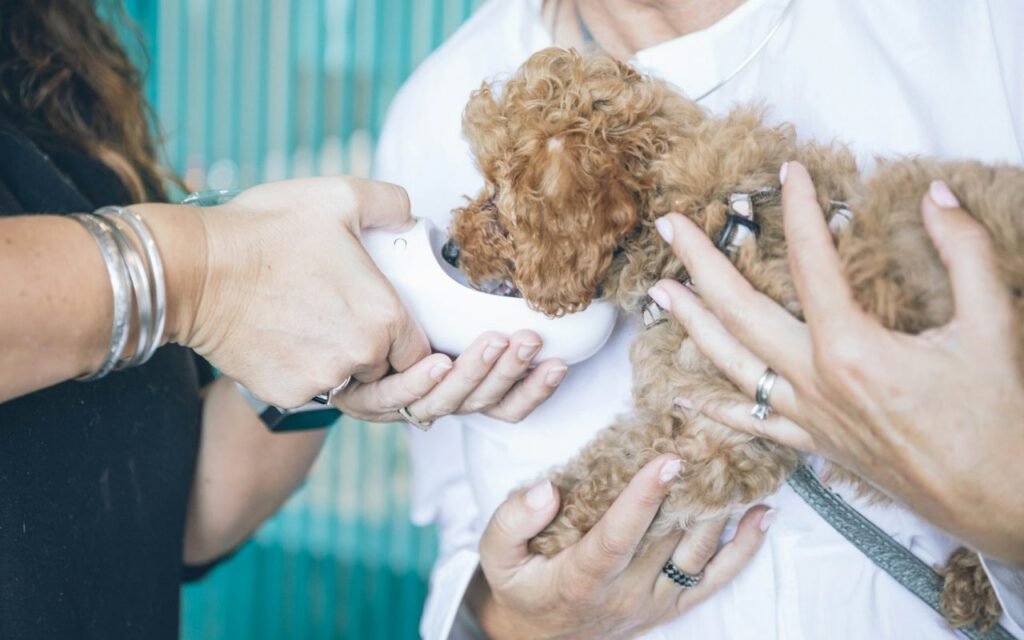
Many small exposures
Different floors, sounds, people and gentle dogs — always at your puppy’s pace. Think of socialization as a long list of tiny introductions spread over many short sessions. A few minutes a day adds up quickly.
Here is a starter checklist to work through over several weeks:
- Surfaces: carpet, tile, wood, grass, gravel, a wobbly cushion and a metal grate.
- Sounds: a vacuum cleaner, a doorbell, traffic, thunder recordings at low volume and a hair dryer.
- People: adults of different ages, people wearing hats or sunglasses, someone with a cane and calm children.
- Handling: gentle touches on paws, ears, mouth and tail, plus brushing and nail trims.
- Places: car rides, a friend’s quiet home and a pet-friendly store at a calm time.
- Animals: healthy, vaccinated, gentle adult dogs and, if possible, a calm cat.
Pair each new experience with something your puppy loves, such as small treats, a favorite toy or gentle praise. Watch their body language. A loose, wiggly puppy who approaches with curiosity is doing great. A puppy who freezes, tucks their tail, tries to hide or won’t take treats is telling you it is too much. Back off, add distance and try again later at a lower intensity.
It helps to keep a simple log. A notebook or a note on your phone with the date, what your puppy experienced and how they reacted makes it easy to spot gaps. Maybe your puppy has met plenty of adults but never a toddler, or has walked on grass and carpet but never on a shiny floor. Many families find it motivating to check items off week by week, and the log becomes useful later if you work with a trainer.
Remember, too, that your puppy is learning from you. If you stay calm and cheerful when a truck rumbles past or a stranger says hello, your puppy is more likely to follow your lead. A relaxed, matter-of-fact attitude tells them there is nothing to worry about.
Reading your puppy
Learning to read your puppy is one of the most useful skills you can build in these early weeks. Puppies can’t tell you when they feel overwhelmed, but their bodies can. Signs of stress include yawning, lip licking, turning away, a lowered body, shaking off as if wet, or suddenly sniffing the ground intently.
Socialization isn’t about meeting everyone. It’s about every meeting going well.
Dr. Leah Moran, veterinarian
Let your puppy choose whether to approach. If someone wants to say hello, ask them to crouch down, stay still and let the puppy come to them. Never force a puppy toward a person, dog or object that worries them. Giving them a choice builds confidence; forcing them builds fear.
It also helps to end sessions early, while your puppy is still happy and curious. A short, upbeat outing is far better than a long one that ends in exhaustion.

Safety
Ask your vet how to socialize safely before vaccinations are complete. This is one of the most important conversations to have at your puppy’s first checkup. Young puppies are vulnerable to serious diseases until their vaccine series is finished, so places with lots of unknown dogs, like dog parks, busy pet store floors and popular trails, may be risky.
At the same time, the socialization window doesn’t wait. Many vets and trainers recommend safe ways to keep socializing during these weeks, and your vet can tailor advice to your area and your puppy. Common ideas include:
- Carry your puppy in your arms or a pet stroller to see and hear new places without touching the ground.
- Invite people over to meet your puppy at home, in a calm setting.
- Arrange playdates with healthy, fully vaccinated adult dogs you know well.
- Join a puppy class that requires age-appropriate vaccines and cleans the space carefully.
- Sit outside a busy spot such as a park bench and let your puppy watch the world from your lap.
A well-run puppy class can be one of the best investments you make. Look for a trainer who uses positive, reward-based methods and keeps groups small.
After the window closes
The sensitive period doesn’t mean learning stops at twelve weeks. Dogs keep learning throughout life, and adolescent dogs, around six to eighteen months, often go through phases of new caution. Continue gentle, positive outings well past puppyhood, and keep visiting new places, people and situations at a comfortable pace.
If your puppy seems very fearful, reactive or anxious despite your efforts, talk with your vet. They can check for health issues and may recommend a qualified trainer or a veterinary behavior specialist. Getting help early often makes a big difference.

Key takeaway: Offer many short, positive experiences at your puppy’s pace, read their body language, follow your vet’s safety advice and keep socializing beyond the first few months.
A confident dog for life
The time you spend on socialization in these early weeks is one of the greatest gifts you can give your dog. Every calm car ride, every friendly neighbor and every new sound paired with a treat tells your puppy the world is a good place to be. You don’t need to do everything, and you don’t need to do it perfectly. Focus on making each meeting go well, follow your vet’s guidance and enjoy watching your puppy grow braver week by week.
General pet-care information, not veterinary advice. Call your own vet with any health question.

Written by
Dana Ruiz
Dana is a certified trainer and the human of two rescue mutts named Pickle and Waffles.
12Articles
2026Writing since
Read next
DogsYour New Puppy’s First Week: A Calm Survival GuideSleep, potty breaks and the art of saying “no” to a very cute face. DogsDog Park Manners: The Unwritten RulesHow to keep play fun for every dog (and every human).
 AdoptionBringing Home a Senior DogWhy older dogs make wonderful, mellow companions.
 Care & GearThe Best Dog Beaches Are Also the Best-Behaved OnesEtiquette, safety and how to keep sand out of your car (mostly).
 DogsTeaching “Leave It” in Five Short SessionsThe one cue that can keep your dog safe.
 CatsKitten Playtime: Games That Build a Confident CatWand toys, boxes and why hands are not toys.
 DogsLeash Walking: Turning Pulling Into StrollingStop, turn, reward — and repeat.
 PuppiesCrate Training Without TearsA cozy den, short steps and lots of treats.
 AdoptionAdopting From a Shelter: What to Ask Before You CommitQuestions that help you find the right match.
2 Comments
Sharing this with my friends.
Saved this one for later. Really useful.