



 Interviews“Models Before Computers”: Inside the Studio That Still Builds Everything by HandOkafor Lindqvist makes a physical model of every project. Here’s why.
Interviews Iris Bell6 min read
Portland Furniture Maker Graham Pell on Slow Joinery, Local Wood and Chairs That Outlive Us
From a small Central Eastside shop, Pell builds about 60 pieces a year. He explains why he refuses to go faster.
Iris Bell6 min read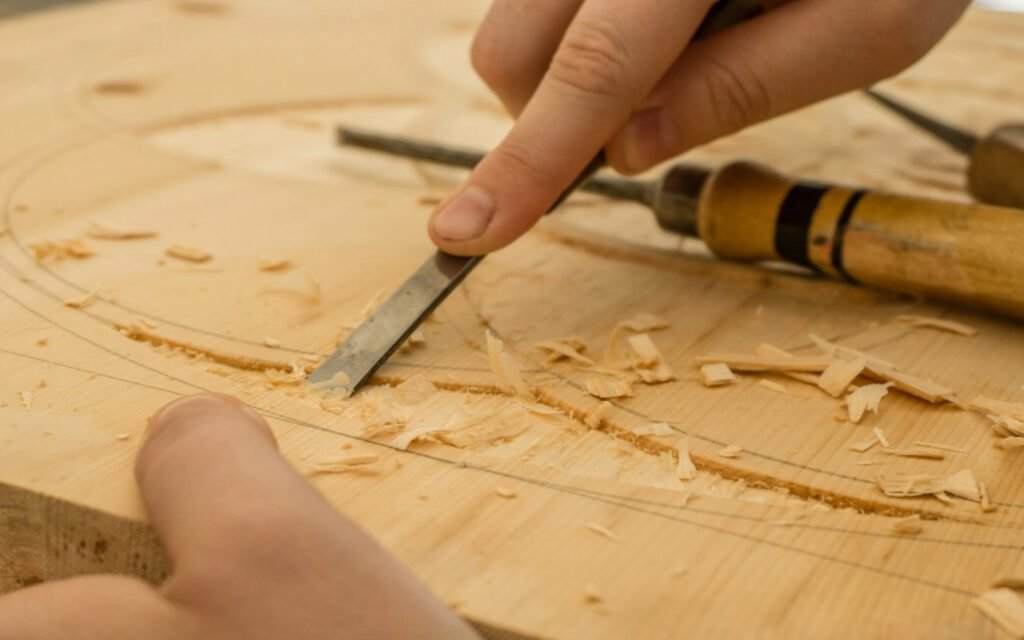
Graham Pell builds about sixty pieces of furniture a year, and he would like you to know that he could build more if he wanted to. He just doesn’t want to. From a narrow, 1,800-square-foot workshop in Portland’s Central Eastside, the 47-year-old furniture maker and his two apprentices produce dining tables, benches, chairs and cabinets that are joined almost entirely without metal fasteners, finished with oil and wax, and built from wood that mostly grew within a hundred miles of the shop.
Interview by Iris Bell · Workshop Pell Joinery · Founded 2012 · Output about 60 pieces a year
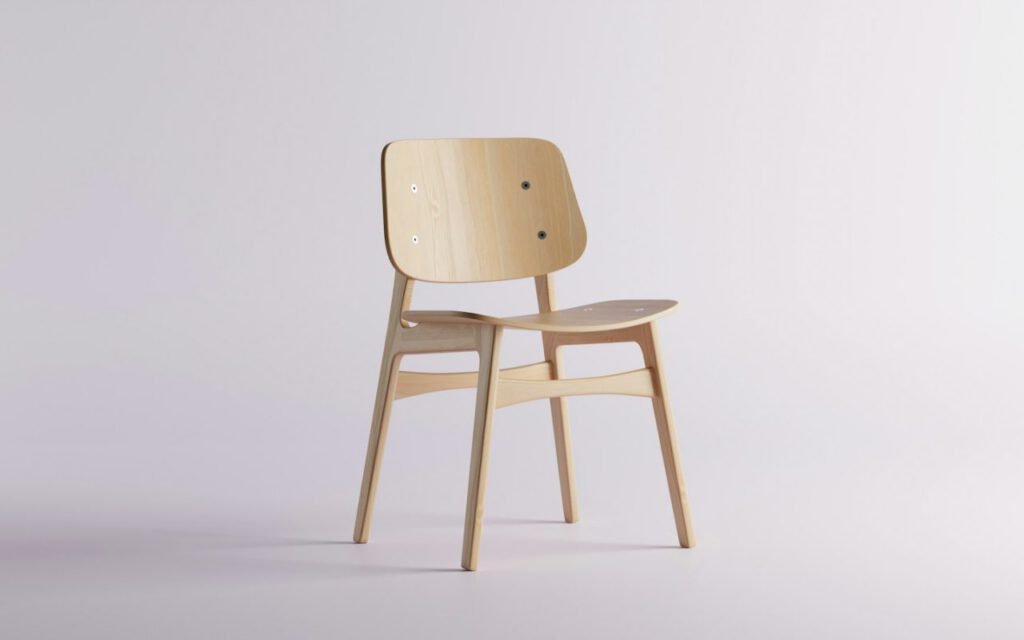
His dining chairs, in particular, have earned a following among architects in the Pacific Northwest, several of whom specify them for houses before the floor plans are finished. A single chair costs $1,450 and has a waiting list of about seven months. We visited Pell on a rainy Thursday, when the shop smelled of cut walnut and linseed oil and a radio played quietly somewhere behind a stack of lumber. Our conversation has been edited for length and clarity.
On going slow
Sixty pieces a year is not many. Why stay that small?
Because every time I have grown, the work has gotten worse, and every time I have shrunk, it has gotten better. I tried running a bigger shop about eight years ago. We had six people and a CNC machine, and we made more money, but I spent all day answering email and fixing other people’s mistakes. I was not making furniture anymore. I was managing it. So I sold the machine and went back to three of us.
Do clients understand the wait?
Most do. I send photos as their piece moves through the shop, from the rough boards to the glue-up to the finish. People who wait seven months for a chair tend to treat it differently than something that arrived in a box. They notice the grain. They tell their friends where it came from. That is the relationship I want.
On the joinery
Your pieces rarely use screws or metal hardware. Why?
Wood moves. It swells in a wet Portland winter and shrinks in a dry August. Screws fight that movement, and eventually something cracks or loosens. A well-cut mortise and tenon, or a sliding dovetail, lets the wood breathe while holding everything tight. And when a joint does loosen after forty years, a good furniture maker can take it apart, clean it and glue it back together. You cannot do that with a stripped screw hole.
How long does one chair take?
About 22 hours of hands-on work, spread over three or four weeks because of glue and finish drying times. The seat is carved by hand, mostly with a gouge and a spokeshave. The joints are cut with a combination of machines for the rough work and hand tools for the final fit. A chair has to survive being tipped back on two legs by a teenager, so the leg-to-seat joints get the most attention.
I design the repair at the same time I design the chair. If someone can’t fix it in fifty years, I haven’t finished the drawing.
Graham Pell, furniture maker
What about the finish?
Oil and wax, almost always. A hard plastic finish looks perfect for five years and then starts to crack and peel, and the only fix is stripping the whole piece. An oil finish wears gradually, like a good pair of boots. When it starts to look dry, you wipe on another coat on a Sunday afternoon and it looks new again. I send every client home with a small tin of the same oil I use and a card that explains how to apply it. Most people do it once a year, around the holidays, and they tell me it has become a small ritual.
On local wood
Where does your wood come from?
Mostly from Oregon and southwest Washington. Bigleaf maple, Oregon white oak, some alder and a lot of walnut. The walnut is my favorite story. Portland has thousands of old walnut trees in yards and along streets, planted generations ago. When one comes down because of disease or a storm, it often goes to firewood or the landfill. I work with two small sawyers who rescue those logs, mill them and dry them slowly. It takes about two years before the wood is ready to use.
Does local wood cost more?
Sometimes, and it is less predictable. A street-tree log might have a nail in it from a fence that was nailed to it eighty years ago. You find it with a metal detector, or you find it with your saw blade, which is an expensive lesson. But the color and figure in that wood are unlike anything you can buy from a lumberyard. Clients love knowing their table came from a tree on a specific street in Sellwood or St. Johns. Some of them have walked past it.
On the business of craft
Can a small furniture shop make a living today?
Yes, but not by accident. Rent is the hardest part. My shop costs more each year, and the neighborhood keeps changing around us. I price my work honestly, which means it is expensive, and I am open about why. A dining table is about $6,800 to $9,500 depending on size and wood. That number covers materials, roughly 90 to 120 hours of labor, insurance, rent and a fair wage for my apprentices. I would rather sell fewer pieces at a price that keeps the shop alive than chase volume.
What advice would you give someone who wants to become a furniture maker?
A few things I wish someone had told me at twenty-five:
- Spend at least two years working in someone else’s shop before you open your own.
- Learn to sharpen properly. Dull tools cause more bad work and more injuries than anything else.
- Build the same piece ten times. You learn more from the tenth chair than the first.
- Keep a notebook of every price you quote and how many hours the job actually took.
- Find the people who sell wood, finishes and hardware locally, and treat them well.

On what lasts
What do you hope happens to your furniture after you are gone?
I hope people argue about who gets it. That sounds like a joke, but I mean it. The best furniture ends up in a family’s stories. Someone carved their initials into the underside of a table when they were eight. Someone did their homework at it every night for twelve years. A grandmother served the same holiday dinner on it for decades. If my tables collect stories like that, I have done my job.
And if it gets damaged?
Then bring it back. I repair my own pieces for free, for life, and I say that on every invoice. Twice now, customers have brought back chairs that were twelve years old and asked for nothing but a new coat of oil. Those are my favorite days in the shop.
Key takeaway: for Pell, good furniture is slow by design, honest about its price and built so that someone can take it apart and fix it long after its maker has put down his tools.

Written by
Iris Bell
Iris covers interiors, furniture and lighting — and keeps a very long list of chairs she wants.
13Articles
2026Writing since
Read next
Interviews“Models Before Computers”: Inside the Studio That Still Builds Everything by HandOkafor Lindqvist makes a physical model of every project. Here’s why. InterviewsThe Staircase as Sculpture: Five Stairs Worth ClimbingFrom spiral to cantilevered, the most beautiful staircases of the year.
 InterviewsArchitect Maya Halden on Building Less and Listening MoreThe founder of Studio Halden Rowe talks about sites, silence and saying no.
 InterviewsLandscape Architect Renata Solis on Designing for Drought, Hail and a Mile-High SunThe Denver designer plants for the climate the city is getting, not the one it had.…
3 Comments
The line about designing the repair at the same time as the chair is going on a sticky note above my bench.
Loved hearing about the street-tree walnut. Such a good use for something that would have been firewood.
Beautiful interview. I’d love a follow-up on his apprentices.