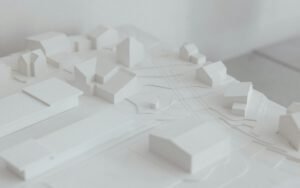
 CitiesHow a Scale Model Helped a Neighborhood Plan Its Own FutureResidents of Pittsburgh’s Hill District rebuilt their streets in foam and cardboard first.
Cities Nora Kessler6 min read
Why More US Cities Are Building in Wood
New building codes allow timber towers up to 18 stories. Architects are racing to use them.
Nora Kessler6 min readRead next
CitiesHow a Scale Model Helped a Neighborhood Plan Its Own FutureResidents of Pittsburgh’s Hill District rebuilt their streets in foam and cardboard first. CitiesThe Beauty of Concrete Steps: Designing Public Spaces People Actually UseWide steps, good shade and somewhere to put a coffee.
 CitiesConcrete Without the Carbon? The New Materials Changing ConstructionLow-carbon cements, recycled aggregates and the buildings already using them.
 CitiesRooftop Gardens Are Cooling CitiesGreen roofs, shade and fewer heat islands.
Since US building codes began allowing tall timber buildings, more than 1,800 mass-timber projects have been built or started. A decade ago, a wooden office tower or apartment block in an American downtown would have sounded like a novelty. Today, cranes in cities from Portland to Atlanta are lifting giant panels of engineered wood into place, and a growing number of developers, architects and city officials say the material is no longer an experiment but a mainstream option.
Code change 2021 IBC · Max height 18 stories · Projects 1,800+ in US

We talked with architects, builders and a city planner about what is driving the shift, what it looks like on the ground, and what still stands in the way.
What mass timber actually is
Mass timber is not the light wood framing used in most American houses. Instead of thin studs and joists, it uses large, solid panels and beams made by gluing or pressing layers of lumber together. The best-known product is cross-laminated timber, or CLT, in which layers of boards are stacked at right angles and bonded under pressure. The result is a panel that can be several inches thick and dozens of feet long, strong enough to serve as a floor or a structural wall.
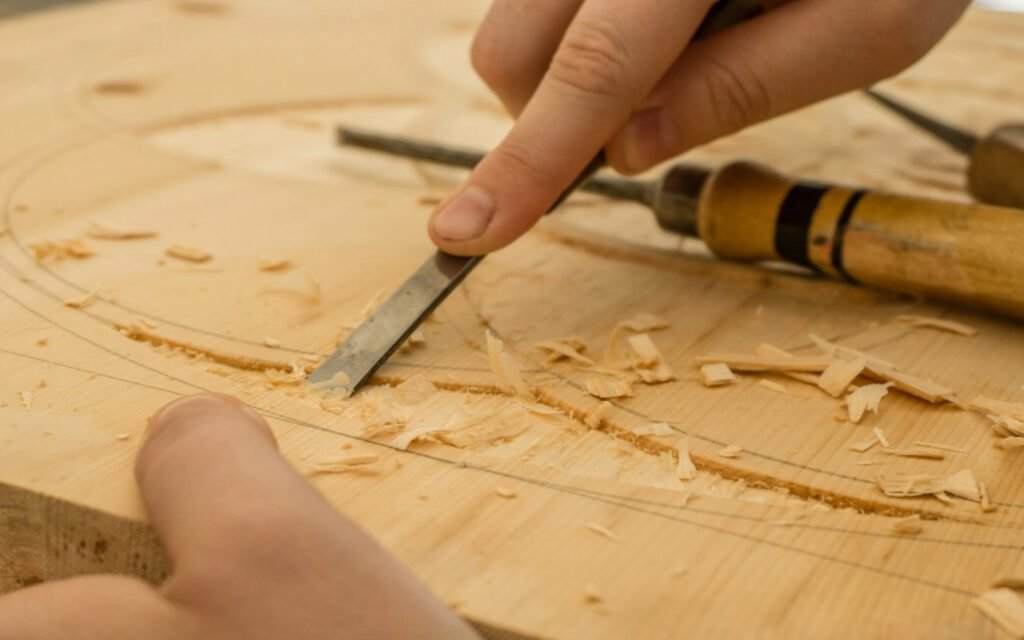
Other products include glue-laminated beams and columns, often called glulam, and nail-laminated panels. Each piece is cut to exact dimensions in a factory using computer-controlled machines, then shipped to the site ready to install. Crews often compare the process to assembling a very large, very precise kit.
Because the panels are so thick, they behave differently in a fire than ordinary lumber. The outer layer chars, and that char layer insulates the wood inside, slowing further burning. Building codes account for this by requiring specific thicknesses and, in taller buildings, some protective covering such as gypsum board.
The code change that opened the door
The turning point was the 2021 edition of the International Building Code, the model code adopted in some form by most US states. It created new construction types that allow mass timber buildings up to 18 stories, depending on how much of the wood is left exposed and how it is protected. Before that, most wooden buildings were limited to around six stories.
Adoption varies from state to state and city to city, and some jurisdictions moved early with their own provisions. But architects say the national code change gave developers and lenders the confidence that timber projects would not be stalled by endless one-off approvals.
Marisol Chen, a senior plan reviewer for the building department in Salem, Oregon, says her office saw the shift almost immediately. “We went from one timber inquiry a year to one a month,” she says. “The code gave everyone a common language, from the fire marshal to the lender.”
Lower carbon
Timber structures can cut a building’s embodied carbon by up to 40 percent. Embodied carbon refers to the emissions created by making and transporting building materials and constructing the building itself, as opposed to the energy used to heat, cool and light it once it is occupied. Concrete and steel are carbon-intensive to produce. Wood, grown from trees that absorb carbon as they grow, generally carries a lower footprint when it comes from responsibly managed forests.
Ten years from now, a concrete apartment building will look old-fashioned.
Lena Ortiz, Cedar & Line
Ortiz, whose firm has completed five mid-rise timber buildings in the Pacific Northwest, is quick to add that the climate benefit depends on sourcing. “If the wood comes from a forest that is being cleared rather than managed, the math falls apart,” she says. Her firm requires certified wood and asks suppliers for documentation on where each shipment was harvested.
Developers also point to benefits that have nothing to do with carbon:
- Speed. Prefabricated panels can shorten the structural phase of construction by several weeks.
- Quieter sites. Fewer concrete pours and less heavy equipment mean less noise for neighbors.
- Lighter buildings. Wood weighs much less than concrete, which can reduce foundation costs on poor soils.
- Warmth. Tenants and office workers consistently say they like exposed wood ceilings and columns.
- Smaller crews. Panel installation needs fewer workers on site at any one time.
The challenges
Insurance costs and limited local factories still slow adoption. Builders’ risk insurance, which covers a project during construction, can be noticeably more expensive for timber buildings, because insurers have less history to base their pricing on. Several developers we spoke with said premiums have improved as more projects are completed, but the gap has not closed.
Supply is the other constraint. There are only a limited number of mass timber plants in North America, and many are concentrated in the Northwest and Southeast. A project in the Midwest or Northeast may have to ship panels hundreds or even thousands of miles, which adds cost and eats into the carbon savings.
Moisture is a third concern. Wood that gets soaked during construction can swell, stain or grow mold. Good builders protect panels with temporary membranes and schedule installation around the weather. “You can build in the rain,” says Ortiz, “but you can’t be careless about it.”
Finally, there is the learning curve. Many general contractors, subcontractors and inspectors have little experience with mass timber, and early projects often involve more coordination than expected. Firms that have done several buildings say the second and third projects go dramatically faster than the first.
What it looks like on the ground
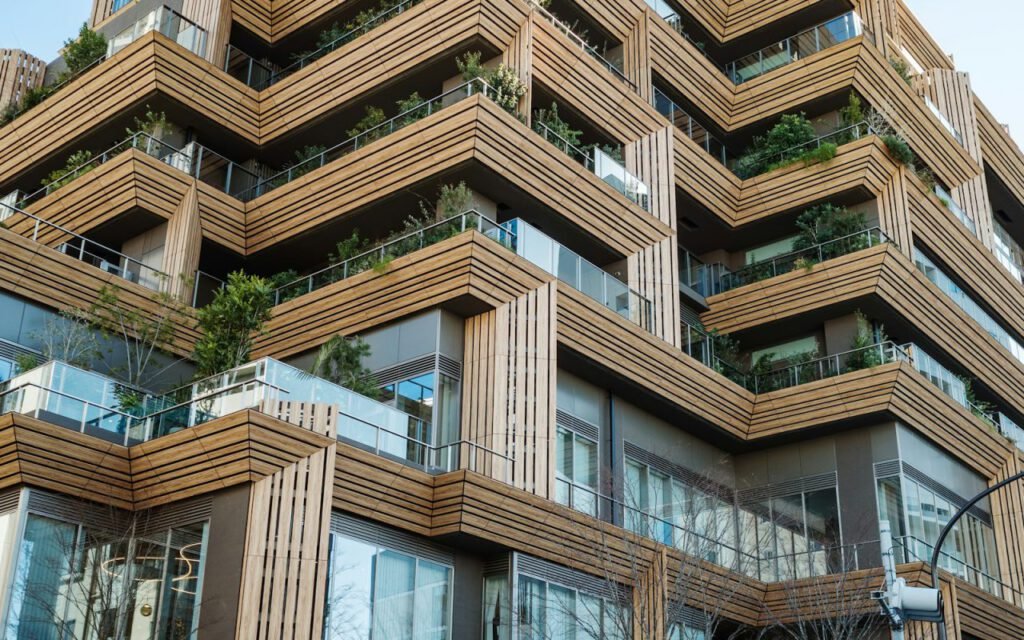
The new buildings come in many forms. In the Pacific Northwest, six- and eight-story apartment buildings with exposed CLT ceilings have become common. In the Southeast, several universities have built timber dormitories and classroom buildings. Office developers in Texas and Colorado are marketing timber towers to tech tenants who want visible sustainability credentials.
Some of the most interesting projects are small. A public library in a mountain town, a fire station, a two-story elementary school wing built over a summer break. These buildings show that mass timber is not only for glamorous downtown towers, but can also be a practical choice for everyday civic architecture.
Key takeaway: mass timber is now a realistic option for mid-rise housing, offices and civic buildings across the US, but its success depends on responsible sourcing, careful moisture control and teams with real experience.
What comes next
Several new timber plants have been announced in states that currently have none, which could bring costs down and shorten shipping distances. Industry groups are also working with insurers to build better data on how timber buildings perform over time. And as more buildings open, the public is getting a chance to experience them firsthand.
Chen expects the growth to continue, though not without bumps. “Every new material goes through a phase where people are excited and then a phase where they find the problems,” she says. “We are somewhere in the middle. The good news is that the problems are solvable.”
For cities trying to build more housing while cutting emissions, that is a hopeful message. The skyline of the next decade may look a little warmer, and a lot more like wood, than anyone would have guessed ten years ago.

Written by
Nora Kessler
Nora trained as an architect before turning to writing. She has edited Form & Frame since 2018.
13Articles
2026Writing since


Start the conversation