


 InterviewsThe Staircase as Sculpture: Five Stairs Worth ClimbingFrom spiral to cantilevered, the most beautiful staircases of the year.
Interviews Theo Grant6 min read
“Models Before Computers”: Inside the Studio That Still Builds Everything by Hand
Okafor Lindqvist makes a physical model of every project. Here’s why.
Theo Grant6 min readThe Minneapolis studio has a model shop bigger than its meeting room. Every project, from houses to museums, begins as wood, foam and cardboard. Walk through the door of Okafor Lindqvist on a weekday morning and you will hear band saws before you hear conversation, and you will smell sawdust and glue before you see a single computer screen. It is an unusual way to run an architecture practice in 2026, and the partners would not have it any other way.
Studio Okafor Lindqvist · Founded 2011 · Team 34 people
The firm, best known this year for the daylit Riverside Art Museum, was founded by Ada Okafor and Johan Lindqvist after both left larger offices in Chicago. We sat down with them at a long worktable covered in pencil shavings and balsa offcuts to talk about why they still build everything by hand.
Why models
Clients understand a model instantly, and light behaves honestly on a physical object. That, in short, is the studio’s philosophy. Okafor says she noticed early in her career that clients would nod politely at renderings and then be surprised, sometimes unhappily, by the finished building. With a physical model on the table, the questions come faster and the surprises come earlier.
A screen lets you lie to yourself. A model never does.
Ada Okafor, Okafor Lindqvist
“On a screen, you can always rotate the view to the flattering angle,” she explains. “You can make the sky perfect and the materials glossy. A model sits there on the table and shows you everything, including the awkward corner you hoped no one would notice.”
Lindqvist adds that models engage more people. Contractors, engineers, neighbors and city officials all crowd around a model in a way they never crowd around a monitor. “People touch it,” he says. “They pick up a little figure and walk it through the entrance. They tell you where they would sit. You learn things you would never learn from a slideshow.”
Inside the model shop
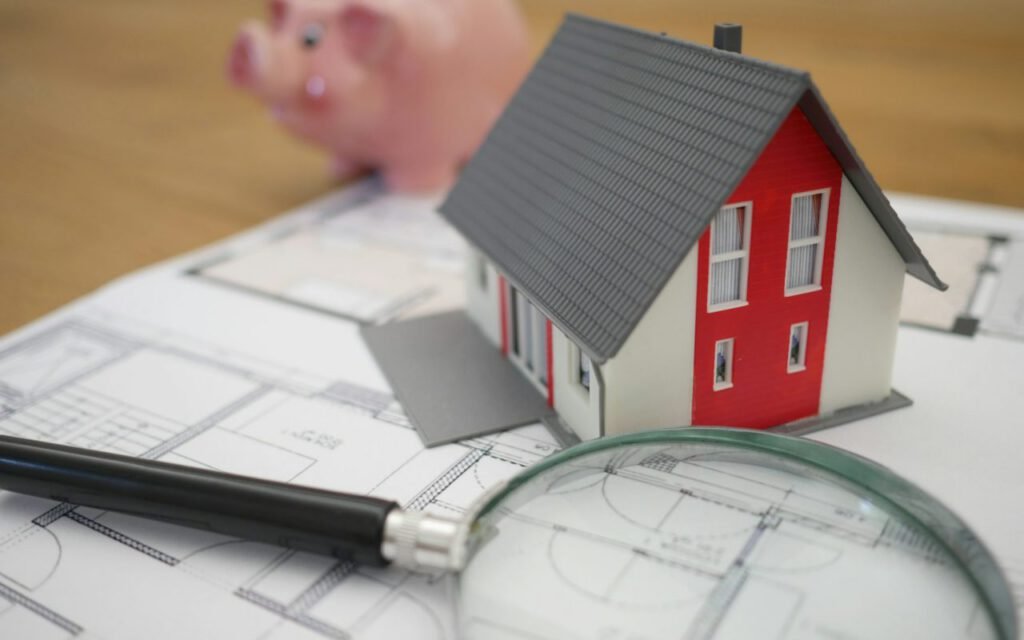
The shop takes up nearly half of the studio’s ground floor. There are two band saws, a scroll saw, a small table saw, a laser cutter, sanding stations and long racks of materials sorted by type: basswood, birch plywood, museum board, rigid foam, cork and plaster. A full-time shop manager, Tomas Reyes, keeps it running and teaches every new hire how to use the tools safely.
Every designer in the office is expected to build. Interns spend their first two weeks in the shop before they are given a desk. “It levels everyone,” Reyes says. “The senior partner and the newest intern are both standing at the same sander covered in dust.”
Models at the studio fall into a few broad types, each with a different job:
- Sketch models. Quick, rough massing studies in foam or chipboard, built in an hour or two.
- Light models. Larger interior models, often big enough to put your head inside, used to study daylight.
- Site models. Contour models of the land and neighboring buildings, to understand how a project fits in.
- Detail models. Full-size or half-size mockups of a joint, a railing or a window frame.
- Presentation models. Finely crafted models for clients and public meetings, usually in pale wood.
For the Riverside museum, the studio built more than 200 models over six years, including several gallery mockups large enough to walk into. Many of them now hang from the ceiling of the shop, a kind of family tree of the building.
Studying light by hand
Light models are the studio’s specialty. A typical one is built at a large scale, with removable roof panels and walls painted to match the intended finish. The team takes the model outside on the roof terrace and rotates it on a turntable to simulate the sun at different times of day and year. Small cameras slipped through a hole in the wall record what a visitor would see.
Okafor says the method is surprisingly accurate. Daylight at model scale behaves much as it does at full size, because light travels in straight lines regardless of how big the room is. Reflections off a curved plaster surface, the spread of light from a skylight, the way a shadow falls across a floor: all of these can be judged by eye on a sunny afternoon.
“Software is very good at giving you numbers,” she says. “A model is very good at giving you a feeling. You need both, but you should get the feeling first.”
And computers?
They use them for everything else, but never for the first idea. Once a design has taken shape in models, the studio moves into digital tools for drawings, structural coordination, energy analysis and construction documents. The office runs the same modeling software as most firms of its size, and the team is fluent in it.
The rule is simply about sequence. The first hours or days of any project are spent with paper, pencil and cardboard. Lindqvist says that order protects the most fragile stage of design. “On a computer, everything looks finished too soon,” he says. “The lines are perfect, so you believe the idea is perfect. Cardboard keeps you humble.”
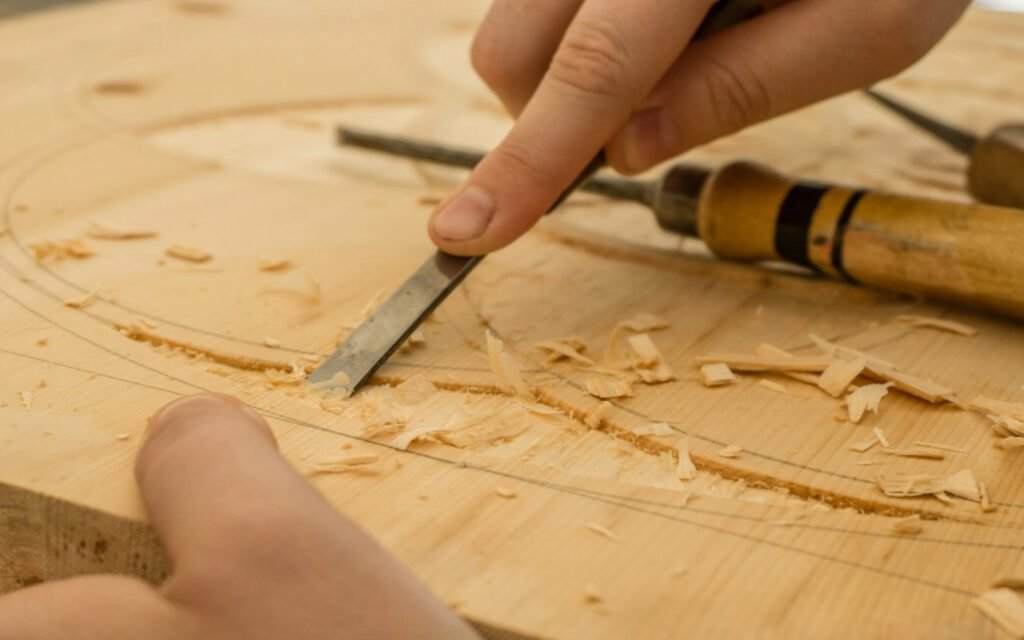
Digital fabrication has also found a place in the shop. The laser cutter handles repetitive parts like window mullions and stair treads, freeing the team to spend time on the parts that need judgment. Several site models are now milled from foam using survey data, then finished by hand.
The two approaches also check each other. When a digital energy model and a physical light model disagree, the team treats it as a clue rather than a nuisance. More than once, Lindqvist says, the disagreement revealed an error in the software settings. Other times it showed that the model had been built carelessly. Either way, the building got better.
The cost of working this way
Model making takes time, and time costs money. The partners estimate that the shop adds a modest percentage to the cost of early design phases compared with a fully digital process. They argue it more than pays for itself by catching mistakes before they reach the construction site, where changes are far more expensive.
Clients seem to agree. Many of the studio’s commissions come from people who saw a model at a public meeting or in an exhibition and called the next day. Several clients have asked to keep the final presentation model, and a few now display them in the lobbies of the buildings they depict.
Key takeaway: handmade models are not nostalgia at Okafor Lindqvist. They are a working tool that helps the studio test light, communicate with clients and catch problems early.
Passing it on
The studio hosts a free model-making workshop for local high school students every summer, run by Reyes and a rotating group of young designers. Students spend a week designing and building a small pavilion for a park in their own neighborhood. Several former participants have gone on to study architecture, and two now work at the firm.
Okafor says the workshop is one of her favorite weeks of the year. “You watch a sixteen-year-old cut a piece of cardboard, fold it, and suddenly see a room,” she says. “That moment is the whole reason I became an architect. I want them to feel it before anyone hands them a mouse.”
Theo has visited more than 300 houses for the magazine and still gets excited about a good window seat.

Written by
Theo Grant
Theo has visited more than 300 houses for the magazine and still gets excited about a good window seat.
16Articles
2026Writing since
Read next
InterviewsThe Staircase as Sculpture: Five Stairs Worth ClimbingFrom spiral to cantilevered, the most beautiful staircases of the year. InterviewsArchitect Maya Halden on Building Less and Listening MoreThe founder of Studio Halden Rowe talks about sites, silence and saying no.
 InterviewsLandscape Architect Renata Solis on Designing for Drought, Hail and a Mile-High SunThe Denver designer plants for the climate the city is getting, not the one it had.…
 InterviewsPortland Furniture Maker Graham Pell on Slow Joinery, Local Wood and Chairs That Outlive UsFrom a small Central Eastside shop, Pell builds about 60 pieces a year. He explains why…