Directing Music Videos on a Small Budget
One location, one idea, done well.
 Theo Grant6 min read
Most music videos I direct have tiny budgets. That’s never stopped them from looking big. Over the years I have shot videos in borrowed warehouses, empty swimming pools, a friend’s bakery after closing and a parking garage at four in the morning. Some of those videos cost less than the camera rental on a typical commercial, and a few of them are still the work I am proudest of. The secret is one strong idea, executed with care.
Independent musicians often come to me worried that their budget is too small to make something worth watching. I understand the worry, but I usually tell them the same thing: a small budget is not a weakness if you plan around it. What hurts small videos is trying to look like a big video without the resources. What helps them is choosing a clear, simple concept and doing it brilliantly. Here is how I approach those projects.
Start with one idea
Before talking about locations, cameras or crew, I spend time with the song. I listen to it on repeat, read the lyrics and talk with the artist about what it means to them. Then I try to describe the video in a single sentence. “She sings the whole song in one take while the room slowly fills with flowers.” “The band plays in a laundromat while every machine spins in time.” If the idea cannot fit in one sentence, it is probably too complicated for the budget.
A single strong idea gives every decision a filter. When someone suggests adding a car chase, a dance troupe or a second location, I can ask whether it serves the idea. Usually it doesn’t, and we save the money for something that does.

One location
Moving the crew costs time. One great location beats five average ones. Every company move, packing up, driving, unloading and relighting, can easily eat two hours of a ten-hour day. On a small video, those two hours might be a fifth of your entire shoot.
Choosing one location lets you invest in making it look incredible. You can pre-light it, dress it carefully and find every interesting angle it offers. A single warehouse can provide a dozen different looks if you move the lights, change the lens and shoot from the floor, the rafters and the doorway. Audiences rarely notice that a video was filmed in one place when the shots are varied and purposeful.
How I find locations on a budget
- Ask the artist’s community first: friends, fans and local businesses often say yes
- Look for spaces with character, such as old diners, empty theaters and workshops
- Visit at the time of day you plan to shoot, to see the real light
- Check power, parking, noise and restrooms before falling in love with a space
- Always get permission in writing and confirm any local permit rules
Constraints are the best creative brief.
Theo Grant, director
Light with intention
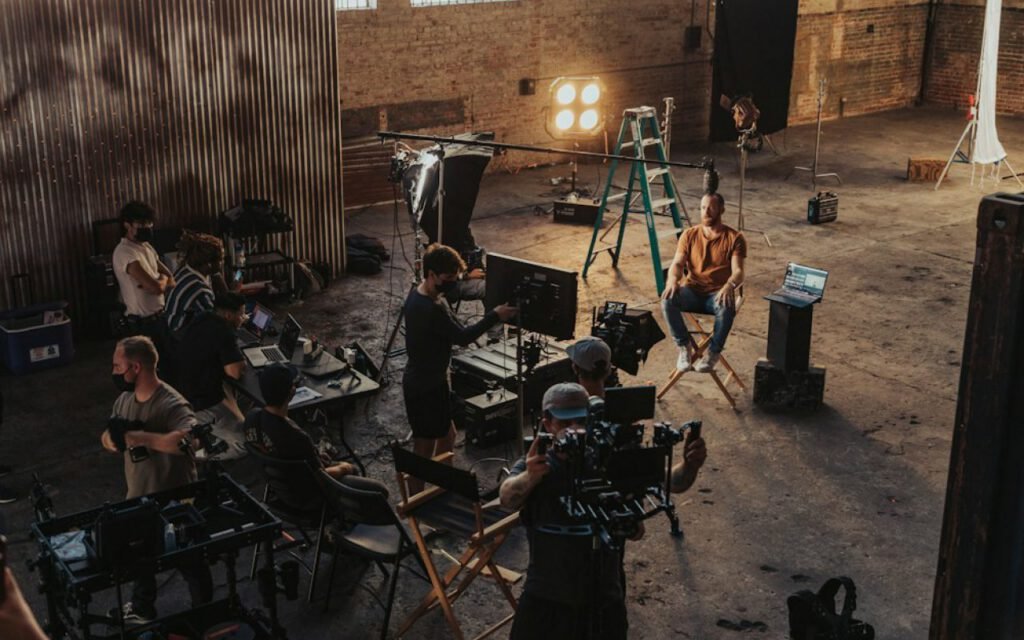
Two well-placed lights can look more cinematic than twenty. Many low-budget videos look cheap not because of the camera but because of flat, careless lighting. Light that comes from everywhere at once removes depth and mood. Light that comes from a clear direction, with shadows allowed to fall, instantly feels more like film.
My go-to setup on small videos is simple: one large soft key light for the artist’s face, one harder backlight or edge light to separate them from the background and a few practical lamps in the frame for atmosphere. Sometimes we add a small haze machine to give the light shape. With careful placement, that kit fits in one car and can be set up by two people.
Use the location’s own light
Many of the best locations already have beautiful light built in: neon signs, string lights, big windows or old fluorescent fixtures. I build the look around those first and add our own lights only where needed. It saves time and money, and it often gives the video a more authentic texture than anything we could create from scratch.
Plan like a big production
A small budget means there is no room for wasted time on the day. I plan small videos with the same discipline I use on commercials, sometimes even more. Before every shoot, the team and I work through a simple process:
- A shot list. Every shot written down, in shooting order, with a target time.
- A playback plan. A good speaker, the song cued up and lip-sync sections marked.
- A performance block. Several full run-throughs of the song in one setup to capture energy.
- A coverage block. Close-ups, details and inserts after the main performance is in the can.
- A safety buffer. At least one hour kept free for surprises.
Shooting full performances early in the day is important. Artists have the most energy then, and if anything goes wrong later, you still have enough material to cut a complete video.
Key takeaway: on a small budget, time is your most expensive resource. Spend it on the idea and the performance, not on moving equipment around.
Where the money should go
When a budget is tight, I am careful about where every dollar lands. My general priorities look like this. First, the location and anything that makes it look special, because the whole video lives there. Second, lighting and grip, because light creates the mood. Third, food and basic comfort for the crew and the artist. Fourth, a good colorist for the finish, because a careful grade can make modest footage feel rich. Camera rental usually comes last. Today’s affordable cinema cameras are more than good enough, and audiences never ask what a video was shot on. They only notice whether it looks and feels alive.
I also try to leave a small reserve, even on the smallest project. Something always comes up: an extra hour at the location, a replacement cable, a last-minute prop that suddenly makes the idea click. Having a few hundred dollars set aside turns those moments from crises into easy decisions, and it means nobody on the crew has to pay out of their own pocket.
Small crew, real care
Most of my budget videos are shot with four to eight people. That is enough to cover camera, lighting, art direction and production without crowding the artist. Everyone gets fed properly, everyone gets credited and everyone knows exactly what the day looks like. People who work on small projects are often doing it partly for love, and treating them with respect is the least we can do.
The artist is part of the crew too. I always remind musicians that the camera loves genuine energy far more than perfect choreography. Some of the best moments in my videos came from an artist laughing at a missed cue or closing their eyes during a quiet line. A relaxed, trusting set makes those moments possible.
Big on screen
A music video does not need a huge budget to feel cinematic. It needs one clear idea, one great location, thoughtful lighting and a plan that respects everyone’s time. When those pieces come together, a small team can make something that stands next to videos that cost ten times as much. If you are a musician with a song and a small budget, don’t wait for more money. Find your one idea and start there.
Theo has visited more than 300 houses for the magazine and still gets excited about a good window seat.

Theo Grant
Theo has visited more than 300 houses for the magazine and still gets excited about a good window seat.