




 InteriorsA Calm, Gray Living Room Designed Around One Enormous WindowInside a Hudson Valley house where the view is the only art on the walls.
Written by
Iris Bell
Iris covers interiors, furniture and lighting — and keeps a very long list of chairs she wants.
13Articles
2026Writing since
Evenly lit rooms feel like offices. The rooms we remember have contrast: bright pools, soft corners and moving shadows. Think of the kitchen table where a single lamp made everyone lean in, or the bedroom where morning sun crawled across the floorboards before anyone was awake. Those rooms were not bright. They were shaped, and the tool that shaped them was shadow as much as light.
Essay by Nora Kessler · Reading time 6 minutes · Series On Light
For most of the last century, the goal of residential lighting was simple: get rid of the dark. Builders put a fixture in the middle of every ceiling, and many homeowners added recessed cans in neat grids until every surface glowed at the same level. The result was practical and safe, and it was also strangely flat. Faces lost their depth. Textured walls looked like drywall. Evenings felt like a continuation of the workday. Over the past year I spoke with architects, lighting designers and a few very patient homeowners about a different approach, one that treats darkness as part of the design rather than a problem to be solved.
Why flat light falls flat
Our eyes read space through contrast. A room that is uniformly lit gives the brain fewer clues about depth, distance and material, so it registers as smaller and less interesting than it really is. Shadows tell us where a wall turns, how deep a window reveal is and whether a surface is rough plaster or smooth paint. Take those clues away and you are left with something that looks like a rendering.
There is also a question of mood. Bright, even light keeps us alert, which is exactly what you want in a hospital corridor or a workshop. At home in the evening, it works against the slower rhythm most of us are looking for. Several designers I interviewed described the same moment: a client switches off the overhead fixture, turns on two lamps and a picture light, and the whole room seems to exhale.
Darkness is a material too. Use it.
Ada Okafor, Okafor Lindqvist
Okafor, whose firm Okafor Lindqvist designs houses and small libraries across the Midwest, says she now draws shadow plans alongside lighting plans. Where will it be dim at nine at night? Which corner should feel like a cave? Which wall deserves to be washed with light, and which should fade away? Answering those questions first, she says, makes the fixture schedule almost write itself.
Layer your light
The most common advice from every designer I spoke with was to think in layers. Ceiling light for tasks, lamps for mood and daylight for everything else. Each layer has a different job, and none of them should try to do all three.
- Task light belongs where work happens: over the kitchen counter, at a desk, beside a reading chair. It should be focused and bright enough to see detail, but it does not need to spill across the whole room.
- Ambient light is the gentle background glow that keeps you from bumping into furniture. In a well-designed room it is lower than most people expect, often bounced off a ceiling or wall rather than aimed down.
- Accent light picks out one or two things worth looking at: a painting, a stone fireplace, a shelf of pottery. Its power comes from the darker surfaces around it.
- Daylight is the layer that changes on its own, and the one that makes a room feel alive.

The practical trick is to put each layer on its own switch, and ideally on a dimmer. That way you can build a room up for a dinner party, pare it back to a single lamp for reading or let the windows do the work on a winter afternoon. A room with one switch has one mood. A room with four switches has dozens.
Low and warm after dark
Placement height matters as much as brightness. Light that comes from below eye level, from table lamps, floor lamps and wall sconces, feels intimate and calm. Light from overhead feels functional. Lighting designers often recommend warm color temperatures around 2700K for living spaces in the evening, and many suggest keeping most fixtures below shoulder height after dark. If you are unsure about wiring or adding new circuits, a licensed electrician can tell you what your home can safely support.
Let the sun move
Electric light is fixed. Sunlight is not, and that is its great gift. Sheer curtains and slatted screens turn sunlight into patterns that change through the day. A linen panel softens a hard western glare into a glow. Wooden slats throw stripes across the floor that slide and stretch as the afternoon goes on. A deep window reveal catches a band of light in the morning and loses it by noon.
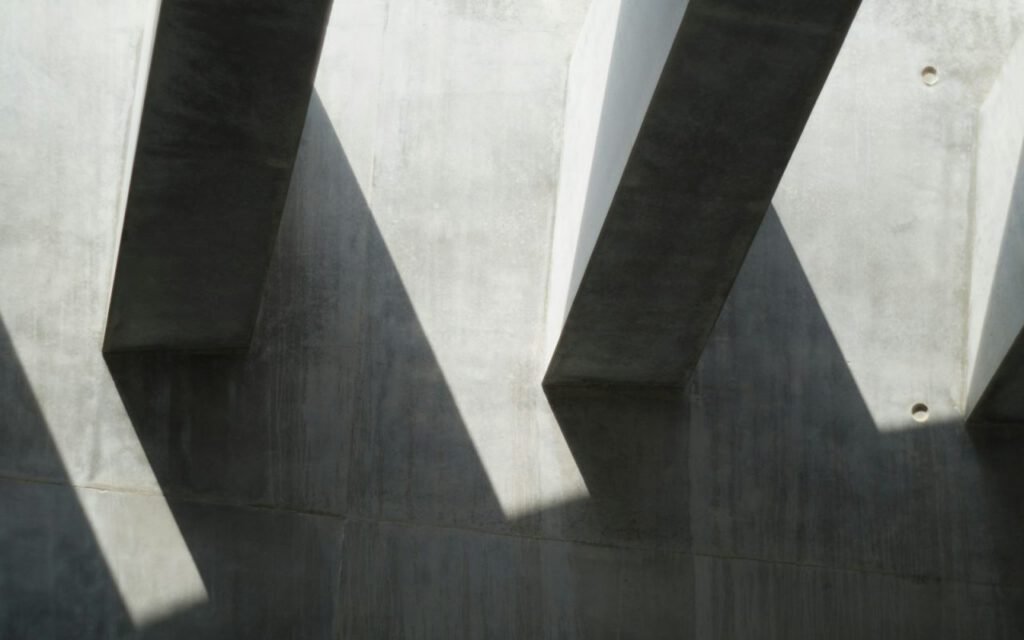
Architects who design for moving light tend to talk about time the way others talk about square feet. Which room gets the first sun? Where do you want to be at five in the afternoon in October? A breakfast nook facing east, a reading corner turned toward north light, a west-facing terrace for evening: these choices give a house a daily rhythm that no fixture can copy.
You do not need a new house to work this way. Start by watching your rooms for a full day. Note where the light lands and when. Then move furniture to meet it. A chair placed in a patch of morning sun becomes the best seat in the house. A mirror opposite a window can carry daylight deep into a hallway. Swapping heavy drapes for something lighter is often the cheapest change with the biggest effect.
Shadow as decoration
Once you start looking for shadows, you find that many of the most beautiful objects in a room are beautiful because of the shadows they throw. A woven pendant scatters dappled light across the ceiling. A plant near a window paints leaf shapes on the wall. A textured plaster finish only reveals its depth when light grazes across it at a low angle.
Designers sometimes call this grazing, and it is one of the simplest ways to bring a plain wall to life. Place a fixture close to the wall, aimed along it rather than straight at it, and every small ripple in the surface becomes visible. The same wall lit head-on would look flat and blank. Stone, brick, wood paneling and rough plaster all reward this approach.
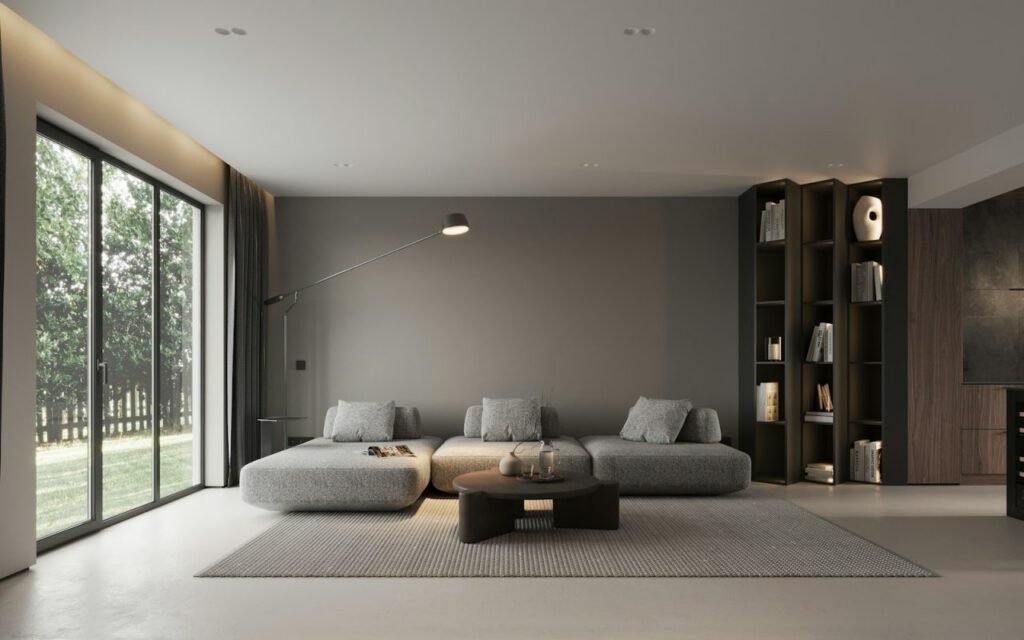
Restraint matters here. A room full of dramatic effects quickly becomes tiring. The best spaces I visited for this series had one or two moments of real contrast and a great deal of quiet in between. The darkness around those moments was not wasted space. It was what made them glow.
Key takeaway: before you add another fixture, ask where you want the room to be darker. The answer usually tells you where the light belongs.
Living with less light
None of this means living in the gloom. Safety comes first: stairs, entries and hallways need enough light to move around without risk, especially for children and older relatives. Kitchens and workspaces need clear, bright task lighting. The point is not to remove light but to stop spreading it evenly over everything.
The homeowners I met who had embraced this approach described a surprising side effect. They spend more time in their rooms in the evening. The living room feels like a place to settle rather than pass through. Dinner lasts longer. Conversation gets quieter and closer. One couple in Minneapolis told me they had removed half the recessed lights from their renovation plan and used the savings to buy two good lamps and a set of wooden blinds. Two years later, they said, it was the best decision they made.
Light is the first thing we notice about a room and the last thing most of us plan. Treat shadow as a partner rather than an enemy, and even an ordinary room can start to feel like one you will remember.
Written by
Iris Bell
Iris covers interiors, furniture and lighting — and keeps a very long list of chairs she wants.
13Articles
2026Writing since
Read next
InteriorsA Calm, Gray Living Room Designed Around One Enormous WindowInside a Hudson Valley house where the view is the only art on the walls. InteriorsSeven Ways to Style a Sideboard Like an Interior DesignerOdd numbers, varying heights and one living thing.
 InteriorsA Marble Kitchen That Feels Like a GalleryPale stone, hidden appliances and an island built for long dinners.
 InteriorsWarm Minimalism: The Kitchen Trend That Isn’t Going AnywhereOak, plaster and cream cabinets replace all-white and high-gloss.
 InteriorsA Hotel Lobby in Nashville Feels Like a Living Room for the CityWalnut, leather and a reception desk designed like a bar.
 InteriorsArt Takes Center Stage in a Dramatic Two-Story LobbyA suspended sculpture of 400 bronze rods anchors a new office building in Denver.
Start the conversation