



 ConnectionWhat Therapy Is Really Like (and How to Start)Finding a therapist, the first session and what to expect.
Connection Iris Cole6 min read
Why a Walk in Nature Helps
Green space, fresh air and a break from screens.
Iris Cole6 min read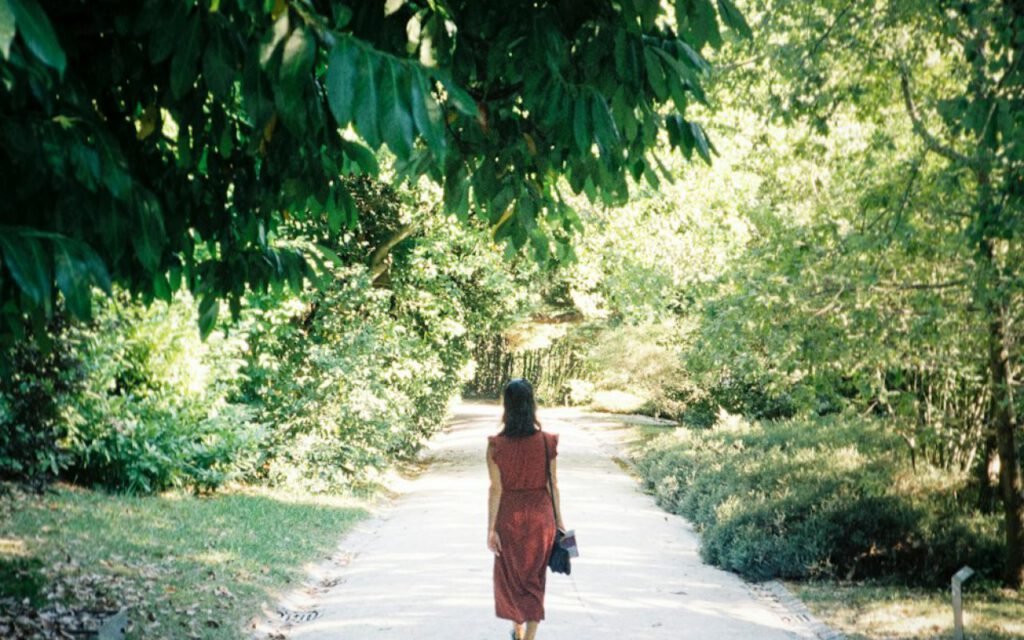

Written by
Iris Cole
Iris writes about sleep, rest and the radical act of doing nothing.
8Articles
2026Writing since
Many people find time in parks and green spaces relaxing and restorative. You may know the feeling yourself: you step off a busy sidewalk onto a tree-lined path, the traffic noise fades, the air smells a little different, and your shoulders drop an inch without your asking them to. A walk in nature offers green space, fresh air and a break from screens all at once. It is free, it needs no equipment beyond comfortable shoes, and it is available in some form to most Americans, whether that means a national park, a city greenway or a single row of oak trees along a quiet street. At Clear Mind, we think it is one of the simplest wellbeing habits there is.
What makes time outdoors feel good
There is no single reason a walk among trees feels restorative, and it is likely a mix of things working together. Gentle movement gets the body going without the intensity of a workout. Natural light, especially earlier in the day, helps many people feel more awake. Being outside often means being away from the phone, the inbox and the to-do list. And natural scenes, with their soft colors, moving leaves and changing skies, tend to hold attention in a relaxed way rather than demanding it the way a screen does.
There is also something about the scale of the outdoors. Standing under a tall tree or looking across a lake can make everyday worries feel a little smaller and more manageable. Many readers describe a walk in the park as the moment their thoughts finally “untangle.”
Nature doesn’t ask anything of you. That’s why it helps.
Our wellbeing editor

Start small
A 20-minute walk in a park counts. You do not need to plan a weekend backpacking trip or drive two hours to a trailhead. The habit grows from small, regular walks close to home, not from rare, heroic outings.
If you are not sure where to go, here are some easy places to look:
- Your nearest city or county park. Many towns have a park within a short drive or walk of most homes.
- Greenways and rail trails. Old rail lines turned into paved paths are flat, safe and often lined with trees.
- Riverfront and lakeshore paths. Water adds sound and movement that many people find calming.
- Botanical gardens and arboretums. Some offer free days or low-cost memberships.
- Cemeteries and campus grounds. Often quiet, green and open to respectful walkers.
- Your own block. Street trees, front gardens and a patch of sky still count.
Choose a time that fits your day. A morning loop before work, a lunch break walk or an after-dinner stroll each has its own rewards. What matters most is doing it often enough that it becomes part of your week.
Make it doable
Keep a pair of walking shoes by the door and a light jacket in the car. Check the weather and bring water on warm days. If you have a health condition or have not been active for a while, talk with your doctor about what kind of walking is right for you, and start gently.
Notice things
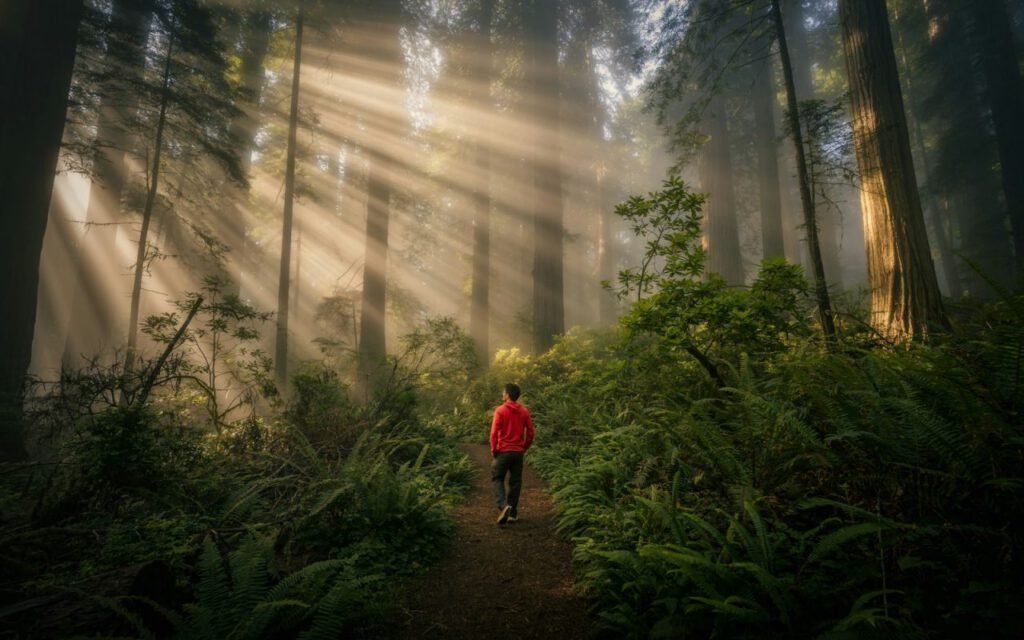
Look for five things you can see, hear and smell. This simple exercise turns an ordinary walk into a moment of mindfulness. Instead of replaying a meeting or planning dinner, you give your attention to what is actually around you.
Here is one way to try it on your next walk:
- See. Find five things you can see: the pattern of bark, a squirrel, a cloud, the color of a leaf, light on the water.
- Hear. Listen for sounds: birdsong, wind in the branches, footsteps on gravel, a distant dog, your own breath.
- Smell. Notice the scents: cut grass, damp earth after rain, pine needles, blooming flowers.
- Feel. Pay attention to the air on your skin, the ground under your feet and the swing of your arms.
- Return. When your mind drifts back to your worries, gently bring it back to one of your senses.
You do not need to do this for the whole walk. Even two or three minutes of noticing can shift how the rest of the walk feels. Some people like to try it at the start, as a way of “arriving” in the park.
Leave the screens behind
A walk outdoors is one of the easiest ways to take a break from screens, but only if the phone stays in your pocket. It is tempting to answer a few messages, check the news or snap photo after photo. Try to resist, at least for part of the walk.
If you need the phone for safety, keep it on silent or in airplane mode. If you love taking pictures, choose one or two moments to capture, then put it away. Some people like to leave headphones at home, too, so they can hear the world around them. Others enjoy a calm playlist or audiobook; there is no wrong choice, as long as the walk still feels like a break.
Walking with others, or alone
Nature walks can be social or solitary, and both have their place. Walking with a friend lets you talk side by side, which many people find easier than face-to-face conversation. Walking with family gets everyone outside and away from screens. Joining a local walking group, which many parks departments and libraries host, can help you meet neighbors and stay consistent.
Walking alone, on the other hand, gives you space to think, or not think, without having to make conversation. If you walk solo, especially on trails, let someone know where you are going and when you expect to be back, stay on marked paths and trust your instincts about safety.
Dog owners already know the secret: a pet that needs walking twice a day is one of the most reliable ways to get outside, whatever the weather.
Bringing nature closer to home
Some days, getting to a park is not possible. Weather, schedules, health or location can all get in the way. On those days, look for smaller doses of nature. Sit by an open window, step out onto a balcony, water a houseplant or eat lunch on a bench under a tree. Tending a few herbs in pots or a small garden bed can also offer some of the same calm.
If you live in a city, look for rooftop gardens, pocket parks and tree-lined side streets you can add to your daily routes. A slightly longer walk to the bus stop past a small park can become a mini nature break you take every day without extra planning.
Green space, fresh air and a break
A walk in nature is one of the most accessible ways to care for your wellbeing. Start with twenty minutes in a park close to home, leave the phone in your pocket, and practice noticing what you see, hear and smell. Over time, those walks can become a reliable place to reset, think clearly and simply enjoy being outside.
This week, pick one green space nearby and put a walk on your calendar. Then go, notice and come back a little lighter.
Key takeaway: Short, regular walks in nearby green spaces count. Leave the screens behind and let your senses lead the way.
General wellbeing information, not medical or mental-health advice. If you are in crisis in the US, call or text 988 to reach the Suicide & Crisis Lifeline.
Written by
Iris Cole
Iris writes about sleep, rest and the radical act of doing nothing.
8Articles
2026Writing since
Read next
ConnectionWhat Therapy Is Really Like (and How to Start)Finding a therapist, the first session and what to expect. MindfulnessBox Breathing: A Calm-Down Tool You Can Use AnywhereInhale four, hold four, exhale four, hold four.
 ConnectionStarting a Meditation Practice in Two Minutes a DaySit, breathe, notice, return.
 ConnectionFriendship Is Good for YouWhy connection matters and how to make time for it.
 Digital CalmGentle Yoga for Stress ReliefChild’s pose, legs up the wall and slow breathing.
 ConnectionJournaling Prompts for Hard DaysGentle questions when everything feels heavy.
 Digital CalmMindfulness at Work: Five Micro-BreaksTiny pauses that make long days easier.MindfulnessDancing in Your Kitchen CountsJoyful movement, no gym required.
 ConnectionThe Ten-Minute Walk ResetStep outside, breathe, notice — then come back.
2 Comments
Sharing this with my friends.
Saved this one for later. Really useful.