



 Calm at HomeA Bedroom Built for Better SleepCool, dark, quiet — and no phones.
Calm at Home Noah Reed6 min read
Five-Minute Journaling for a Clearer Mind
Three prompts that make busy days feel lighter.
Noah Reed6 min read

Written by
Noah Reed
Noah started meditating for two minutes a day in 2015 and hasn’t missed many since.
7Articles
2026Writing since
Writing for just a few minutes can help you notice your thoughts and feelings. That is the whole idea behind this practice, and it is also the reason so many of us give up on it. We picture a leather-bound journal, a quiet sunrise and three beautifully written pages every morning. Then real life arrives with a school drop-off, an overflowing inbox and a cold cup of coffee, and the journal goes back in the drawer. This guide is for everyone who has tried and stopped. Five minutes is enough. Honestly, some days two minutes is enough.
At Clear Mind, we hear from readers every week who want a simple way to feel a little less scattered. Journaling comes up again and again, not because it is magic, but because it is one of the few tools that costs almost nothing, works anywhere and asks only for a pen and a bit of honesty.
Why a few minutes is plenty
Long journaling sessions can be wonderful, and if you enjoy them, keep going. But for most busy people, the barrier is not a lack of interest. It is the feeling that journaling has to be a big project. When we shrink it down to five minutes, it becomes something we can fit between brushing our teeth and checking our phones, or into the last quiet moment before bed.
Short sessions also take the pressure off. You are not writing a memoir or solving every problem in your life. You are simply checking in with yourself, the way you might check the weather before heading out. What is going on inside today? What do I need? What can I let go of?

Many people find that putting a swirl of worries on paper makes them feel more manageable. A thought that seemed huge at 2 a.m. can look smaller and clearer once it is written down in plain words. That is not a promise or a treatment, just something many readers tell us they notice.
Three prompts
What’s on my mind? What am I grateful for? What’s one small thing I’ll do today? These three questions are the heart of our five-minute practice. Here is how to use each one.
What’s on my mind?
Start by emptying your head onto the page. Write whatever comes up, without judging it or organizing it. It might be a deadline, a conversation that bothered you, a song stuck in your head or the fact that you are tired. Give this one about two minutes. If you run out of things to say, write “I don’t know what else to write” until something new appears.
What am I grateful for?
Next, write down one to three things you appreciate today. They can be tiny. A warm shower. A text from a friend. The way the light looked on the kitchen floor. The goal is not to force cheerfulness or ignore hard feelings. It is simply to make sure the good things get noticed too.
What’s one small thing I’ll do today?
Finally, choose one small, doable action. Drink a glass of water. Take a 10-minute walk at lunch. Call your sister. Go to bed by 10:30. Keep it small enough that you are very likely to do it. Small wins add up, and they build trust with yourself over time.
A journal is a place where you don’t have to be impressive.
Dr. Maya Lin, psychologist (fictional)
We love this reminder from Dr. Lin, because it captures what journaling is really for. No one is grading your sentences. No one will read your list of worries unless you choose to share it. The page is yours, and it can hold the messy, unfinished version of your day.
No rules
Bullet points, scribbles or full sentences all count. Some people like writing in neat paragraphs. Others draw arrows, doodle in the margins or jot down single words. If you prefer typing, a notes app or a simple document on your laptop works just as well as paper. If you would rather speak than write, a voice memo can serve the same purpose.
A few gentle guidelines can help, though none of them are required:
- Keep your journal somewhere you will see it, like your nightstand or kitchen counter.
- Use a timer if five minutes feels open-ended. Stop when it rings, even mid-sentence.
- Do not reread right away. Give your entries a few weeks before looking back.
- Skip the fancy notebook if it makes you nervous about “ruining” it.
- If a prompt feels stale, swap it for a new one for a week.

Finding your five minutes
The best time to journal is whatever time you will actually use. Here are a few moments readers have told us work well for them.
- With your morning coffee or tea. Before you open your email, sit with your cup and the three prompts.
- On your lunch break. A midday check-in can help reset a stressful morning.
- In the car before you go inside. Parked in the driveway after work, take five minutes before walking into the house.
- Right before bed. Writing down tomorrow’s worries can make them easier to set aside for the night.
One reader, a nurse who works 12-hour shifts, told us she keeps a tiny notebook in her bag and writes three lines on her break, one for each prompt. “It’s not much,” she wrote, “but it’s the one part of the day that’s just for me.”

When journaling feels hard
Some days, the page will stay blank, and that is okay. Other days, writing may bring up feelings that are heavy or painful. If that happens, you can stop at any time. You might close the notebook, take a few slow breaths, step outside or talk with someone you trust.
Journaling is a helpful habit for many people, but it is not a substitute for professional care. If you notice that you are feeling low most days, that worries are getting in the way of sleep, work or relationships, or that you are having thoughts of harming yourself, please reach out to a doctor, a licensed therapist or a crisis line. Asking for support is a strong and sensible step.
Key takeaway: Five minutes, three prompts and no rules. That is all it takes to start a journaling habit that fits into a real, busy life.
Start tonight
If you would like to try this, you do not need to wait for a new notebook or a fresh Monday. Find any piece of paper, set a timer for five minutes and answer the three questions. What’s on my mind? What am I grateful for? What’s one small thing I’ll do today?
Then do it again tomorrow, or the next day. Miss a week? Simply start again. There is no streak to break and no wrong way to do it. Over time, many people find that these small entries become a quiet record of their lives, full of ordinary moments, small victories and lessons they would have otherwise forgotten. And on busy days, they become something even simpler: five minutes where you get to hear yourself think.
General wellbeing information, not medical or mental-health advice. If you are in crisis in the US, call or text 988 to reach the Suicide & Crisis Lifeline.
Written by
Noah Reed
Noah started meditating for two minutes a day in 2015 and hasn’t missed many since.
7Articles
2026Writing since
Read next
Calm at HomeA Bedroom Built for Better SleepCool, dark, quiet — and no phones. MindfulnessBox Breathing: A Calm-Down Tool You Can Use AnywhereInhale four, hold four, exhale four, hold four.
 Calm at HomeThe Case for a Phone-Free HourOne hour a day, no screens, real rest.
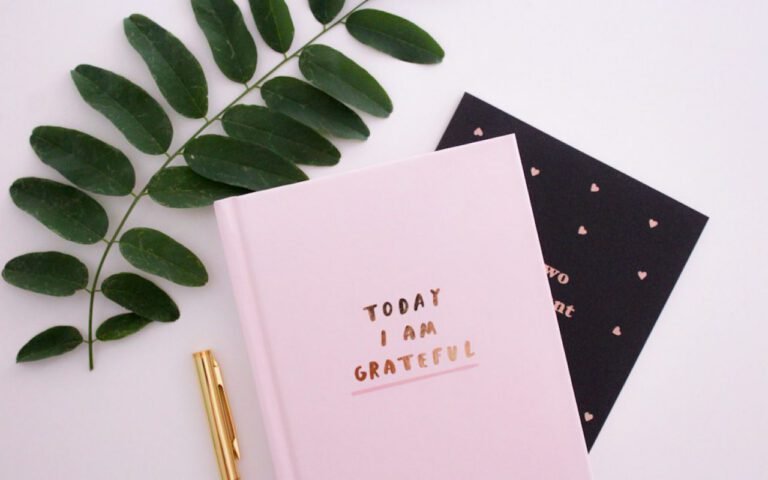 Calm at HomeBuilding a Gratitude Habit That SticksThree good things, every night.
 ConnectionStarting a Meditation Practice in Two Minutes a DaySit, breathe, notice, return.
 Calm at HomeHerbal Tea Rituals for Winding DownThe comfort of a warm cup — and the ritual around it.
 Calm at HomeMorning Light: A Gentle Start to the DayOpen the curtains before you open your phone.
 ConnectionJournaling Prompts for Hard DaysGentle questions when everything feels heavy.
 Calm at HomeCreating a Calm Corner at HomeA chair, a plant and a little quiet.
2 Comments
Thanks for explaining this so clearly.
Great reporting — please keep following this story.