


 Earth & ClimateInside Iceland’s New Age of EruptionsSince 2021, the Reykjanes Peninsula has erupted again and again. Geologists explain why.
Earth & Climate Owen Hale6 min read
What Glaciers Remember
Ice cores hold bubbles of ancient air — a time machine for climate.
Owen Hale6 min read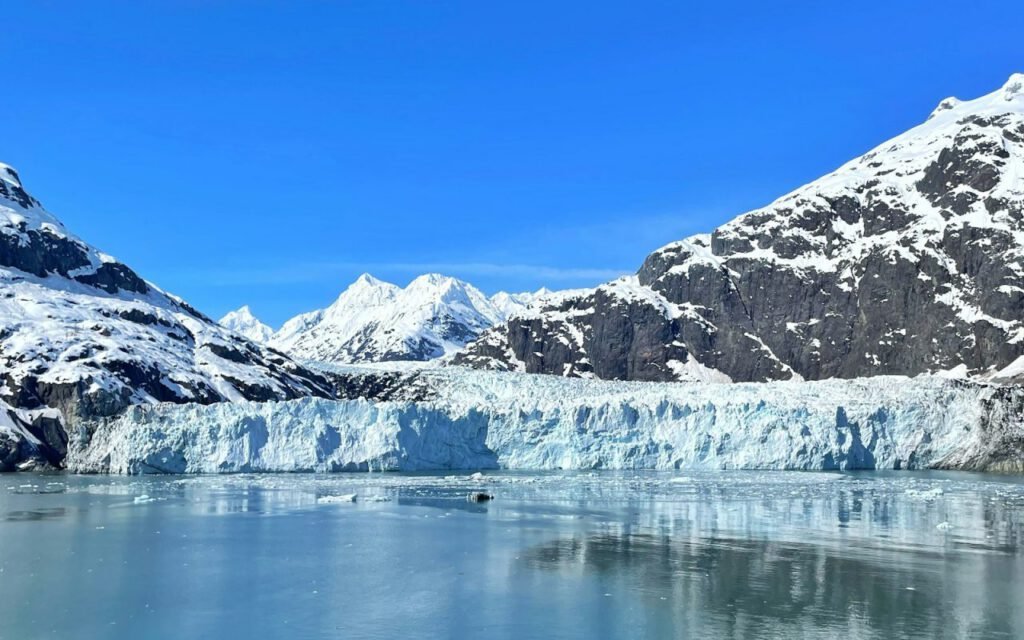

Written by
Owen Hale
Owen is a geologist who has stood a safe distance from four erupting volcanoes and one very angry glacier.
10Articles
2026Writing since
Stand on a glacier and you are standing on time itself. The ice beneath your boots may have fallen as snow before the first cities were built, before the woolly mammoths disappeared, even before modern humans spread across the continents. As snow piles up over thousands of years, it turns to ice and traps tiny bubbles of air. Those bubbles are samples of the sky from the day they were sealed, and scientists have learned to open them like letters from the deep past.
From snowflake to ice
A glacier begins with a simple imbalance: in some places, more snow falls each winter than melts each summer. The leftover snow builds up year after year. Under the weight of new layers, the fluffy flakes on the bottom get squeezed. Their delicate arms break off, the grains round out and pack together, and the snow gradually becomes a dense, grainy material called firn.
As firn is pressed deeper, the spaces between grains close. At a depth that can range from roughly 150 to more than 300 feet, depending on the climate, those spaces pinch off completely. The air that was moving freely through the snow is suddenly locked inside the ice as tiny bubbles. From that moment on, the bubbles are sealed time capsules, holding a sample of the atmosphere as it was when the ice closed around them.
Over time, the ice itself begins to flow under its own weight, creeping downhill like a very slow river. That is what makes a glacier a glacier rather than simply a pile of old snow.
Reading the layers
Scientists drill long cores and count yearly layers like tree rings. The drills are hollow tubes that cut a cylinder of ice a few inches across, which is then pulled up in sections and carefully labeled. In the coldest places on Earth, such as the high plateaus of Antarctica and the center of Greenland, these cores can stretch for more than two miles.
Near the top, the layers are easy to spot. Summer snow tends to look different from winter snow, with changes in texture, dust and chemistry, so researchers can sometimes count individual years by eye or with special light tables. Deeper down, where the ice has been squeezed thin, they rely on chemical measurements and computer models to keep track of time.
Ice cores are handled with almost obsessive care. They are stored in freezers well below zero, shipped in insulated containers and cut in clean rooms so that modern air and dust do not contaminate them. A single core can be studied by dozens of teams, each looking at a different clue.
Every ice core is a library. We’re still learning to read it.
Dr. Owen Hale, geologist
What the ice records
Beyond its air bubbles, a core holds a surprising amount of information. Researchers routinely look for:
- Chemical fingerprints of temperature. The balance of heavy and light forms of oxygen and hydrogen in the ice changes with how cold it was when the snow fell.
- Dust and sea salt. Windblown dust from distant deserts and salt from ocean spray reveal how windy and dry the world was.
- Volcanic ash and sulfur. Large eruptions leave sharp, datable markers that help line up cores from different places.
- Pollen and tiny particles. These hint at what plants grew nearby and how forests and grasslands shifted.
- Traces of human activity. More recent layers capture changes such as the rise and fall of lead pollution from older fuels.
Ancient air
Antarctic ice cores hold air from about 800,000 years ago, showing how carbon dioxide and temperature changed together. To get at that air, scientists crush or melt small samples of ice inside sealed chambers and measure the gases released. The result is a direct record of the atmosphere, not an estimate built from indirect clues.
What emerges is one of the most striking patterns in all of Earth science. Over hundreds of thousands of years, the planet has swung between long, cold ice ages and shorter, warmer periods. Through every one of those swings, carbon dioxide levels in the trapped air rose and fell closely in step with temperature. During the ice ages, carbon dioxide stayed low. During warm periods, it climbed higher, though for all that time it remained within a fairly narrow range.
The ice also shows that today’s carbon dioxide levels are higher than anything recorded in those 800,000 years of bubbles. That comparison is one reason ice cores are so important to climate research. They give scientists a long baseline against which to measure the changes happening now.

Matching cores around the world
One core is valuable, but many cores together are far more powerful. When a large volcanic eruption sends sulfur high into the atmosphere, traces of it can settle on ice sheets at both ends of the planet. Scientists use those shared markers like bookmarks, lining up cores from Greenland, Antarctica and mountain glaciers so they can compare the same moments in time. Where the records agree, confidence grows. Where they differ, researchers learn something about how climate changes played out differently from region to region, such as how the Northern Hemisphere sometimes warmed or cooled in sudden jumps.
Glaciers we can visit
You do not have to travel to Antarctica to see glaciers. Alaska is home to thousands of them, from tidewater glaciers that calve icebergs into the sea to valley glaciers you can view from a roadside pullout. Glacier National Park in Montana and Mount Rainier National Park in Washington offer more accessible views, along with ranger programs that explain how the ice has changed over the past century.
If you visit, remember that glaciers are hazardous places. Hidden cracks called crevasses can lurk beneath thin snow bridges, and ice near the front of a glacier can collapse without warning. Stay on marked trails, keep a safe distance from ice cliffs and join a guided trip with trained staff if you want to walk on the ice itself.
Many park visitor centers display photographs taken from the same spot decades apart. Side by side, the images often show a glacier pulling back up its valley, leaving behind bare rock and new lakes. Those pictures make an abstract topic feel very real.
Quick facts
- Glaciers store most of Earth’s fresh water
- Ice cores can contain volcanic ash layers
- Many mountain glaciers are shrinking
The shrinking of mountain glaciers matters well beyond scenery. In many parts of the world, including parts of the American West, glacier meltwater helps keep rivers flowing during late summer, when rain is scarce. As glaciers lose ice, that steady summer supply can become less reliable. Scientists are also racing to collect cores from smaller, lower glaciers before the oldest layers melt away and their records are lost for good.
A library worth protecting
An ice core looks like a plain cylinder of frozen water, but it is one of the richest archives on the planet. Every layer tells of a season, every bubble holds a breath of ancient air, and every ash band marks a moment when a volcano shook the world. Together they let us read Earth’s climate story far beyond the reach of written history or thermometers.
That library is still being read, and some of its shelves are melting. The more we learn from the ice, the better we understand how our planet’s climate has behaved in the past, and what that might mean for the future.
Key takeaway: glaciers remember. Their layers and trapped air bubbles give scientists a direct, year-by-year record of Earth’s climate that stretches back hundreds of thousands of years.
Written by
Owen Hale
Owen is a geologist who has stood a safe distance from four erupting volcanoes and one very angry glacier.
10Articles
2026Writing since
Read next
Earth & ClimateInside Iceland’s New Age of EruptionsSince 2021, the Reykjanes Peninsula has erupted again and again. Geologists explain why. Earth & ClimateCoral Reefs Cover Less Than 1% of the Ocean — and Shelter a Quarter of Its LifeWhy reefs matter and how scientists are helping them recover.
 Earth & ClimateHow Rainforests Make Their Own RainTrees breathe water into the sky — enough to shape the weather.
 Earth & ClimateLightning, ExplainedHotter than the surface of the Sun, and it strikes the Earth many times every second.
 Earth & ClimateHow Wind Turbines Turn Breeze Into PowerBlades, gearboxes and why bigger is better.
Start the conversation