

 Big IdeasBirds Are Dinosaurs. Really.Feathers, wishbones and a 150-million-year family tree.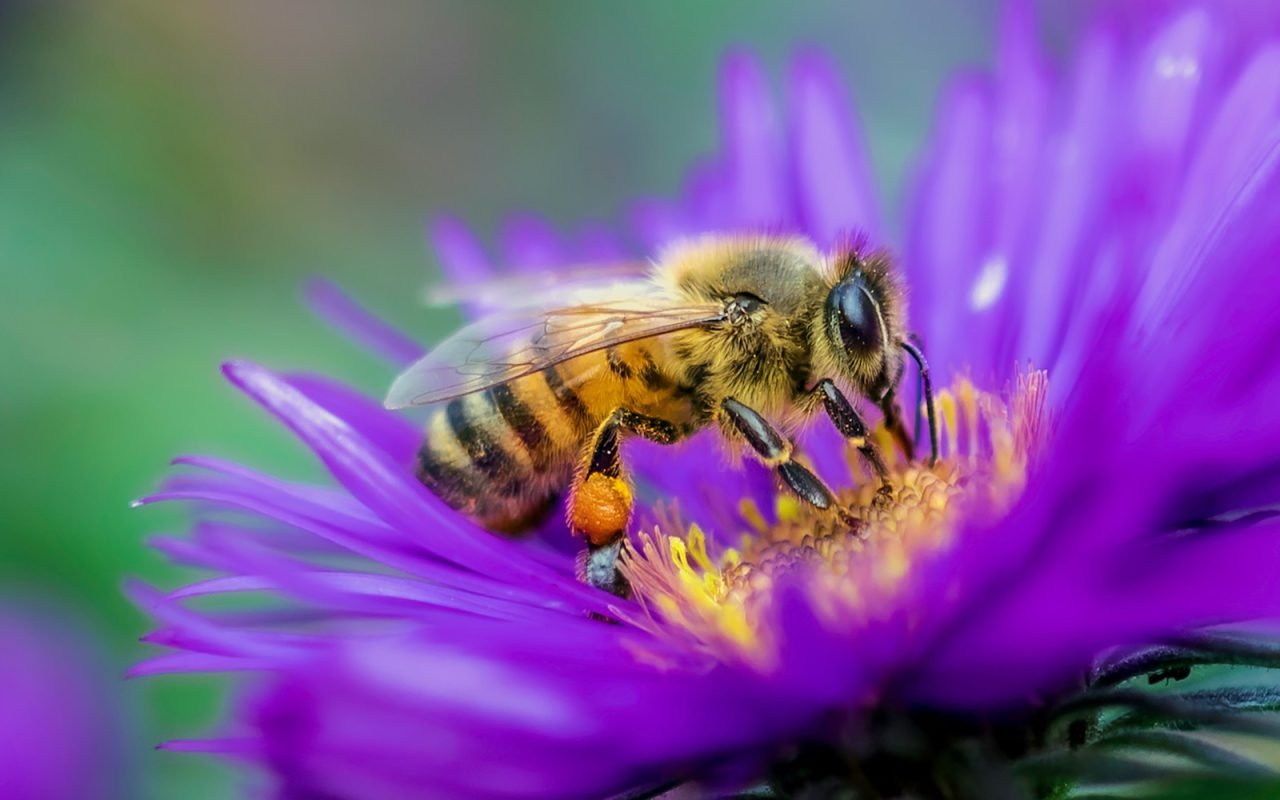
Life Priya Raman6 min read
Honeybees Dance to Give Directions
The waggle dance tells sisters where the flowers are — and how far.
Priya Raman6 min read
Written by
Priya Raman
Priya studied octopus behavior before switching to writing. She keeps a microscope on her kitchen table.
9Articles
2026Writing since
A forager bee who finds good flowers returns to the hive and performs a figure-eight “waggle dance.” In the dark, crowded space of the hive, surrounded by thousands of sisters, she runs forward in a straight line while shaking her body rapidly from side to side, then loops back around to start again. Her sisters press close, following her movements with their antennae. Within minutes, some of them leave the hive and fly directly toward a patch of flowers they have never visited, sometimes more than a mile away. The waggle dance tells sisters where the flowers are — and how far. It is one of the most remarkable forms of communication known in the animal world, and it took scientists decades to fully understand it.
Life inside a busy hive
To appreciate the dance, it helps to understand how a honeybee colony works. A healthy hive is a highly organized society with one queen, a few hundred to a few thousand males called drones in the warmer months, and a large workforce of female worker bees. Workers take on different jobs as they age. Young workers clean cells, feed larvae and build wax comb. Older workers guard the entrance, and the oldest become foragers, flying out to gather nectar, pollen, water and plant resins.
Foraging is demanding and risky work. A colony needs huge amounts of nectar to make honey for the winter and plenty of pollen to feed its growing young. Flowers bloom and fade quickly, and the best patches change from day to day. A colony that can share good locations quickly has a big advantage. That is exactly what the waggle dance does.

Reading the dance
The angle of the waggle run shows the direction relative to the Sun; its length shows the distance. That single sentence holds a surprising amount of information, so it is worth unpacking each part.
Direction
Inside the hive, the comb hangs vertically, and it is usually dark. The dancer uses gravity as a stand-in for the Sun. If she runs straight up the comb, it means the flowers lie in the same direction as the Sun. If she runs straight down, the flowers are directly away from the Sun. If her waggle run points at an angle to the right of straight up, the flowers are that same angle to the right of the Sun’s direction outside. Her sisters translate the angle from the vertical comb into a flight path across the landscape.
Because the Sun moves across the sky during the day, the angle changes too. Remarkably, dancers adjust their angle over time to account for the Sun’s movement, even if they have been inside the hive for a while.
Distance
The length of the waggle portion of the dance tells sisters how far to fly. A longer waggle run means a more distant food source. Researchers have found that bees seem to measure distance by how much visual motion they experience during the flight, a kind of built-in odometer based on the scenery streaming past their eyes. For flowers very close to the hive, bees often perform a simpler round dance that says, in effect, food is nearby, go look around.
Quality
The dance also hints at how good the food is. A forager who has found a rich, sugary source tends to dance more vigorously and repeat her dance more times. Followers also pick up the scent of the flowers on her body and taste samples of the nectar she shares. Together, those clues help the colony send more workers to the best patches.
It’s a map, a compass and a distance chart, all in one little dance.
Dr. Priya Raman, biologist
A Nobel discovery
Karl von Frisch decoded the dance and shared the 1973 Nobel Prize for his work on animal behavior. He spent years running careful experiments, training bees to visit feeding stations at known distances and directions and then watching how returning foragers danced. By moving the stations and comparing the dances, he worked out how angle and duration carried information.
His conclusions were controversial at first. Some scientists doubted that an insect could communicate something so abstract. Later researchers tested the idea in new ways, including tracking bees with radar and building small robotic bees that performed dances on the comb. Those experiments showed that recruits really do use the information in the dance, although they also rely on scent and their own experience when they get close to the flowers.
How bees find their way
The dance works because bees are skilled navigators. Here are some of the abilities that make it possible:
- A Sun compass: Bees track the Sun’s position and adjust for its movement through the day.
- Polarized light: They can detect patterns of polarized light in the sky, which helps them find the Sun’s direction even when it is behind clouds.
- Landmarks: Foragers learn trees, buildings and other features around the hive.
- Scent memory: Bees remember floral scents and use them to find flowers once they are close.
- Ultraviolet vision: They see patterns on petals that are invisible to people, which guide them to nectar.
Scientists continue to study how these abilities fit together inside a brain smaller than a grain of rice. The answers are helping researchers design simple navigation systems for small robots and drones.
Why it matters for people
Honeybees are among the most important pollinators for crops in the United States, from almonds in California to apples in Washington and blueberries in Maine. Many beekeepers move hives from farm to farm during the growing season to help pollinate these crops. Native bees, butterflies and other insects also do a great deal of pollination, often for wild plants and garden flowers.
Pollinators face many pressures, including habitat loss, disease, parasites and pesticide exposure. Scientists, farmers and gardeners are working on ways to help. Even a small garden can make a difference. Planting a variety of flowers that bloom from spring through fall, leaving some areas a little wild, providing a shallow dish of water with stones for landing and avoiding unnecessary pesticide use can all support local bees. Your local extension office or a nearby nursery can suggest plants that suit your region.
Key takeaway: The waggle dance shares direction, distance and quality in a few seconds, and it helps colonies gather the food that also pollinates many of our crops.
Quick facts
- A hive can hold tens of thousands of bees
- Bees see ultraviolet patterns on flowers
- Many crops depend on pollinators
- Only female worker bees forage and dance
- Foragers can fly more than a mile from the hive to find food
The next time you see a honeybee working through a flower bed, it may be following directions that a sister danced out in the dark only minutes earlier. Watch closely as she moves from bloom to bloom. Somewhere back at the hive, a small, buzzing crowd is waiting to learn what she found.
Read next
Big IdeasBirds Are Dinosaurs. Really.Feathers, wishbones and a 150-million-year family tree. LifeThe Toughest Animal on Earth Is Smaller Than a Grain of SandTardigrades can survive freezing, boiling and even space.
 LifeThree Hearts and Blue Blood: Meet the OctopusOne of the smartest animals on Earth is built nothing like us.
 Big IdeasDo Trees Talk? What the Science Really SaysFungal networks connect roots — but scientists are still debating what that means.
Start the conversation