



 Earth & ClimateInside Iceland’s New Age of EruptionsSince 2021, the Reykjanes Peninsula has erupted again and again. Geologists explain why.
Earth & Climate Owen Hale6 min read
Lightning, Explained
Hotter than the surface of the Sun, and it strikes the Earth many times every second.
Owen Hale6 min read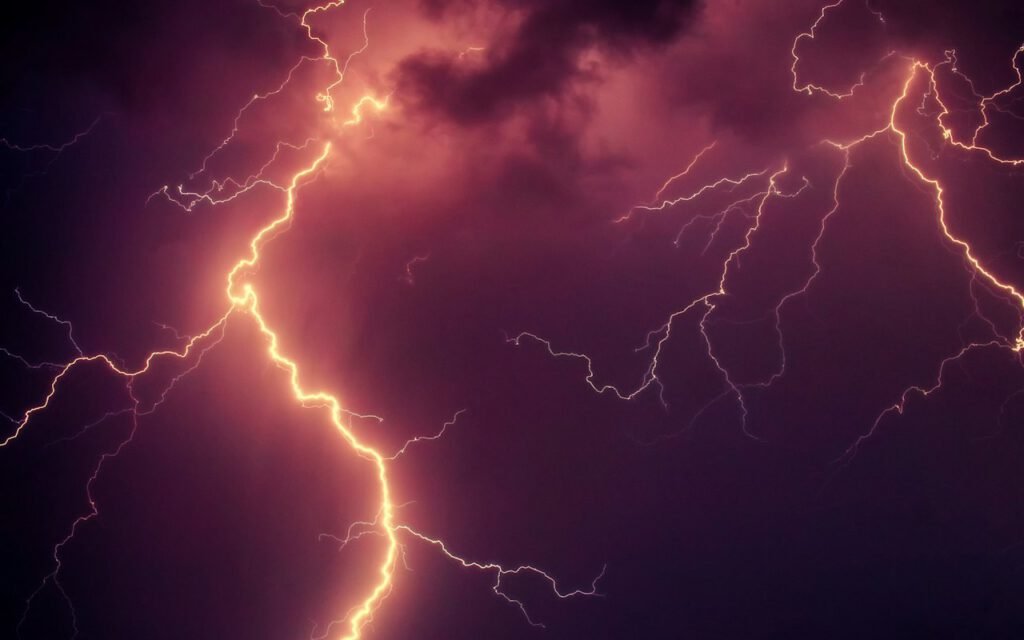

Written by
Owen Hale
Owen is a geologist who has stood a safe distance from four erupting volcanoes and one very angry glacier.
10Articles
2026Writing since
A single lightning bolt can heat the air around it to about 50,000°F — several times hotter than the surface of the Sun. It does this in a tiny fraction of a second, along a channel often no wider than a thumb, stretching for miles through the sky. Then it is gone, leaving behind a rumble that can roll across the landscape for half a minute. Lightning is one of the most familiar forces in nature and one of the most dangerous. Understanding how it works makes it both more fascinating and easier to stay safe around.
How it forms
Inside storm clouds, ice and water collide and separate electric charges until the difference becomes too big. That is the short version. The longer version starts with the kind of cloud that builds on a hot summer afternoon.
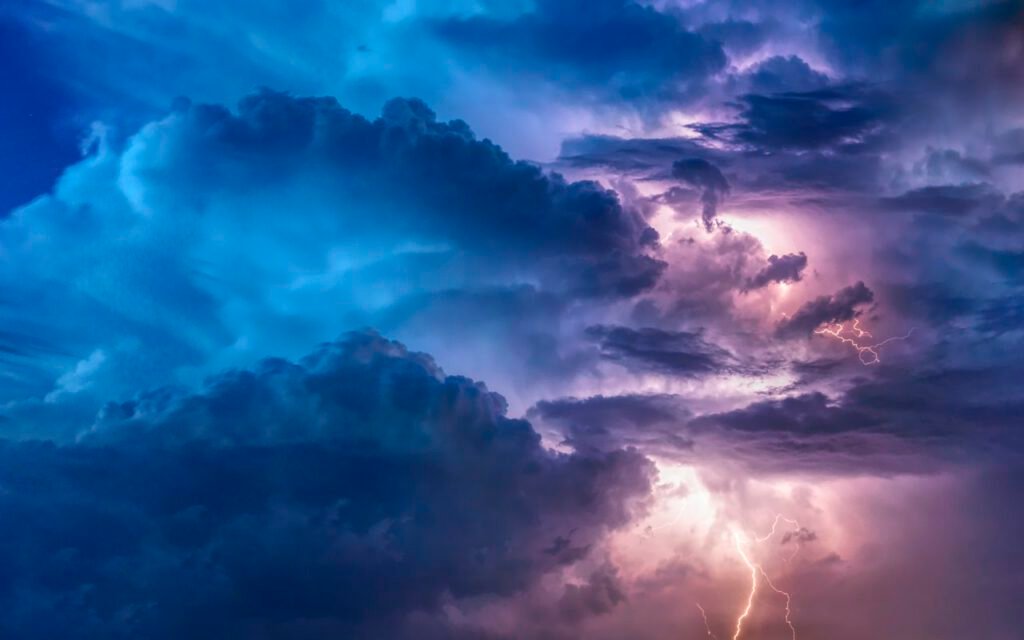
Thunderstorm clouds, called cumulonimbus clouds, can tower 40,000 feet or more into the sky. Inside them, powerful updrafts carry water droplets high into freezing air, where they turn into ice crystals, soft hail and snow pellets. All that material is constantly moving, rising and falling, and bumping into each other.
Those countless collisions transfer electric charge. In a typical storm, lighter ice crystals carried upward tend to become positively charged and collect near the top of the cloud. Heavier pellets tend to become negatively charged and gather in the middle and lower parts. The result is a giant natural battery, with opposite charges separated by miles of air.
The spark
Air is normally a good insulator, which means it resists the flow of electricity. But as the charge difference grows, the electric pressure eventually becomes too strong. A faint, branching channel of charged air, called a leader, begins inching downward from the cloud in a series of quick steps. As it nears the ground, objects below, such as trees, poles, buildings and sometimes people, send up their own small streamers to meet it.
When a leader and a streamer connect, the circuit is complete. A massive surge of current races along the channel, and that bright return stroke is the flash you see. Often several strokes follow the same path in quick succession, which is why lightning sometimes seems to flicker.
Thunder
The sudden heat makes air expand explosively. That shock wave is the thunder you hear. In a few millionths of a second, the air in the lightning channel is heated far beyond anything on Earth’s surface. It expands outward so fast that it creates a sonic boom.
Close by, thunder sounds like a sharp crack or a loud bang. Farther away, it becomes a long, rolling rumble. That is because sound from different parts of a miles-long lightning channel reaches you at slightly different times, and it echoes off hills, buildings and layers of air along the way.
Counting the storm
Light travels almost instantly over short distances, but sound is much slower, covering about a mile in roughly five seconds. That difference gives you a handy way to estimate how far away a lightning strike is. Count the seconds between the flash and the thunder, then divide by five. Ten seconds means the strike was about two miles away.
It is a useful trick, but not a safety license. Lightning can strike many miles from the storm that produces it, sometimes reaching out of a clear-looking patch of sky. If you can hear thunder at all, you are already within striking distance.
If you can hear thunder, you are close enough to be struck.
Dr. Owen Hale, geologist
Dr. Owen Hale, a geologist who spends much of his summer doing fieldwork in the Rocky Mountains, says that rule shapes every day his team spends outdoors. “We start early and plan to be off exposed ridges by early afternoon,” he said. “When we hear the first rumble, we stop what we’re doing and head down. The rocks will still be there tomorrow.”
Staying safe
Lightning safety comes down to a few simple, widely accepted rules. Weather services repeat them every summer because they work.
- When thunder roars, go indoors. The safest places are fully enclosed buildings with plumbing and wiring, or a hard-topped metal vehicle with the windows closed.
- Wait it out. Stay inside until at least 30 minutes after the last thunder you hear.
- Avoid open, high ground. Hilltops, ridges, open fields, beaches and the water are especially risky.
- Stay away from tall, isolated objects. A lone tree is a dangerous place to shelter.
- Indoors, avoid plumbing and corded electronics. Skip showers and baths during a storm and stay off corded phones.
- Check the forecast before outdoor plans. Afternoon storms are common in summer in much of the country.
Picnic shelters, tents, dugouts and open-sided pavilions do not offer real protection. Neither does lying flat on the ground. If you are caught outdoors with no safe shelter nearby, move away from water, high ground and tall objects, and keep moving toward safety rather than waiting in the open.
If someone is struck, call 911 right away. People struck by lightning do not carry an electric charge and are safe to touch, and prompt first aid, including CPR when trained, can save lives. Local emergency services and weather agencies offer more detailed guidance worth reviewing before storm season.

Planning around summer storms
In much of the country, summer thunderstorms follow a daily rhythm. Mornings are often calm, heat and humidity build through the day, and storms pop up in the afternoon and early evening. Hikers, golfers, swimmers, campers and youth sports coaches can use that pattern. Schedule outdoor activities for the morning, keep an eye on the sky as clouds start to tower, and decide ahead of time where you will go if a storm develops. Many families and teams also keep a weather alert app on hand and agree on a simple rule: the first rumble ends the game, no arguments. Having that plan in place before anyone is having fun makes it much easier to follow when the moment comes.
Myths and surprising facts
Lightning has inspired plenty of folklore. Some of it is wrong in ways that matter.
- Myth: lightning never strikes the same place twice. It often does. Tall buildings and towers can be struck many times a year.
- Myth: rubber tires protect you in a car. It is the metal body that carries the current around you, not the tires.
- Fact: most lightning never touches the ground. Much of it flashes within a cloud or between clouds.
- Fact: lightning helps fertilize the planet. The intense heat combines nitrogen and oxygen in the air into compounds that rain carries into the soil.
- Fact: volcanoes can make lightning. Colliding ash particles separate charges, creating dramatic storms inside eruption clouds.
Key takeaway: lightning is a giant spark from a cloud-sized battery. Enjoy it from indoors, and treat the first sound of thunder as your cue to move.
Quick facts
- When thunder roars, go indoors
- Count seconds from flash to thunder; every 5 seconds ≈ 1 mile
- Lightning can strike the same place twice
Watching a thunderstorm roll in can be one of summer’s great shows: the darkening sky, the cool gust of wind, the sudden flashes and the long, deep rumble. There is no need to fear it, only to respect it. Find a good window, stay safely indoors and enjoy one of nature’s most powerful displays from the best seat in the house.
Written by
Owen Hale
Owen is a geologist who has stood a safe distance from four erupting volcanoes and one very angry glacier.
10Articles
2026Writing since
Read next
Earth & ClimateInside Iceland’s New Age of EruptionsSince 2021, the Reykjanes Peninsula has erupted again and again. Geologists explain why. Earth & ClimateCoral Reefs Cover Less Than 1% of the Ocean — and Shelter a Quarter of Its LifeWhy reefs matter and how scientists are helping them recover.
 Earth & ClimateHow Rainforests Make Their Own RainTrees breathe water into the sky — enough to shape the weather.
 Earth & ClimateWhat Glaciers RememberIce cores hold bubbles of ancient air — a time machine for climate.
 Earth & ClimateHow Wind Turbines Turn Breeze Into PowerBlades, gearboxes and why bigger is better.
2 Comments
Thanks for explaining this so clearly.
Great reporting — please keep following this story.