

 CampingYour First Camping Trip: A No-Stress ChecklistTent, sleep system, kitchen and a backup plan.
Every climber remembers the first time they looked down from the top of a wall, hands chalky, heart pounding, rope snug at the waist. That moment is addictive, and it is the reason climbing has grown so quickly in towns far from any mountain range. But climbing is also a sport where small mistakes can have serious consequences. The good news is that the path to doing it safely is well worn. Most climbers start indoors at a climbing gym, where staff teach the basics, and they build from there one careful step at a time.
Start at a climbing gym
A climbing gym is the friendliest possible place to try the sport. The walls are designed for every level, the floors are padded, the gear is available to rent and the staff have seen thousands of nervous first-timers. You can walk in on a Tuesday evening with sneakers and a water bottle and leave two hours later having climbed your first route.
Most gyms offer two main styles. Bouldering means climbing short walls without ropes over thick foam pads, usually no higher than about 15 feet. Roped climbing uses taller walls, a harness and a partner on the ground who manages the rope. Many beginners start with an intro session that covers both, and a day pass with rental shoes and harness usually runs between $25 and $40.
Gyms are also social. You will meet people at every level, many of whom are happy to share tips, and you will quickly find partners who climb at a similar pace. That network becomes important later, when you want to try climbing outside.

Learn from pros
Take a lesson before climbing outside, and never learn ropes from videos alone. Online clips can be a great refresher, but they cannot watch your hands as you tie in, catch the half-finished knot or tell you that your belay device is loaded backward. A certified instructor can, and that feedback is what turns a new climber into a safe one.
Most gyms require a belay test before you can climb on ropes without staff supervision. Take it seriously, even if it feels like a formality. You will learn how to put on a harness correctly, tie the figure-eight follow-through knot, load and operate a belay device, and give and take the clear verbal commands that keep partners on the same page.
What a good first lesson covers
- Putting on and adjusting a harness so it sits above the hip bones.
- Tying the figure-eight follow-through and checking it with a partner.
- Belaying: taking in slack, holding a fall and lowering smoothly.
- Standard commands like “on belay,” “climbing” and “take.”
- Basic footwork, which matters far more than arm strength.
- How to fall safely when bouldering.
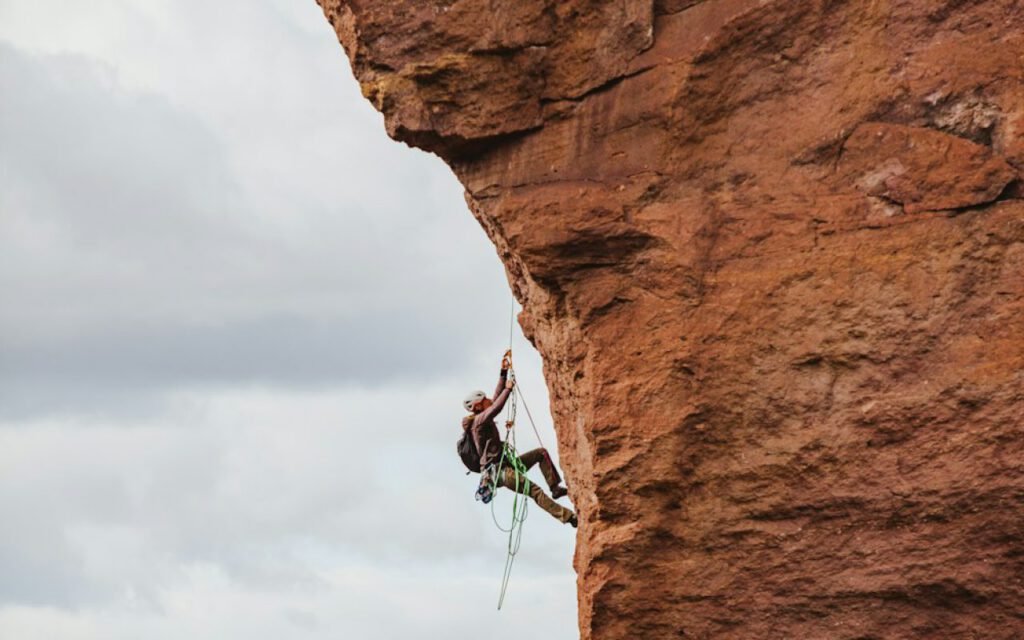
When you are ready to move outdoors, the safest route is a guided day with a certified guide or a course from an established climbing school. Outdoor climbing adds anchors, rock quality, weather and approach hikes to the picture, and each of those deserves expert teaching. Expect to pay a few hundred dollars for a private day, or less for a group clinic.
The knots you must know
You do not need a library of knots to start climbing. You need one knot tied perfectly every time. The figure-eight follow-through is the standard tie-in knot because it is strong, easy to inspect and hard to tie incorrectly once you know what a good one looks like. A properly dressed figure eight has neat, parallel strands and a tail at least a few inches long.
Many instructors also teach a stopper knot at the end of the rope. It is a simple backup that can keep the rope end from slipping through a belay device if a route is longer than expected. Your instructor will show you when and how to use it, and it is a habit worth building from day one.
Practice at home with a short length of rope until you can tie your knot with your eyes closed. Then keep looking at it anyway. Familiarity is good. Complacency is not.
Check everything
The partner check is the most important ten seconds in climbing.
Climbing instructor (fictional)
Partners check each other’s harness and knot before every climb. Not just the first climb of the day. Every single one. The partner check is a short routine that takes seconds and catches the most common, most avoidable errors in the sport. Experienced climbers do it without thinking, which is exactly the point.
A typical partner check walks through the system from top to bottom:
- Harness: buckles doubled back or secured, waist belt snug, leg loops not twisted.
- Knot: figure eight tied through both tie-in points, dressed and with a healthy tail.
- Belay device: rope loaded correctly, carabiner locked and attached to the belay loop.
- Rope end: a stopper knot or a check that the rope reaches the ground when lowering.
- Communication: both partners agree on commands before leaving the ground.
Key takeaway: Make the partner check a non-negotiable habit, even with friends you have climbed with for years. It is fast, free and it works.

Building strength and good habits
New climbers tend to pull with their arms and forget their feet. The fastest way to improve is the opposite: look down, place your feet carefully and push with your legs. Keep your arms straight when you can and let your skeleton, not your biceps, hold your weight. You will climb longer and feel better the next day.
Rest days matter, too. Fingers and tendons adapt more slowly than muscles, and many common climbing injuries come from doing too much too soon. Two or three sessions a week is plenty for a beginner. If something hurts in a sharp or lasting way, stop and talk to a medical professional rather than climbing through it.
Finally, respect the outdoors when you get there. Stay on established trails to the crag, pack out everything you bring and follow any posted closures, which sometimes protect nesting birds of prey. Climbing access depends on climbers being good neighbors.
What to expect from your first month
Most new climbers notice their forearms first. That tight, pumped feeling after a few routes is normal, and it fades as your body adapts and your technique improves. Expect to feel clumsy on your first visits and surprisingly capable by your third or fourth week. Progress in climbing tends to come in bursts, often right after a session where nothing seemed to work.
Keep a simple journal of the routes you try, how they felt and what you learned. It is motivating to look back after a month and see how far you have come. Ask staff or more experienced climbers to watch you on a route that gives you trouble. A single suggestion about where to place a foot or how to shift your hips can unlock a climb that felt impossible a minute earlier.
Above all, stay curious and stay humble. The best climbers in any gym are usually the ones still asking questions, still checking their partners and still taking lessons long after they could get away without them.
Your first steps up
Climbing rewards patience. Start in a gym, take a real lesson, learn one knot well and never skip the partner check. Then, when you feel ready for real rock, hire a guide or join a course and let someone experienced show you the ropes in the most literal sense. The view from the top is worth every careful step it takes to get there.
Outdoor activities carry real risks. Check conditions, tell someone your plan and know your limits.

Written by
Mira Shah
Mira climbs, coaches beginners and believes in the partner check above all else.
8Articles
2026Writing since
Read next
CampingYour First Camping Trip: A No-Stress ChecklistTent, sleep system, kitchen and a backup plan. CampingKayaking for Beginners: Calm Water FirstPaddle basics, life jackets and picking the right day.
 CampingStargazing at Camp: What to Look For TonightThe Milky Way, planets and meteor showers.
 CampingHammock Camping: Sleep Among the TreesStraps, bug nets and the diagonal lie.
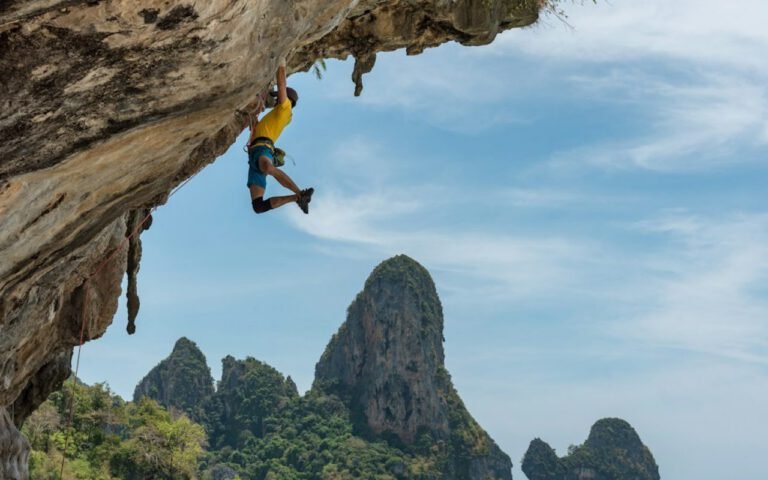 ClimbingClimbing Gyms: A Guide to Your First VisitShoes, chalk and bouldering grades.
 CampingWinter Camping BasicsStay dry, eat often and bring a warm water bottle.
 CampingCampfire Cooking: Five Easy MealsFoil packets, skillet breakfasts and s’mores, upgraded.
 CampingCanoe Camping: Paddle In, Camp OutPacking, portages and calm-water routes.ClimbingBouldering Grades, ExplainedV0 to V-whatever — and why grades vary.
2 Comments
Sharing this with my friends.
Saved this one for later. Really useful.