



 CampingYour First Camping Trip: A No-Stress ChecklistTent, sleep system, kitchen and a backup plan.
Camping Cal Brooks6 min read
Hammock Camping: Sleep Among the Trees
Straps, bug nets and the diagonal lie.
Cal Brooks6 min read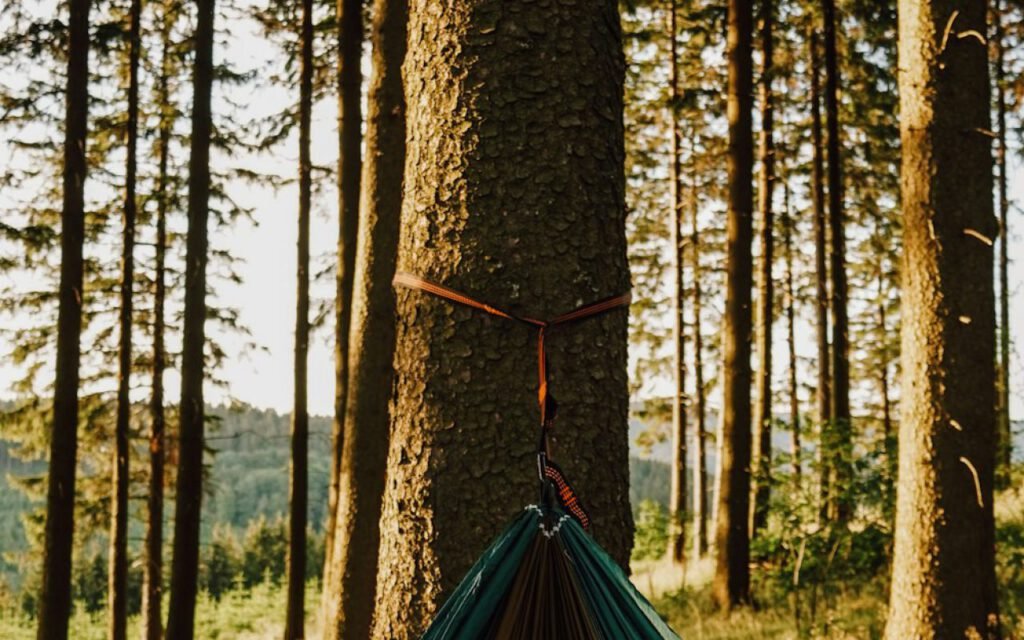

Written by
Cal Brooks
Cal has guided trips for 18 years and still packs too many snacks on purpose.
10Articles
2026Writing since
The first night I spent in a hammock, I was sure I had made a mistake. I lay straight down the middle like a banana, my back curved and my feet higher than my head, and I barely slept. The second night, a friend showed me one small adjustment, and I woke up more rested than I ever had on a sleeping pad. Hammock camping can be wonderfully comfortable, with the right setup. It is light, quick to pitch and lets you camp over roots, rocks and slopes that would ruin a tent site. Here is how to get it right from your first night.
Why campers love hammocks
The appeal starts with comfort. A well-hung hammock has no pressure points, no lumpy ground and no rocks under your hip. Many hammock campers say they sleep better outdoors than they do at home. There is also something special about drifting off with a gentle sway and waking up surrounded by trees instead of tent walls.
Hammocks are also flexible. In wooded areas, you can set up almost anywhere with two healthy trees the right distance apart, even on uneven or rocky ground. Setup takes only a few minutes once you have practiced, and many complete hammock systems weigh about the same as a lightweight backpacking tent.
They are not perfect for every trip. Treeless deserts, high alpine areas above tree line and some campgrounds that prohibit hanging from trees are better suited to a tent. Always check the rules for the park or forest where you plan to camp.
Protect trees
Use wide straps, not rope, to avoid damaging bark. Thin rope or cord concentrates all of your weight on a narrow line, which can cut into the bark and harm the living layer just underneath. Wide polyester tree straps, usually about one inch across or wider, spread the load and protect the tree. Many land managers require them.
Choosing the right trees matters as much as the straps. Look for healthy, living trees at least six inches in diameter, and avoid any that are dead, leaning or damaged. Check above you for dead branches, which campers often call widowmakers, that could fall in the wind. Never hang from signposts, shelters or other structures.
A good rule of thumb is to look for trees about 12 to 15 feet apart. That spacing gives most hammocks the right sag without straining your straps. Practice in a backyard or local park before your first trip so you can find the right distance and height without guesswork.

Lie diagonally
The secret to hammock sleep is the diagonal.
Our gear editor
A diagonal lie keeps your back flatter. Instead of lying straight along the centerline, shift your head a little to one side and your feet to the other, so your body angles across the fabric. The hammock flattens out beneath you, your spine stays straighter and you can even sleep on your side. This one change is the difference between a restless night and a great one.
The diagonal works best when the hammock has a deep, relaxed sag. Many beginners hang the hammock too tight, like a clothesline, which makes it narrow and tippy. Aim for straps that run at roughly a 30-degree angle from the tree. The hammock should look like a gentle smile, not a straight line.
A few comfort tips
- Hang the foot end slightly higher than the head end so you do not slide toward the middle overnight.
- Keep the hammock low, about chair height, so getting in and out is easy and any slip is harmless.
- Use a small pillow or a stuff sack filled with clothes for neck support.
- Keep a water bottle and headlamp in a ridgeline organizer within reach.
Bug nets, tarps and staying warm
A hammock alone is just the start. For a comfortable night outdoors, you need protection from insects, weather and cold air. Many camping hammocks come with a built-in bug net, which is a must in summer, especially near lakes and in the forests of the East and Midwest. If yours does not, add a separate net that zips or cinches closed around the hammock.
A tarp hung on a line above the hammock keeps you dry in rain and blocks wind. Pitch it so it extends past both ends of the hammock, and lower the edges when weather threatens. Run short drip lines, small pieces of cord tied to your straps, so rainwater drips off before it can run down into your bed.
Cold is the challenge new hammock campers rarely expect. Air moving under the hammock pulls heat away from your back, and a sleeping bag offers little warmth where it is compressed beneath you. Hammock campers solve this with an underquilt, an insulated layer that hangs beneath the hammock, or with a sleeping pad placed inside. Even on mild summer nights, some insulation underneath makes a big difference.
Key takeaway: Plan for three things beyond the hammock itself: bugs, rain and cold from below. Solve those, and you will sleep soundly almost anywhere.

Leave no trace and camp courteously
Hammocks can be one of the lowest-impact ways to camp because they do not crush vegetation the way a tent does. To keep it that way, set up in established campsites when possible, use wide straps on sturdy trees and take everything down without leaving a mark. Avoid hanging in fragile areas, and never cut branches to make space.
Be a good neighbor at shared campgrounds, too. Do not string a hammock across a trail or a common area, and leave enough room for others to walk around your setup. Here is a short setup routine I follow every time:
- Check the area for dead branches and confirm that hammocks are allowed.
- Wrap straps around two healthy trees about 12 to 15 feet apart.
- Hang the hammock with a relaxed sag and the foot end a bit higher.
- Pitch the tarp above it and run drip lines on the straps.
- Add the underquilt or pad, then test it by sitting in the middle first.
Packing light for a hammock trip
One of the best things about hammock camping is how compact the whole kit can be. My full setup, including the hammock, straps, bug net, tarp and underquilt, fits into a stuff sack about the size of a loaf of bread. Because you are not carrying tent poles or a ground cloth, you can often save weight or use the extra space for a warmer layer or more food.
Pack your system so the pieces come out in the order you need them. I keep the tarp on top so I can pitch it first if rain is falling when I reach camp. The hammock and bug net stay together, and the underquilt rides in a waterproof bag at the bottom. A small repair kit with spare cord and a few safety pins rounds things out.
Before every trip, check your straps and the stitching where the suspension meets the hammock. Gear that holds your weight off the ground deserves a careful look, and worn parts should be replaced, not patched.
Give it a night or two
Hammock camping has a short learning curve, but it rewards practice. Try a night in the backyard or at a drive-in campsite before taking it into the backcountry. Play with the sag, the height and your diagonal angle until it feels right. Once you find your setup, you may never want to go back to sleeping on the ground.
Outdoor activities carry real risks. Check conditions, tell someone your plan and know your limits.
Written by
Cal Brooks
Cal has guided trips for 18 years and still packs too many snacks on purpose.
10Articles
2026Writing since
Read next
CampingYour First Camping Trip: A No-Stress ChecklistTent, sleep system, kitchen and a backup plan. HikingLeave No Trace: Seven Principles Every Hiker Should KnowPlan ahead, pack it out, respect wildlife.
 CampingKayaking for Beginners: Calm Water FirstPaddle basics, life jackets and picking the right day.
 CampingRock Climbing: How to Start SafelyGyms, guides and the knots you must know.
 CampingStargazing at Camp: What to Look For TonightThe Milky Way, planets and meteor showers.
 HikingSnowshoeing: Winter Hiking Made EasyIf you can walk, you can snowshoe.
 HikingHow to Read a Topographic MapContour lines, scale and the compass basics.
 CampingWinter Camping BasicsStay dry, eat often and bring a warm water bottle.
 HikingSummit Fever: Knowing When to Turn AroundThe smartest hikers set a turnaround time.
Thanks for explaining this so clearly.
Great reporting — please keep following this story.