

 StrengthStrength Training 101: The Five Moves That MatterSquat, hinge, push, pull and carry — a full-body plan in five exercises.
Strength Maya Brooks7 min read
No Gym? The 20-Minute Home Workout
Bodyweight only, no equipment, no excuses.
Maya Brooks7 min read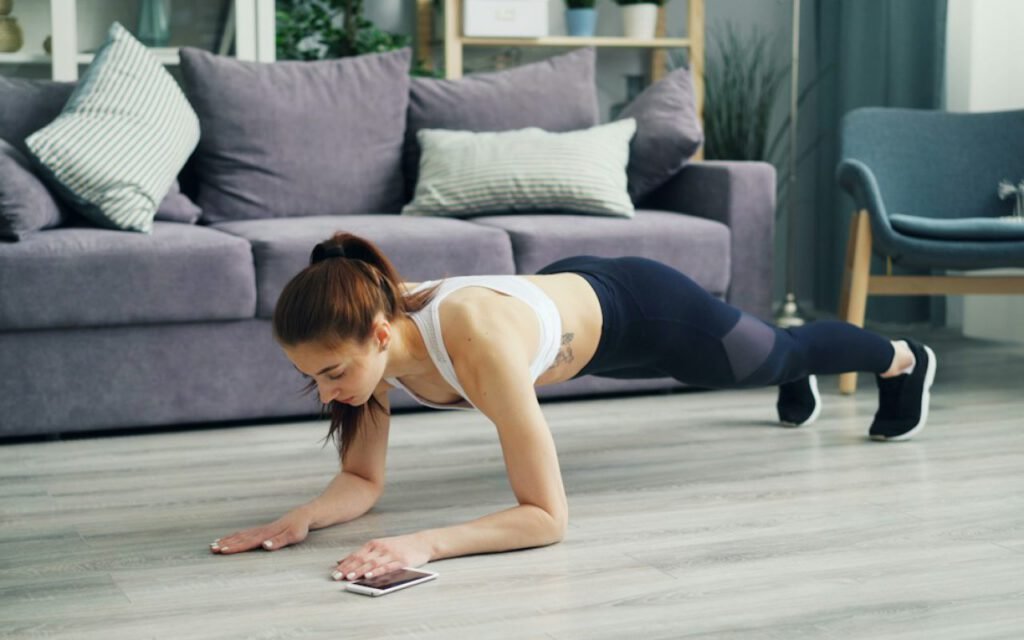

Written by
Maya Brooks
Maya is a certified strength coach who believes everyone should own one kettlebell and one good playlist.
20Articles
2026Writing since
A living room and twenty minutes are enough for a full-body workout. No membership card, no commute, no waiting for the bench, and no special equipment beyond the floor under your feet and a staircase you already climb every day. For anyone who has ever skipped a workout because the gym felt too far away, too crowded or too expensive, the home circuit is a quiet revolution. It fits into a lunch break, a nap time or the gap between dinner and the evening news, and it works.
Bodyweight training is not a lesser version of “real” exercise. Your muscles respond to effort and challenge, not to the logo on a machine. Squats, push-ups and planks have been staples of athletic training for generations precisely because they are simple, scalable and hard to argue with. This plan gives you a complete 20-minute session, shows you how to make it tougher as you get stronger, and helps you build a habit that lasts longer than a burst of New Year’s motivation.
Set up your space
Before the first rep, take two minutes to clear a little floor space. You need an area roughly the size of a yoga mat with some room to swing your arms. Move the coffee table, push the dog bed aside and check that the floor is not slippery. A rug or mat makes kneeling and lying down more comfortable, and a pair of supportive sneakers helps on hard floors, though some people prefer bare feet on carpet.
You will also want a sturdy stair or a low, stable step for step-ups. The bottom step of a staircase is ideal. Avoid chairs that can tip or slide, and stay away from anything with wheels. Finally, set up a timer. A phone stopwatch works, and so does any free interval app that beeps at the end of each work and rest period.
Warm up first
Spend three to four minutes getting warm before the circuit. March in place, swing your arms in big circles, do a few slow bodyweight squats and some gentle hip circles. The goal is to raise your heart rate a little and get your joints moving through their full range before you ask them to work hard.
The circuit
Squats, push-ups (on your knees is fine), glute bridges, planks and step-ups on a sturdy stair. That is the whole menu. Together, these five moves cover your legs, hips, chest, shoulders, arms and core. Do each one for 40 seconds, rest for 20 seconds, then move to the next. One trip through all five moves takes five minutes. Three rounds, plus a warm-up and a short cooldown, fills your 20 minutes.
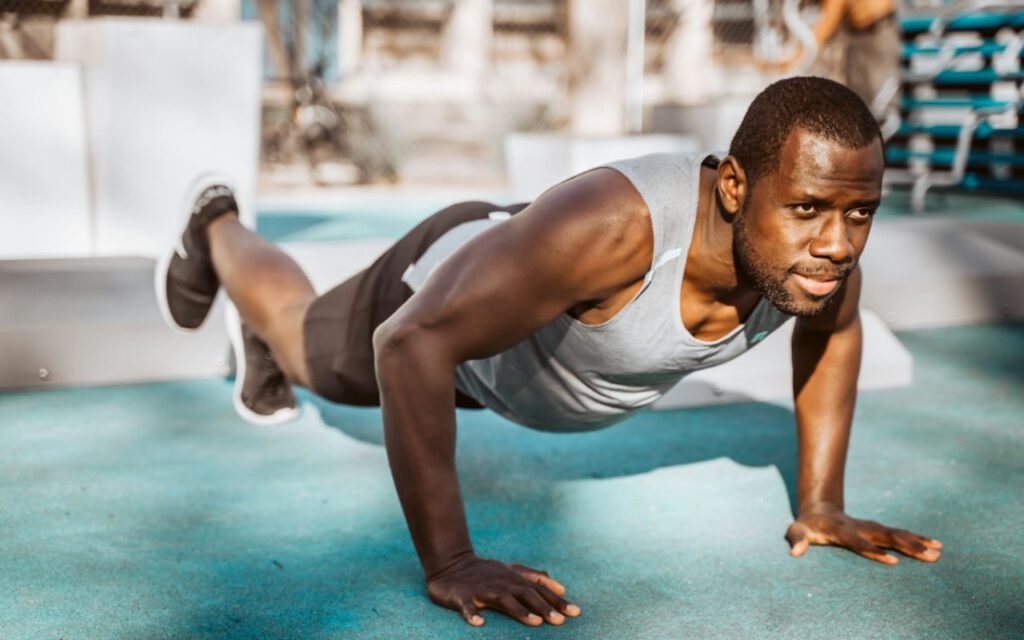
- Squats. Feet about hip-width apart, sit your hips back as if reaching for a chair, keep your chest up and stand tall again. Go as low as feels comfortable.
- Push-ups. Hands slightly wider than your shoulders, body in a straight line from head to knees or heels. Lower your chest toward the floor and press back up.
- Glute bridges. Lie on your back with knees bent and feet flat. Press through your heels to lift your hips, squeeze at the top and lower slowly.
- Planks. Forearms on the floor, elbows under shoulders, body long and straight. Breathe steadily and hold. Drop to your knees if your lower back starts to sag.
- Step-ups. Step up onto the stair with one foot, bring the other foot up, then step back down. Alternate the leading leg, and hold the rail if you need it.
Move at a pace where you can keep good form for the full 40 seconds. If your technique starts to slip, slow down or pause for a breath. Quality reps beat fast, sloppy ones every time, and they are much kinder to your joints.
Make it harder over time
Add reps, slow down each rep or add a backpack with books. Those three tools will keep a bodyweight routine challenging for months. The principle behind them is called progressive overload: to keep getting stronger, you gradually ask your body to do a little more than it did last time.
Your body doesn’t know the difference between a dumbbell and a backpack full of books.
Maya Brooks, certified strength coach
Coach Maya Brooks recommends changing only one thing at a time. If you managed 14 squats in 40 seconds last week, aim for 15 or 16 this week. Once that feels steady, try slowing each squat down so it takes three seconds to lower and one second to rise. Your rep count will drop, but the work will feel harder, because your muscles spend more time under tension. When slow reps feel manageable, load up a backpack with a few hardcover books, cinch the straps tight and wear it for squats, step-ups and bridges.
Progressions for each move
Push-ups can move from a wall, to a kitchen counter, to your knees, to your toes. Glute bridges can become single-leg bridges. Planks can grow from 20 seconds to the full 40, then to side planks. Step-ups get harder with a higher step or a slower lowering phase. Each move has a ladder, and you can climb it at your own speed.

Build the habit
The best workout plan is the one you actually do, and home workouts have one big advantage: there is almost nothing standing between you and the first rep. To make the most of that, attach your session to something you already do every day. Some people work out right after their morning coffee, others as soon as they close the laptop at the end of the workday. Pick a time and protect it the way you would protect a meeting.
Aim for two or three sessions a week to start, with at least one rest day between them. That is enough to make steady progress while giving your muscles time to recover. If you use the Stride strength plan, you can slot this circuit into any of its home days and log it alongside your walks and runs. Combined with some brisk walking, it can help you work toward the commonly recommended 150 minutes of moderate activity each week shown in our weekly chart.
Key takeaway: Consistency beats intensity. Twenty focused minutes, three times a week, will do far more for you over a year than one heroic session followed by a month on the couch.
Try this
Ready to start? Keep it simple for your first week and let the routine teach you what feels easy and what feels hard.
- Do 3 rounds of 40 seconds on, 20 seconds off
- Clear a little floor space first
- Track your reps to see progress
Tracking matters more than most people expect. Keep a notebook by your mat or a note on your phone, and write down how many reps you completed for each move in each round. After a few weeks, flip back to the first page. Seeing your squat count climb from 12 to 18, or your plank go from wobbly to steady, is one of the most motivating things in fitness. It turns a vague feeling of “I think I’m getting stronger” into proof.
No gym, no problem
A home workout will never come with a smoothie bar or a wall of mirrors, but it does come with something more valuable: no excuses. Rainy days, busy weeks, sick kids and tight budgets all lose their power when the gym is the floor of your living room. Start with three rounds, take your rest seriously, cool down with a few gentle stretches, and let the small wins add up. In a couple of months, you may be the one telling a friend that twenty minutes and a backpack full of books really is enough.
General information, not medical advice. Check with your doctor before starting a new exercise or nutrition plan, especially if you have a health condition.
Written by
Maya Brooks
Maya is a certified strength coach who believes everyone should own one kettlebell and one good playlist.
20Articles
2026Writing since
Read next
StrengthStrength Training 101: The Five Moves That MatterSquat, hinge, push, pull and carry — a full-body plan in five exercises. StrengthHow to Deadlift SafelyThe king of strength exercises, step by step.
 StrengthGetting Your First Pull-UpA step-by-step plan from zero to one.
 StrengthStrength Training After 50: It’s Never Too LateMuscle and bone respond to training at every age.
 StrengthKettlebells: One Tool, a Hundred WorkoutsSwings, goblet squats and carries for a full-body routine.
Start the conversation