My First Pottery Class (and Very Wobbly Bowl)
Six weeks at a community studio, and why I’m going back.
 Hannah Brooks6 min read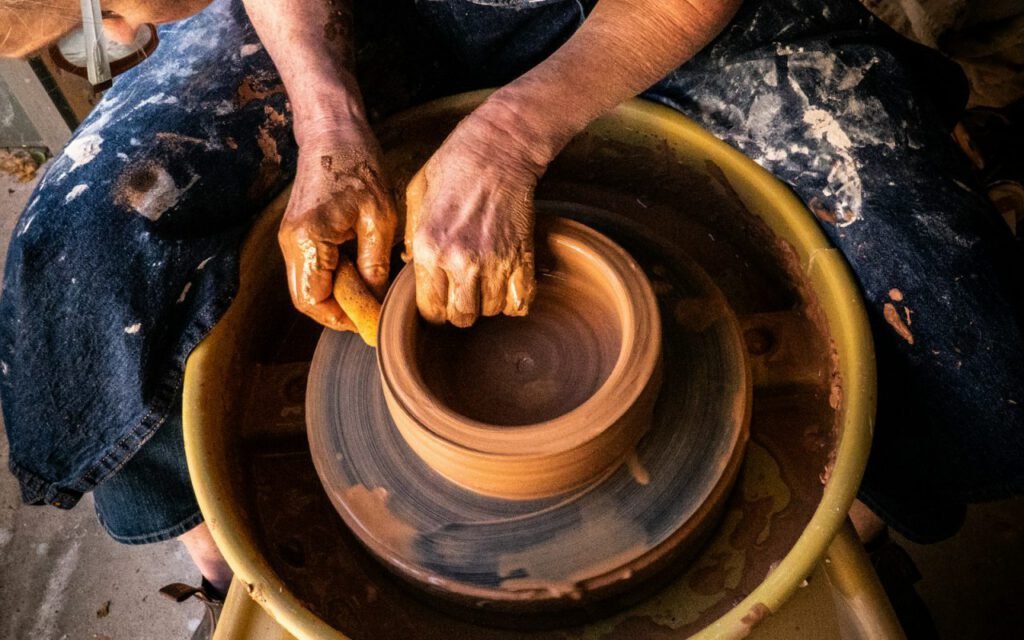

Hannah Brooks
Hannah covered state politics for twelve years before co-founding Maple & Main. She lives in the Old North End and bikes to every council meeting.

I signed up for a six-week wheel class at a community studio. My first bowl leaned like a sleepy cat. It slumped to one side, its rim dipped like a wave, and when I finally cut it off the wheel, one wall was nearly twice as thick as the other. I loved it immediately, of course, and it now holds paper clips on my sewing table.
By week six, I made a set of mugs I actually use. They are not perfect, and they are certainly not the same size, but they hold coffee, they feel good in my hand and every single morning they remind me how much I learned in a short stretch of evenings. If you have ever wondered about trying pottery, this post is for you. I am sharing how the class worked, what surprised me, what I would tell a nervous beginner and why I have already signed up for the next session.
 Sponsored · Quilt Haven FabricsFat quarters from $3.50Thousands of prints, ships in a day.Shop fabric
Signing up
The studio is a small community space in an old brick building on the edge of downtown, run by a cheerful potter named Rosa Delgado. The class met on Tuesday evenings from six to eight, and the fee covered six sessions, twenty-five pounds of clay, glazes and two firings. Aprons and tools were available to borrow, though most of us bought a simple starter tool kit for about $15 by the second week.
I almost talked myself out of it. I am a stitcher, not a sculptor, and I worried I would be the only person who had never touched a wheel. It turned out that nobody in our group of eight had thrown before. There was a retired teacher, a nurse who came straight from her shift, two college students and a father and teenage daughter who signed up together. By the end of the first night, we were all covered in the same gray slip and laughing at the same disasters.
Centering is everything
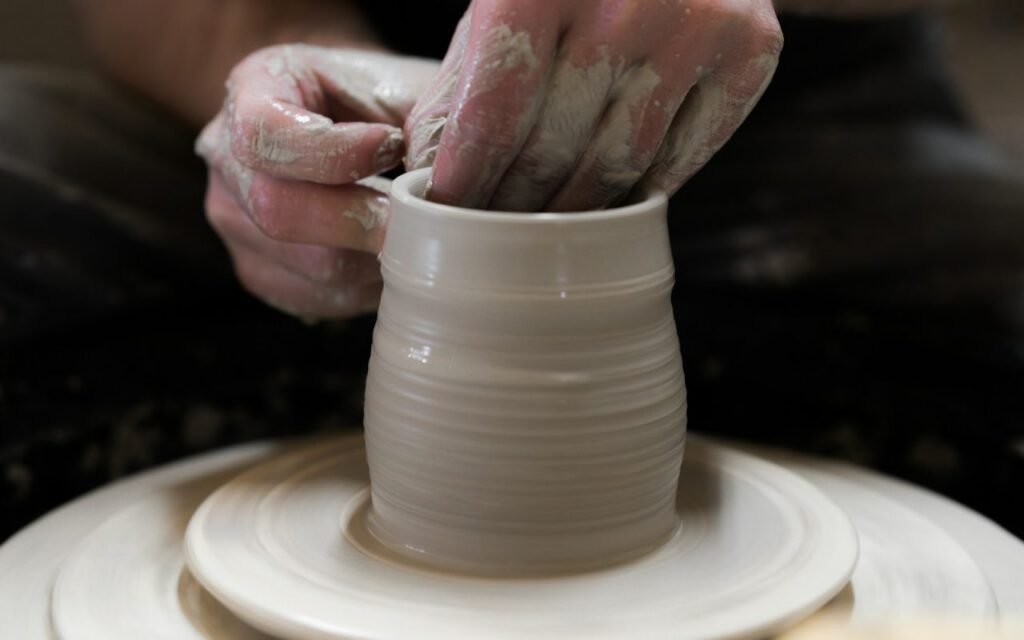
If the clay isn’t centered, nothing else works. It took me three weeks to feel it. Centering means pressing the spinning lump of clay into a perfectly balanced shape right in the middle of the wheel head. When it is centered, your hands feel still even as the clay spins beneath them. When it is not, the clay wobbles and fights you, and every wall you try to pull up will wobble along with it.
Rosa taught us to brace our elbows against our thighs, keep our hands wet and lean our body weight into the clay rather than squeezing with our fingers. For the first two weeks, my clay flew off the wheel at least once a night. In week three, something finally clicked. I felt the lump settle under my palms, and the hum of the wheel went smooth. I may have squealed a little.
Clay doesn’t care about perfect. It cares about patience.
Hannah
What each week covered
- Week one: wedging clay, the basics of centering and opening a simple cylinder.
- Week two: more centering practice, and pulling up walls without collapsing them.
- Week three: shaping bowls and learning when to stop touching the clay.
- Week four: trimming last week’s pieces once they were leather-hard, and adding foot rings.
- Week five: throwing mugs and attaching pulled handles.
- Week six: glazing, plus a little show-and-tell with everyone’s first fired work.
Glazing day surprises
Nobody warned me that glazes look nothing like their final colors before firing. The jar labeled “ocean blue” was a chalky pinkish gray in the bucket. Rosa had a wall of test tiles showing what each glaze actually looked like after the kiln, and I spent a good fifteen minutes staring at them like a kid in a candy store.
I dipped my mugs in a soft cream glaze and then dipped the rims in a speckled brown, which overlapped into a lovely toasty band. One mug got a little too much glaze near the base and ran onto the kiln shelf, which earned me a gentle lecture about wiping the bottom of every piece clean. Lesson learned. The finished mugs came out glossy and warm, and seeing them on the shelf the following week felt like opening a present.

Why I loved it
For two hours a week, my hands were busy and my mind was quiet. That is the honest heart of it. I could not check my phone with clay up to my wrists, and I could not think about my to-do list while trying to keep a wall from flopping over. The wheel asks for all of your attention, and in return it gives you a kind of calm that is hard to find anywhere else.
It also reminded me what it feels like to be a true beginner. I spend most of my crafting life doing things I already know how to do well. Being bad at something again was humbling, a bit uncomfortable and, in the end, joyful. Every small win felt enormous. I think it has made me a more patient teacher in my own sewing workshops, too.
There is something about turning raw earth into a useful object that feels deeply grounding. Sewing gives me that feeling too, but clay does it in a messier, more elemental way. I came home every Tuesday with dried slip under my fingernails and a strange, contented tiredness in my shoulders.
And there was the community. By week four, we were swapping tips, cheering each other on and passing around the good sponge. The nurse brought cookies on the last night. The father and daughter made matching bowls. It felt like the best kind of club.
Tips if you want to try it
If you are feeling inspired, here are the things I wish someone had told me before my first class:
- Wear clothes you do not mind ruining, and short sleeves or sleeves you can push up high
- Trim your fingernails, since long nails gouge the clay
- Bring a towel and a small bag for taking home trimming tools
- Expect to lose a lot of pieces, and do not get attached to the first ones
- Ask the instructor to watch you center, because tiny adjustments make a big difference
- Look for community studios, parks and recreation programs or local art centers, which often offer affordable beginner sessions
Key takeaway: give yourself the full six weeks. The first two can feel frustrating, but the moment centering clicks, everything else starts to make sense.
Going back for more
I have already signed up for the next session, which focuses on making plates and lidded jars. I am also eyeing an open studio membership so I can practice between classes. My long-term dream is a full set of handmade dinnerware, though at my current pace, that may take a few years and a lot of wobbly practice bowls.
In the meantime, my sleepy-cat bowl still sits on my sewing table, holding paper clips and reminding me that every maker starts somewhere. If you have been curious about pottery, consider this your nudge to sign up. You will get messy, you will make something lopsided and you might just find a new favorite way to spend a Tuesday night. Tell me in the comments if you give it a try.
Hannah Brooks
Hannah covered state politics for twelve years before co-founding Maple & Main. She lives in the Old North End and bikes to every council meeting.


2 Comments
Sharing this with my friends.
Saved this one for later. Really useful.