 Elena Hale6 min read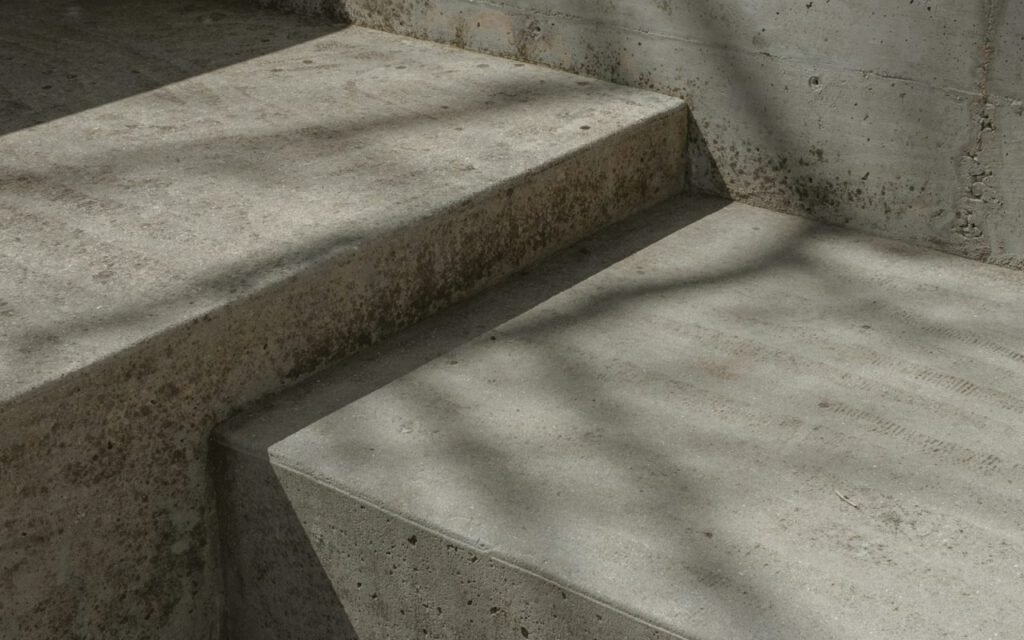
In many of our buildings, the concrete is left bare — board marks and all. Visitors sometimes run a hand along a wall, feel the faint ridges of wood grain pressed into the surface and ask when the plaster is going on. The answer is never. That surface is the finish, and it is one of the most carefully planned parts of the project.
It’s not unfinished. It’s honest about how the building was made. Every line, every small bug hole and every subtle shift in tone records a moment in construction, when wet concrete was poured into wooden forms and left to harden. We think there is real beauty in that record, and in letting a material show what it is.
Why we choose exposed concrete
Concrete is often hidden. It sits in foundations, behind drywall and under flooring, doing quiet structural work no one ever sees. When we decide to leave it exposed, we are making a deliberate choice for several reasons.
First, it is durable. A bare concrete wall will not need repainting, will shrug off bumps from strollers and furniture, and will age gracefully over decades. Second, it has thermal mass. Like the thick stone walls of an old building, concrete absorbs heat slowly and releases it slowly, which helps even out indoor temperatures. Third, leaving it exposed avoids layers of extra material that would otherwise cover it, saving cost and waste.
And finally, it is simply beautiful when done well. The play of light across a textured concrete wall changes through the day, from cool and soft in the morning to warm and dramatic in the late afternoon.
Texture tells a story
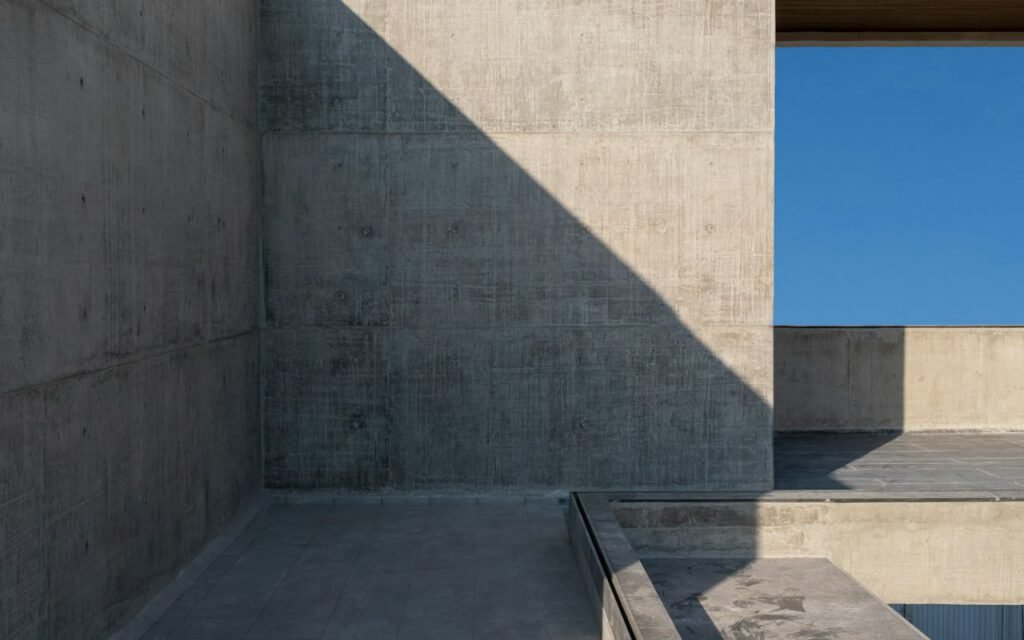
Wooden forms leave a grain on the concrete, like a fossil of the construction. Before a wall is poured, carpenters build a mold of boards to hold the wet concrete in shape. When the forms come off, the surface carries a perfect imprint of every board: the grain, the knots, even the small gaps between planks.
Materials look best when they’re allowed to be themselves.
Daniel Stone
We choose the boards with great care. Rough-sawn lumber gives a deep, rustic texture. Planed boards leave a smoother, more refined pattern. Narrow boards create a fine rhythm of lines; wider ones feel calmer and more relaxed. On some projects we lay out the board pattern on our drawings as carefully as we would a tile floor, deciding where every joint will fall.
Planning for the imperfect
No two pours are identical. Weather, the concrete mix, the way it is vibrated into the forms and the timing of form removal all affect the final look. We accept a certain amount of variation as part of the character, but we also work hard to control what we can. On every project, we ask the builder to pour a full-size sample panel on site before the real walls go up. It lets everyone agree on the look before there is no turning back.
Working with builders
Exposed concrete leaves no room to hide mistakes, so the relationship with the contractor matters enormously. We look for builders who take pride in formwork and enjoy the challenge. Before construction begins, we meet with the concrete crew to walk through the drawings, explain the intent and listen to their advice, which is often excellent.
A few points we always discuss in that meeting:
- The type, width and finish of the form boards
- Where construction joints and tie holes will appear
- How corners and edges will be shaped
- The concrete mix, color and any added pigment
- How the finished surface will be protected during the rest of construction
- Which sealer, if any, will be applied at the end
That last point about protection is easy to forget. A beautiful wall can be scratched by a ladder or stained by a careless coffee cup months before the building opens. Good crews wrap and guard finished surfaces as carefully as they would a piece of fine furniture.
Pair it with warmth
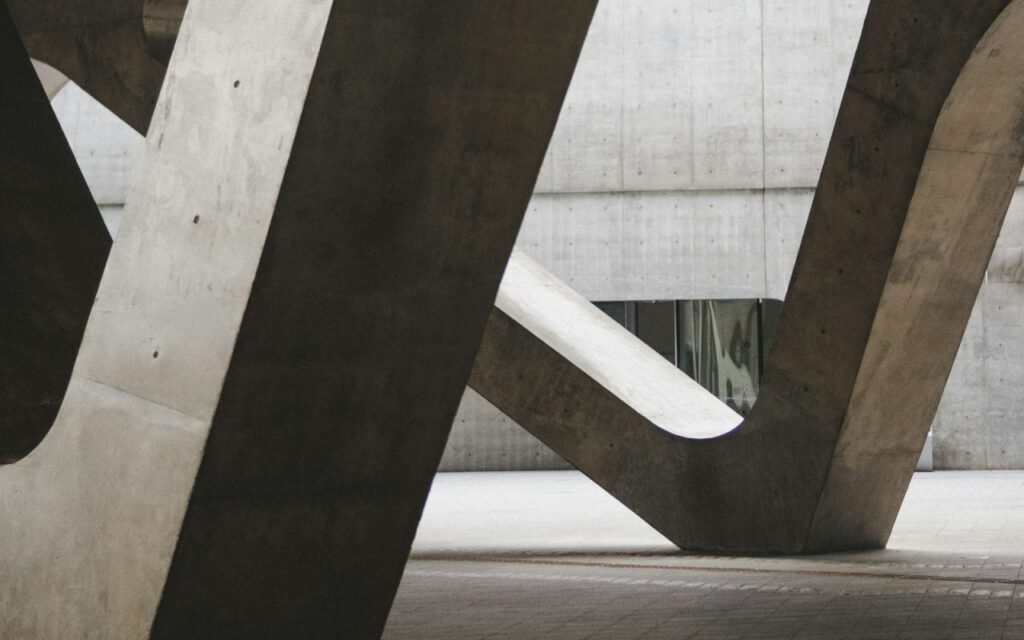
Bare concrete feels best next to wood, textiles and lots of daylight. On its own, a room of exposed concrete can feel cold and severe. But place a white oak floor beside it, add a wool rug, a linen curtain and a big window, and the same wall suddenly becomes calm and inviting. The contrast makes each material look better.
In our homes, we often use concrete for a single feature, such as a fireplace wall, a stair core or a kitchen island, and surround it with softer finishes. In public buildings like libraries and community centers, where durability matters more, we might use it more broadly but always balance it with warm wood ceilings, upholstered seating and plenty of natural light.
Light makes the difference
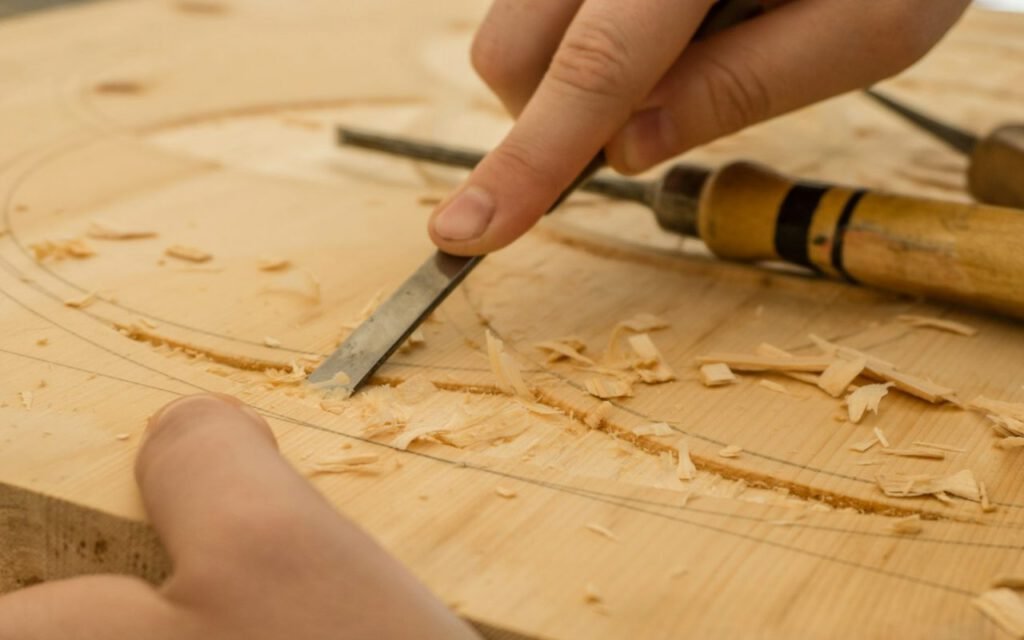
Concrete looks its best when daylight grazes across it at a low angle, picking out every ridge and line. We often place skylights or tall windows right beside a concrete wall to wash it with light. At night, a simple fixture aimed along the surface does the same job, turning texture into a quiet, glowing pattern.
Key takeaway: exposed concrete is not a shortcut. It takes careful planning, skilled builders and thoughtful pairing with warmer materials to look its best.
Living with bare concrete
Clients often ask what it is like to live or work with exposed concrete day to day. The honest answer is that it asks very little. A clear, breathable sealer helps resist stains from spills and fingerprints, and a damp cloth handles most everyday cleaning. Small marks tend to blend into the natural texture rather than standing out, which is one reason the material suits busy family homes and public buildings alike.
Sound is the other common question. Hard surfaces can make a room echo, so we balance concrete walls with soft materials such as rugs, upholstered furniture, curtains and acoustic panels hidden in wood ceilings. In larger rooms, we sometimes use perforated wood or fabric-wrapped panels on the opposite wall. Done thoughtfully, a concrete room can feel as quiet and comfortable as any other.
Some people worry that concrete will feel cold to the touch. In practice, when a wall sits in a sunny room or forms part of a heated space, it stays close to room temperature. In winter, a concrete wall warmed by the afternoon sun can feel pleasantly mild long after dark.
Honest buildings last
We believe buildings that are honest about their materials tend to age well. They do not depend on paint, cladding or trends to look good. A concrete wall poured with care will look much the same in fifty years, perhaps a little softer and richer as it picks up the patina of daily life.
That longevity is a quiet form of sustainability. Fewer coats of paint, fewer replacements and fewer renovations over the life of a building all add up. And there is something reassuring about walking past a wall and seeing exactly how it was made, by real people with real tools, on a particular day.
If you are curious whether exposed concrete might suit your project, we are always happy to share samples, show finished examples and talk through the options. Like every material we use, it works best when it is chosen for the right reasons and allowed to be itself.

Elena Hale
Elena co-founded Hale & Stone and leads residential work.

Elena Hale
Elena co-founded Hale & Stone and leads residential work.


Start the conversation