


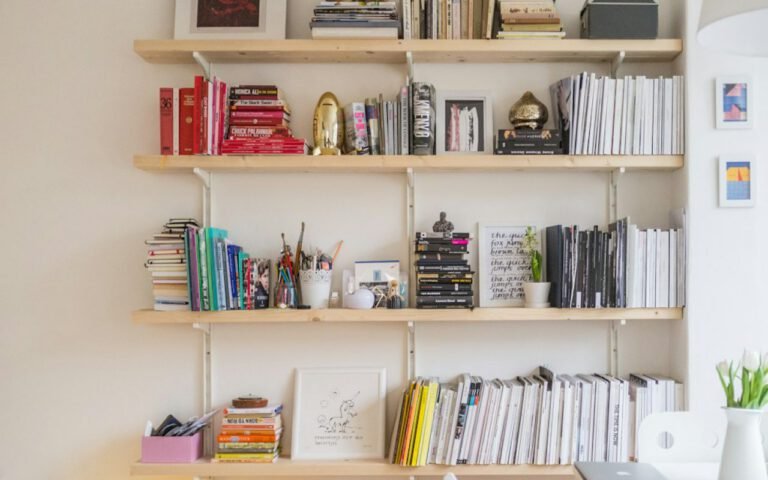
 Home LibraryBuilding a Home Library on a BudgetShelves, secondhand finds and how to organize it all.
Home Library Rosa Diaz6 min read
Reading More This Year: Small Habits That Work
Ten pages a day adds up to a dozen books.
Rosa Diaz6 min read
Written by
Rosa Diaz
Rosa is a public librarian who can find you the perfect book in under a minute.
5Articles
2026Writing since
Most of us do not stop reading because we stop loving books. We stop because life fills every corner of the day, and the moments that used to belong to novels quietly get handed over to emails, streaming shows and endless scrolling. The good news is that you do not need hours of free time to become a reader again. You need a few small habits and a little arithmetic on your side. Ten pages a day is about 3,650 pages a year — roughly a dozen average novels. That is a book a month, built from a few minutes at a time.
Start smaller than you think
When people decide to read more, they often set ambitious goals: fifty books this year, an hour every night, the complete works of a favorite author. Big goals feel exciting in January and crushing by March. A smaller target is easier to keep, and consistency matters far more than speed.
Ten pages is a good starting point because it takes most people somewhere between ten and twenty minutes. That fits into a lunch break, a wait at the doctor’s office or the time before bed. On busy days, ten pages is still doable. On slow days, you will often read far more without trying, simply because you are already in the story.
If ten pages feels like too much, start with five, or even a single chapter a week. The goal is to rebuild the habit of picking up a book, not to win a race.
Always have a book nearby
One by the bed, one in your bag, one on your phone. This might be the single most effective habit on the list. Reading often happens in small, unplanned windows: a delayed flight, a long line at the pharmacy, ten minutes before a meeting starts. If a book is within reach, those windows become reading time. If not, they become phone time by default.
Many readers like to keep different kinds of books in different places. A big, absorbing novel lives on the nightstand. A collection of short stories or essays rides along in a bag, since each piece can be finished in one sitting. An ebook or library app on your phone fills any gaps in between. Your local library likely offers free ebooks and audiobooks through an app, which makes it easy to carry a whole shelf in your pocket.
You don’t find time to read. You take it.
Our books editor
Make reading the easy choice
Habits stick when they are easy and when the alternatives are a little harder. Try leaving a book on the couch where you usually sit in the evening and putting the TV remote in a drawer. Charge your phone in another room overnight so the last thing you reach for is a book rather than a screen. These small nudges do not require willpower, and they quietly tip the balance toward reading.
Quit bad books
Life is short. If a book isn’t working by page 50, move on. Many readers feel a strange guilt about abandoning a book, as if they owe the author their full attention. But slogging through a novel you dislike is one of the fastest ways to stall a reading habit. Days turn into weeks, the book sits untouched on the nightstand and reading starts to feel like homework.
Some readers use a modified version of the rule: subtract your age from 100 and read that many pages before deciding. Others give a book until the end of the first major section. The exact number matters less than the permission. Not finishing a book is not a failure. It is a choice to spend your limited reading time on something you will actually enjoy.
A book that did not work today might be perfect in a year. Keep a short “maybe later” list so abandoned books do not feel gone forever.

Try this
- Read before your phone in the morning
- Try audiobooks on commutes
- Track books in a notebook
Each of these small changes works in a slightly different way. Reading before you check your phone in the morning protects a few quiet minutes before the day’s demands rush in. Even five pages with your morning coffee can set a calmer tone for the hours ahead.
Audiobooks are a wonderful way to fit more stories into a busy life. Many readers worry that listening “doesn’t count,” but there is no need for that kind of gatekeeping. If you followed the story, felt something and thought about it afterward, you read it. Audiobooks are especially good for long drives, workouts, dog walks and household chores like folding laundry or washing dishes.
Keeping track of what you read can be surprisingly motivating. A simple notebook works beautifully: write down the title, the author, the date you finished and a line or two about what you thought. Over time, it becomes a record of your reading life and a handy reference when a friend asks for a recommendation. Some readers prefer apps or spreadsheets, and that is fine too.
A few more ideas
- Join a book club. A monthly deadline and friendly conversation can keep you on track.
- Take on a reading challenge. Prompts like “a book set in another state” or “a book published before you were born” can lead you to unexpected favorites.
- Read what you love. Romance, comics, cookbooks, poetry and graphic novels all count.
- Pair reading with something pleasant. A favorite chair, a cup of tea or a weekend morning in the park can make reading feel like a treat.
- Visit your library. Browsing shelves in person is one of the best ways to stumble onto your next great read.
Finally, talk about what you read. Tell a coworker about the novel that kept you up late or text a friend a line you loved. Sharing books makes them stick in your memory, and it often leads to great recommendations in return.
When you fall off the wagon
You will have weeks when you do not read at all. A new job, a sick kid, a move or simply a tired stretch can knock any habit off course. That is normal. The trick is not to wait for the perfect moment to start again. Pick up a short, easy book, something light and fun, and read a few pages tonight. Short books, story collections and graphic novels are especially good for getting back into rhythm because they give you a quick sense of accomplishment.
It can also help to revisit an old favorite. Rereading a book you love takes away the effort of getting to know new characters and reminds you why you liked reading in the first place.
Key takeaway: reading more is less about finding big blocks of time and more about building small, steady habits. A few pages a day really do add up.
A dozen books, a few pages at a time
Imagine looking back next December and seeing twelve titles in your notebook, maybe more. Twelve new worlds, twelve sets of characters, twelve conversations you could have with friends. All of it built from a few minutes stolen here and there, from pages read in waiting rooms, on buses and under the covers before sleep.
So pick a book tonight. Put it somewhere you will see it tomorrow. Read ten pages, then do it again the next day. Before long, you will not need a plan at all. You will just be a reader again.
Read next
Home LibraryBuilding a Home Library on a BudgetShelves, secondhand finds and how to organize it all. Book ClubsBook Club Questions for “The Orchard Letters”Ten questions to get your group talking.
 Poetry & WritingThe Joy of Reading OutdoorsParks, porches and the best spots to read in the sun.
 Book ClubsOrganizing Your Bookshelf by Color: Yes or No?Our editors fight about it so you don’t have to.
 Poetry & WritingTen Classic Poems Everyone Should Read AloudPoetry was made for the voice.
 Bookstores & LibrariesAudiobooks Count. Here’s Why.Listening is reading — science and joy agree.
 Bookstores & LibrariesThe Secret Life of Secondhand BooksNotes, bookmarks and inscriptions from strangers.
 Poetry & WritingAsk the Librarian: How Do I Pick My Next Book?A librarian’s favorite tricks for finding a great read.
Start the conversation