

 StrengthStrength Training 101: The Five Moves That MatterSquat, hinge, push, pull and carry — a full-body plan in five exercises.
Strength Maya Brooks7 min read
Kettlebells: One Tool, a Hundred Workouts
Swings, goblet squats and carries for a full-body routine.
Maya Brooks7 min read

Written by
Maya Brooks
Maya is a certified strength coach who believes everyone should own one kettlebell and one good playlist.
20Articles
2026Writing since
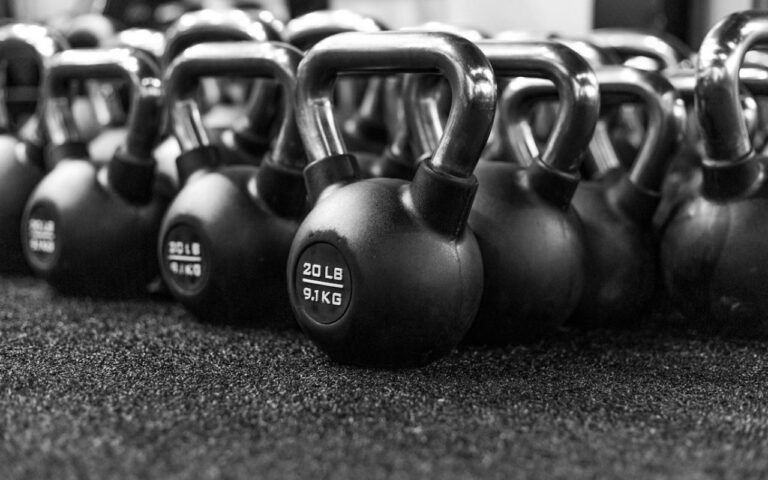
A single kettlebell can give you a complete strength and conditioning workout at home. It sits in the corner of a spare room, takes up less floor space than a laundry basket, and yet it can train your legs, hips, back, shoulders, grip and heart in the same twenty minutes. That is a big promise for a lump of cast iron with a handle, so we asked coaches, readers and our own testing crew to put it through a month of real use. The verdict was simple: if you only buy one piece of equipment this year, this is a strong candidate.
What makes the kettlebell different from a dumbbell is the offset weight. The mass hangs below and away from your hand, which means your body has to work harder to control it. Every swing, squat and carry becomes a lesson in staying tight through the middle. That is why a handful of basic moves can be shuffled into what feels like a hundred different workouts.
The swing
A powerful hip hinge — the kettlebell floats up from the hips, not lifted by the arms. If you remember only one thing about the swing, make it that sentence. The arms act like ropes connecting you to the bell. The real engine is a hard, fast snap of the hips that sends the weight forward to about chest height, where it seems to hover for a split second before falling back between your legs.
Most beginners make the same mistake: they squat the swing instead of hinging it. Their knees drive forward, their hips drop low, and they end up lifting the bell with their shoulders. The fix is to think about closing a car door with your backside. Push the hips back, keep a soft bend in the knees, let your chest tip forward with a flat back, and then stand up fast and tall.
Kettlebell swings are the best thirty seconds you can give your back side.
Maya Brooks, certified strength coach
Brooks, who coaches small group classes in Denver, starts every new client on the swing in short bursts. Ten good swings, a long rest, then ten more. She would rather see five crisp sets than one long, sloppy one. When form fades, the set is over, even if the timer says otherwise.
Learn the hinge first
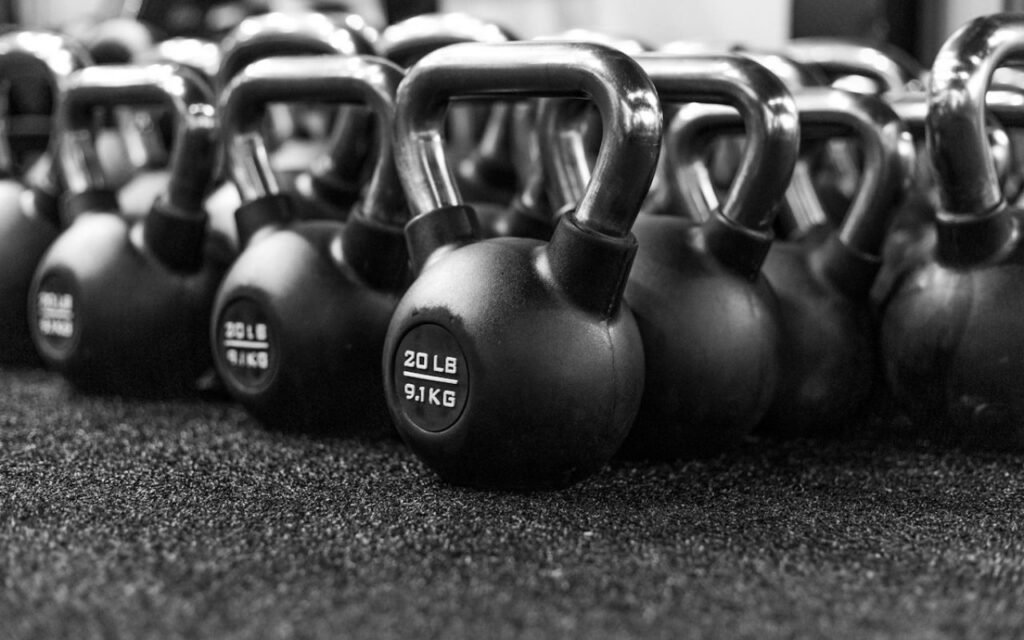
Before you swing anything, practice the movement with no weight at all. Stand an arm’s length in front of a wall, then push your hips back until they touch it while your back stays flat. Step a few inches farther away and repeat. Once that feels natural, pick up the bell from the floor using the same pattern, which is really just a kettlebell deadlift. Our testers found that a week of hinge drills made their first real swings far smoother.
Choosing a weight
Many beginners start with a lighter bell for presses and a heavier one for swings. That advice confuses people at first, because it sounds like you need a whole rack. You do not. It simply reflects how differently your body handles each move. The hips are strong and can move a surprising amount of weight in a swing. The shoulders, working overhead, are far weaker.
Here is the general starting range our coaches suggest, measured in pounds. Treat it as a loose guide rather than a rule, and always err on the light side while you learn.
- Brand new to strength training: a light bell for learning, roughly 15 to 20 pounds for many women and 25 to 35 pounds for many men
- Some lifting experience: step up one size for swings and goblet squats
- Comfortable with the basics: add a second, heavier bell for swings and carries
- Presses and get-ups: stay with the lighter bell until your form is rock solid
A cast-iron bell with a smooth, wide handle is the most forgiving choice for home use. Look for a flat base so it does not roll across the floor, and check that both hands fit on the handle together, since two-handed swings are where you will spend your first few weeks.
The goblet squat and the carry
If the swing is the headline act, the goblet squat is the steady supporting player. Hold the bell by its horns close to your chest, elbows pointing down. Sit straight down between your heels, keeping your chest up and your weight spread across your whole foot. The bell in front acts as a counterweight, which is why many people who struggle with a regular squat suddenly find depth and balance here.
Goblet squats build the legs and also teach good posture under load. Brooks likes to have new clients pause for two seconds at the bottom of each rep, using their elbows to gently press the knees outward. It turns a basic leg exercise into a mobility drill at the same time.
Why carries matter
Carries look almost too easy to count as exercise. Pick up the bell, stand tall and walk. That is it. Yet a one-handed carry, sometimes called a suitcase carry, forces the muscles along the opposite side of your body to fight to keep you upright. Your grip burns, your shoulders stay packed down and your core works the entire time without a single crunch.
Our testing crew found that a minute of carrying in each hand was one of the best finishers in the whole plan. It is low impact, easy to learn and hard to do badly. Walk slowly, keep your shoulders level and do not let the bell drag you sideways.
Try this
Here is a simple routine that strings the basic moves together into a full-body session. It takes about twenty minutes including a warm-up. Do it two or three times a week on nonconsecutive days, and pair it with walking or easy cardio on the days in between.
- Learn the hinge before the swing
- Practice goblet squats
- Carry it for a minute in each hand
Put those ideas into practice like this. Warm up with five minutes of easy marching, arm circles and bodyweight hinges. Then complete four rounds of ten swings, eight goblet squats and a one-minute carry, switching hands halfway. Rest as long as you need between rounds, usually one to two minutes. As the weeks go by, add a fifth round before you add more weight.
If you want variety, swap in a few new moves once the basics feel easy. A one-handed row trains the upper back. A halo, where you circle the bell slowly around your head, warms up stiff shoulders. A reverse lunge holding the bell at your chest challenges balance. Each one plugs into the same template, which is how one tool really can turn into a hundred workouts.
Key takeaway: master three moves, keep sets short and crisp, and only add weight when your form looks the same on the last rep as it did on the first.
Staying safe and making it stick
Kettlebell training is safe for most healthy adults when it is learned patiently. Clear a wide space around you, wear flat shoes or go barefoot on a stable surface, and keep pets and kids well out of swinging range. If something pinches or feels sharp, stop and reset rather than pushing through it. A session with a qualified coach, even just one, can catch habits you will never notice on your own.
Consistency matters more than intensity. Our readers who stuck with the routine for six weeks reported better posture, a stronger grip and more energy for daily chores like hauling groceries and lifting kids. None of them needed a gym membership to get there. They needed one bell, a little floor space and the patience to learn a hinge before chasing heavier weights.
Start light, stay curious and treat the kettlebell like a long-term training partner. It will still be in that corner of the spare room years from now, ready for the next workout.
General information, not medical advice. Check with your doctor before starting a new exercise or nutrition plan, especially if you have a health condition.
Written by
Maya Brooks
Maya is a certified strength coach who believes everyone should own one kettlebell and one good playlist.
20Articles
2026Writing since
Read next
StrengthStrength Training 101: The Five Moves That MatterSquat, hinge, push, pull and carry — a full-body plan in five exercises. StrengthHow to Deadlift SafelyThe king of strength exercises, step by step.
 StrengthNo Gym? The 20-Minute Home WorkoutBodyweight only, no equipment, no excuses.
 StrengthGetting Your First Pull-UpA step-by-step plan from zero to one.
 StrengthStrength Training After 50: It’s Never Too LateMuscle and bone respond to training at every age.
2 Comments
Sharing this with my friends.
Saved this one for later. Really useful.