




 TechHow AI Language Models Learn, in Plain EnglishPredicting the next word, billions of times.
Written by
Owen Hale
Owen is a geologist who has stood a safe distance from four erupting volcanoes and one very angry glacier.
10Articles
2026Writing since
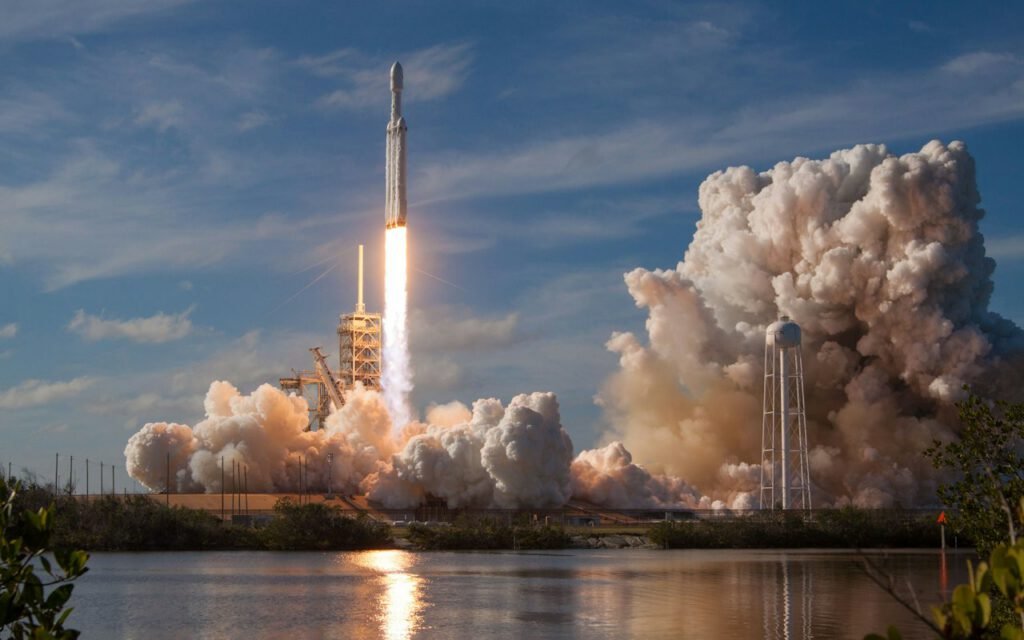
Watch any launch from Florida’s Space Coast and you will notice something after the first few seconds of thunder. The rocket climbs straight up, clears the tower and then begins to lean, tipping gracefully out over the Atlantic. It is not a random choice or a quirk of the camera angle. Most rockets head east after liftoff. They’re borrowing speed from Earth itself, and that small loan can be the difference between reaching orbit and falling back into the sea.
Orbit is about going sideways
It is tempting to think of reaching space as a matter of going up. Altitude matters, of course; a satellite needs to be high enough that the thin upper atmosphere will not drag it down too quickly. But height is the easy part. The hard part is speed, and specifically sideways speed.
An object in orbit is really falling all the time. It simply moves sideways so fast that, as it falls toward Earth, the curved surface of the planet drops away beneath it at the same rate. The satellite keeps falling and keeps missing. To pull off that trick in low Earth orbit, a spacecraft needs to travel at about 17,500 miles per hour. At that speed it circles the globe in roughly an hour and a half.
Every mile per hour of that velocity has to be paid for with fuel, and fuel is heavy. A rocket must lift not only its payload but also all the propellant it will burn later in the flight. Engineers call this the tyranny of the rocket equation: adding a little more speed requires a lot more fuel, which requires a bigger rocket, which requires still more fuel. Any speed you can get for free is precious.

The free push
Earth spins on its axis once a day, from west to east. That is why the Sun rises in the east: we are rotating toward it. Everything on the surface is carried along for the ride, including the launch pad, the rocket on top of it and the crowd watching from the beach.
At the equator, Earth’s surface spins at about 1,000 miles per hour. Launching east adds that speed. Before the engines even ignite, a rocket sitting on an equatorial pad is already moving in the right direction at a speed faster than most jetliners. When it lifts off and turns east, it keeps that momentum and builds on it.
The boost shrinks as you move away from the equator, because the circle traced by the ground each day gets smaller. In Florida, the eastward speed of the surface is a little less than at the equator, roughly 900 miles per hour, but that is still a meaningful gift. It means a rocket can carry more payload, or use a smaller and cheaper vehicle, for the same mission.
Every eastbound rocket is getting a little help from the planet.
Dr. Ethan Brooks, physicist
What happens if you launch west
Launching west is possible, but it is like trying to run up a down escalator. The rocket first has to cancel the eastward speed it inherited from the ground and then build up its full orbital speed in the opposite direction. The extra cost in fuel is large. Westward orbits, sometimes called retrograde orbits, are rare and are usually chosen only when a mission absolutely needs one.
Why Florida
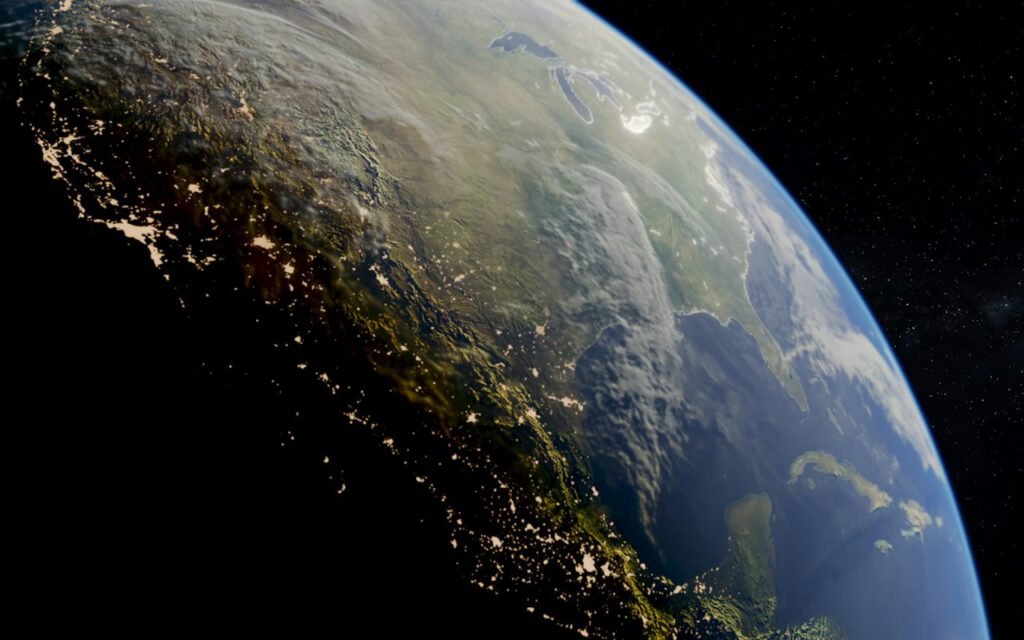
Launch sites near the equator with ocean to the east, like Florida’s coast, are ideal and safer. Florida is the southernmost large stretch of the continental United States with open water to the east, which made it a natural home for the nation’s busiest launch area. Rockets can rise from the coast, tip toward the Atlantic and never pass over a city during the most dangerous part of the flight.
Geography helps in another way, too. A launch site’s latitude sets the lowest orbital tilt, or inclination, that a rocket can easily reach. A spacecraft launched from Florida naturally ends up in an orbit tilted at about 28 degrees to the equator. Satellites that need to sit above the equator, such as many communication satellites in very high orbits, must later spend fuel to flatten that tilt. The closer to the equator you start, the less correcting you need to do.
Other spacefaring nations have followed the same logic, choosing coastal or equatorial sites where they can. Some companies have even experimented with launching from floating platforms that can be towed to the equator, just to capture the maximum boost.
Safety over the ocean
A rocket is not a single piece that flies all the way to space. Most rockets drop pieces as they climb. Spent boosters and lower stages fall away once their fuel is gone, and the protective nose cone, called a fairing, splits open and tumbles back down once the rocket is above most of the atmosphere. Those pieces have to land somewhere.
By sending rockets out over the ocean, launch planners make sure that falling hardware lands in empty water rather than on homes, highways or farms. Before every launch, officials publish warning areas for ships and aircraft, and recovery crews know where to look if a company plans to reuse a booster. Some modern boosters even fly themselves back to a landing zone near the coast or touch down on a drone ship hundreds of miles offshore.
If something goes wrong in the first minutes of flight, the open ocean also gives range safety officers room to act. A failed rocket over water is a costly loss, but it is far less likely to put anyone on the ground at risk.
Quick facts
- Low Earth orbit needs about 17,500 mph
- Launches over water keep falling stages away from people
- Polar orbits launch north or south instead
That last point is the important exception. Not every mission wants an eastward orbit. Weather satellites, mapping satellites and many Earth-imaging spacecraft use polar or near-polar orbits, passing over both poles on each loop. As Earth turns beneath them, they eventually see every part of the planet. Rockets bound for these orbits give up the free eastward push and fly north or south instead. In the United States, many polar launches lift off from California’s central coast, where rockets can fly south over the Pacific without crossing populated land.
There are also orbits that are tilted to match a particular destination. Flights to a space station, for example, must launch into the station’s orbital plane, which is why launch windows for those missions can be as short as a few seconds. The rocket waits until Earth’s rotation carries the pad directly under the path it needs to follow.
Watching with new eyes
The next time you watch a launch, either in person on the Florida coast or on a livestream, pay attention to the moment the rocket starts its turn. Mission controllers call it the pitch-over or gravity turn, and it is the beginning of the real work. The rocket is trading its upward climb for sideways speed, adding thousands of miles per hour to the head start it inherited from the ground beneath the pad.
If you plan to watch a launch in person, check the launch provider’s schedule close to the date, because delays for weather and technical issues are common. Bring water, sunscreen and patience, and remember that the sound arrives several seconds after you see the flame.
Key takeaway: rockets head east because Earth is already spinning that way. It is the closest thing spaceflight has to a free lunch, and engineers never pass it up when they can help it.
Written by
Owen Hale
Owen is a geologist who has stood a safe distance from four erupting volcanoes and one very angry glacier.
10Articles
2026Writing since
Read next
TechHow AI Language Models Learn, in Plain EnglishPredicting the next word, billions of times. SpaceCommercial Rocket Launch Lights Up the Coast at DawnThousands gathered on the beach for the first launch from the new coastal pad.
 TechRobots Are Running Experiments in Self-Driving LabsMachines that mix, measure and decide what to try next.
 Big IdeasQuantum Computers, Without the HeadacheQubits, superposition and why they won’t replace your laptop.
2 Comments
Sharing this with my friends.
Saved this one for later. Really useful.