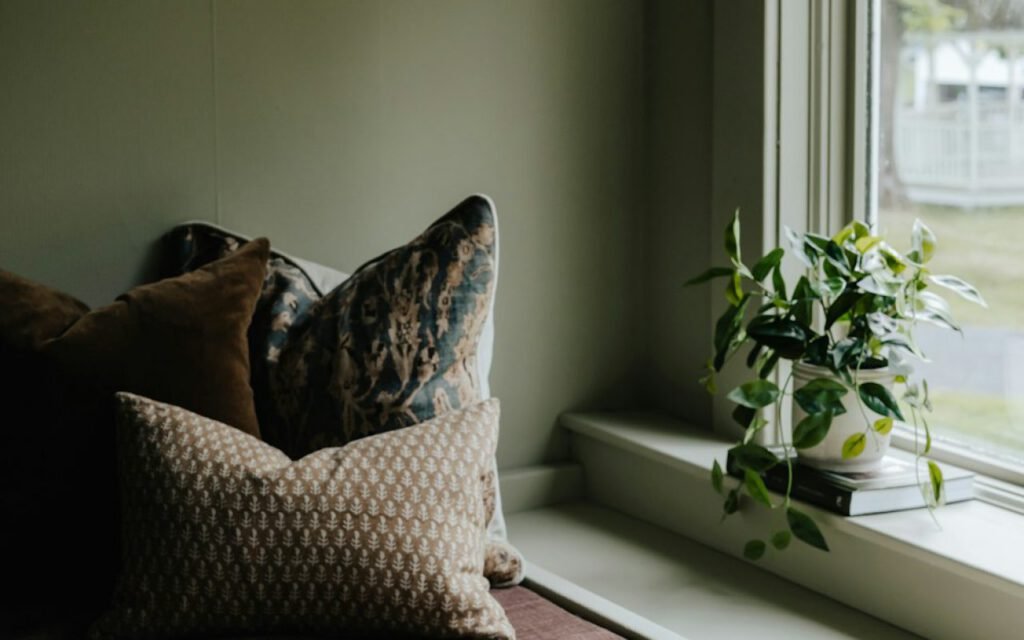
The Reading Nook I Built in a Closet
A tiny corner, a cushion and one very good lamp.
 Jess Carter7 min read
We had a closet we didn’t really use. For three years it held a vacuum, two broken umbrellas, a box of cords nobody could identify and a winter coat that belonged to a guest who left in 2022. Now it’s the coziest seat in the house, and the first place my husband looks when he can’t find me on a Saturday afternoon. It took a weekend, a foam cushion and some shelves, plus a little more planning than I expected. Here is exactly how I did it, what it cost and what I would change if I started over tomorrow.
Why a closet works so well
Closets are already small, enclosed and a little bit quiet. That is the whole recipe for a reading nook. You don’t have to build walls or carve out a corner of the living room that will never feel separate. The door frame does the framing for you, and when you climb in, the rest of the house fades into the background.
 Sponsored · Cozy Corner HomeThrows, pillows and soft lightsFree shipping over $50.Shop home
Ours is a standard reach-in closet off the hallway, about 5 feet wide and 26 inches deep. That depth turned out to be the magic number. It is just deep enough for an adult to sit sideways with knees bent, back against one wall and feet against the other. If your closet is shallower, you can still make it work as a sit-facing-out bench. If it’s deeper, lucky you: you may be able to fit a little twin mattress.
Before I bought a single thing, I emptied the closet completely and sat on the floor inside it with a pillow and a book for an hour. It sounds silly, but it told me where my shoulders landed, which wall felt best to lean on and how much light came in from the hall. Do this first. It is free and it saves you from buying the wrong cushion.
Measure twice
The cushion had to fit exactly. A gap of even an inch on either side becomes a crumb trap and a place for your bookmark to disappear forever. I measured the width at the back wall and at the front, because older houses are rarely square. Ours was off by three-quarters of an inch, which would have been annoying to discover later.
I bought a 4-inch slab of medium-firm upholstery foam from a fabric store and cut it at home. I cut foam with an electric bread knife — it works! The trick is to draw your line with a marker, keep the blade straight up and down and let the knife do the work without pushing. Go slowly at the corners. A clean cut means the cover will sit flat and look like you paid someone.
For the cover, I used a heavy cotton canvas in a warm oatmeal color and sewed a simple box cushion with a zipper along the back. If you don’t sew, a fitted twin crib sheet stretched over the foam works surprisingly well, and you can toss it in the wash. I also added a thin layer of batting over the foam before the cover went on. It softens the edges and makes the whole thing look plumper.
The base
Instead of putting the cushion on the floor, I raised it on a simple platform made from a sheet of plywood resting on two short runs of 2x4s screwed to the side walls. That lift of about 14 inches gave me storage underneath for baskets and made it easier to get in and out. Find your studs, use real wood screws and test it with your full weight before you trust it.
Shelves you can reach
The best part of a closet nook is that the books live right there with you. I added three short shelves on the back wall, well above head height when sitting, so nobody bumps their head reaching for a novel. I used plain pine boards and inexpensive metal brackets, painted the same soft white as the walls so they almost disappear.
Here is what lives on the shelves now:
- A rotating stack of library books, so the shelf never gets stale
- A few favorite rereads I reach for when I’m tired
- A small basket of reading glasses, a pencil and sticky tabs
- A little plant that tolerates low light, which so far is a very forgiving pothos
- One framed photo of my grandmother, who taught me to read
I kept the top shelf mostly empty on purpose. A closet full of stuff stops feeling like a retreat and starts feeling like, well, a closet. Leaving some breathing room is what makes it calm.
Every home needs one spot that says: sit down, stay a while.
Jess
Light it warmly
Lighting is the difference between a cozy nook and a dark box. A plug-in wall sconce means no rewiring. I mounted a small brass swing-arm sconce on the side wall at about shoulder height when seated, and ran the cord down the wall inside a paintable cord cover. It plugs into the hallway outlet just outside the door frame. No electrician, no drywall patching and no permits.
The bulb matters as much as the fixture. I use a warm white LED around 2700K, which gives a soft golden glow without the harsh blue tint of daylight bulbs. Bright enough to read comfortably, dim enough that the space feels like evening even at noon. I also tucked a short strand of battery fairy lights along the top shelf for when I want ambiance instead of reading light.

One safety note: keep any lamp or bulb well away from fabric, pillows and curtains, and choose LED bulbs because they run cool. If you are ever unsure about electrical work, ask a licensed electrician. A plug-in fixture is the easy route for a reason.
Soft things and the curtain
Once the bones were in, the fun part began. I added two big square pillows for my back, a smaller lumbar pillow and a chunky knit throw that lives folded at the foot of the cushion. Mixing textures makes the space feel layered and inviting: canvas, knit, a bit of linen and one velvet pillow because I couldn’t resist.
We took the closet door off its hinges and stored it in the garage. In its place, I hung a tension rod and a pair of linen curtains in a muted sage. When the curtains are open, the nook feels like part of the hallway. When they are closed, it becomes a tiny private room. My kids call it the reading tent, and it is now the most requested spot for bedtime stories.
Key takeaway: A curtain instead of a door gives you privacy without blocking light or air, and it is much easier on small hands.
What it cost and what I’d change
I kept a running list, because I always want to know what a project really costs. The whole thing came in at about $240. The foam was the biggest expense at roughly $85. The plywood, lumber and brackets came to around $55. The sconce was $38, the curtains and rod about $40, and the rest went to fabric, paint and a few new pillow covers. I already owned the throw and most of the pillows.
If I did it again, I would choose a slightly firmer foam, because the medium-firm version is softening faster than I hoped. I would also add a small outlet strip under the platform so I could charge my e-reader without the cord stretching across the floor. And I would paint the inside of the closet a deeper, warmer color. White is bright and fresh, but a soft terracotta or mushroom tone would make it feel even more like a hug.
Sit down, stay a while
The nook has changed how our family uses the house. My daughter does her homework reading there. My husband takes his coffee in there on Sunday mornings. I sneak in for twenty minutes after lunch on work-from-home days, and I come out feeling like a person again. A closet we ignored for years is now the room everyone fights over.
If you have an unused closet, a deep window or even an awkward corner under the stairs, I hope this gives you permission to try. You don’t need a big budget or special skills, just a tape measure, a little patience and a willingness to let one small space be only for rest. Start by sitting in it with a book. You will know right away if it wants to be your nook.

Jess Carter
Jess writes about budget home makeovers, thrifted style and slow weekends around Texas.






Start the conversation