Stargazing in a Dark Sky Park
A red flashlight, a blanket and a sky full of light.
 Maya Ortiz6 min read

Maya Ortiz
Maya designs websites from the passenger seat and takes most of our photos.

We camped in a dark sky park with no moon. We saw the Milky Way with our own eyes for the first time. Not in a photo, not on a screen, but stretched across the whole sky from one horizon to the other, so bright and detailed that it almost looked like a cloud. We had both grown up near big cities, where a clear night meant maybe a dozen stars. This was something else entirely.
It was the quietest, brightest night of our lives. Here is how we planned it, what we brought and everything we learned about seeing a truly dark sky for the first time.
 Sponsored · Cooler Co.Ice for five daysRotomolded coolers with a lifetime warranty.Shop coolers
What a dark sky park is
A dark sky park is a protected area recognized for exceptionally dark night skies and a commitment to protecting them from light pollution. Many are national parks, state parks or other public lands in remote areas far from cities. They often limit outdoor lighting, use shielded fixtures that point down instead of up, and offer night sky programs led by rangers or volunteers.
Several national parks in the Southwest and the Rockies are well known for their dark skies, and there are smaller designated parks in many states. Our night was at a high-desert park in Utah, hours from the nearest city. We chose it because it had a first-come campground, a clear forecast and a reputation for some of the darkest skies in the country.

Check the moon
Plan around a new moon for the darkest skies. This is the single most important part of planning a stargazing trip. A full moon is beautiful, but its light washes out all but the brightest stars and makes the Milky Way nearly invisible. Even a half moon can make a big difference.
The best nights are the few days around the new moon, when the moon is not in the sky at all during the darkest hours. Moon calendars and many free weather apps show the phase and the moonrise and moonset times. If you cannot travel during a new moon, look for nights when the moon sets early in the evening or rises late, giving you a few dark hours in between.
Other things to check before you go
- The weather forecast. Even thin, high clouds can hide the stars. Look specifically at cloud cover for the night.
- The season. In the Northern Hemisphere, the brightest part of the Milky Way is easiest to see from late spring through early fall.
- Campground rules. Some parks have quiet hours and light restrictions. Many also have special stargazing areas.
- Ranger programs. Night sky talks and telescope nights are a wonderful introduction, and they are usually free.
Let your eyes adjust
It takes twenty minutes. Use a red light and keep your phone screen off. We did not believe this at first. When we stepped away from the campfire and looked up, the sky seemed dark and only moderately starry. We were almost disappointed. Then, minute by minute, more and more stars appeared, until there were simply too many to make sense of.
Your eyes need time to fully adapt to darkness, and any bright light resets that process almost instantly. A single glance at a phone screen or a white flashlight can undo fifteen minutes of waiting. That is why stargazers use red light. It lets you see your feet and your gear without ruining your night vision.
We covered our headlamps with red cellophane held on by a rubber band, though many headlamps now have a built-in red mode. We turned our phones to the dimmest setting and put them away completely. It felt strange at first. Then it felt like a gift.
We stopped talking and just looked up for an hour.
Maya, co-author of Two Lanes
What we brought
Stargazing does not require fancy equipment. Here is everything we packed for the night:
- A red flashlight or headlamp for moving around without ruining our night vision.
- A thick blanket and sleeping pads to lie on, since looking straight up while standing gets uncomfortable fast.
- Warm layers. Desert nights get cold quickly, even in summer. We wore hats, jackets and gloves by midnight.
- A thermos of hot cocoa, which made everything better.
- A simple star chart printed on paper, since we did not want to use a bright screen.
- Binoculars. A regular pair reveals more stars, star clusters and craters on the moon than you would expect.
What we saw
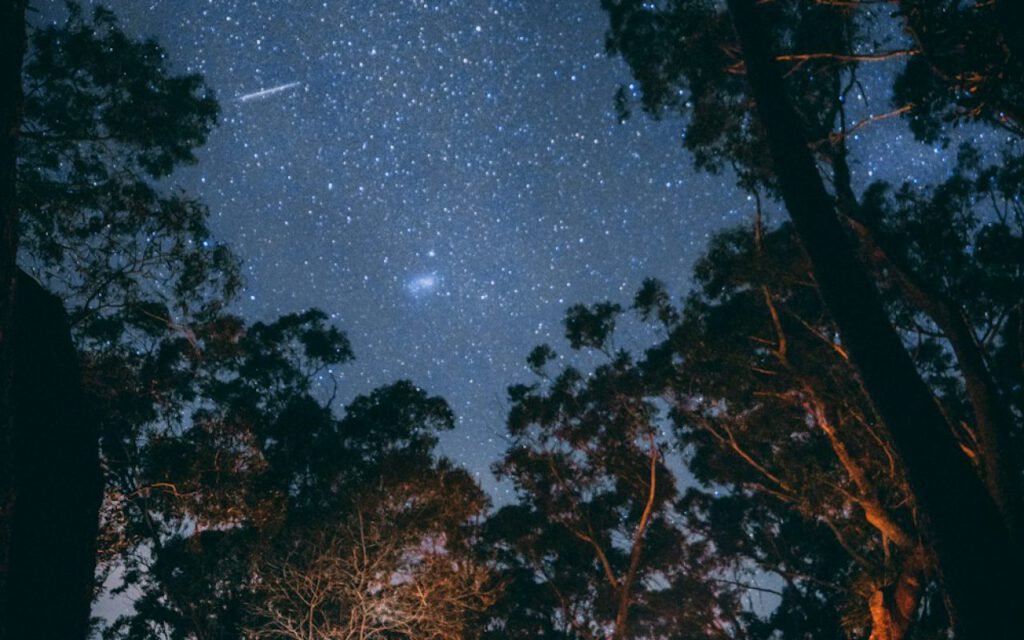
Once our eyes adjusted, the Milky Way was the obvious star of the show, a soft, glowing band with dark lanes of dust running through it. With binoculars, it broke apart into countless individual stars. We found a few constellations we recognized, and many we did not, and spent a long time just tracing shapes.
We saw at least a dozen shooting stars, each one sparking a quiet gasp. We watched satellites drift slowly and steadily across the sky, very different from the quick streak of a meteor. Around midnight, a bright planet rose over the eastern ridge, glowing steadily without twinkling. And the silence was remarkable. No traffic, no hum of the city, just the occasional rustle of wind in the brush and the distant call of an owl.
Around one in the morning, a park volunteer set up a small telescope near the campground host site and invited anyone still awake to take a look. Through the eyepiece, we saw the rings of Saturn, tiny and perfect, like a sticker someone had placed in the sky. A few minutes later, the volunteer swung the telescope toward a fuzzy patch of light and told us it was another galaxy, so far away that the light we were seeing had left it long before there were any people on Earth. We stood there in the cold for a long time after that, not saying much.
Key takeaway: Pick a night near the new moon, give your eyes twenty full minutes and keep every bright screen out of sight.
Be a good night sky neighbor
Dark skies are fragile, and the people around you are often there for the same reason you are. A few simple habits help everyone enjoy the night:
- Use only red light, and point it down at the ground.
- Avoid using car headlights in the campground after dark if you can.
- Keep voices low. Sound carries a long way in the quiet.
- Do not use bright camera flashes, lanterns or string lights.
- Pack out everything you bring in, and leave your campsite as you found it.
If you try photographing the night sky, use a tripod and keep your camera screen dimmed. And remember to look up from the screen now and then. Some moments are better stored in your memory than on a memory card.
Why it stayed with us
We have had a lot of memorable nights on the road, but this one changed something. Lying on that blanket, under more stars than we could have imagined, made our everyday worries feel small in the best possible way. We talked less that night than any other on our trip, and we felt closer than ever.
If you have never seen a truly dark sky, put it on your list. Check the moon, find a dark sky park and plan a night. Bring a blanket, a red light and something warm to drink. Then turn everything off, lie back and wait. Give it twenty minutes. The sky will do the rest.
Maya Ortiz
Maya designs websites from the passenger seat and takes most of our photos.

2 Comments
Sharing this with my friends.
Saved this one for later. Really useful.