Our 12-Hour Rule for Long Drives
Snacks, playlists and a fair system for who picks the music.
 Maya Ortiz7 min read

Maya Ortiz
Maya designs websites from the passenger seat and takes most of our photos.

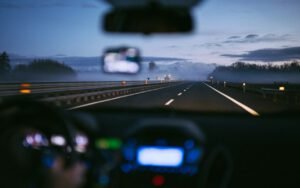

Long drives can bring out the worst in any couple. We have a system. It took us four years, eleven cross-country trips and one truly terrible afternoon outside Amarillo to build it, and it now lives on a sticky note on our dashboard. It involves snacks, timers and a very serious music rotation. Most of all, it involves one rule we refuse to break: no driving day is ever longer than twelve hours, door to door, stops included.
That number sounds generous until you actually live it. Twelve hours includes gas, lunch, the bathroom break that turns into a gift shop visit, the wrong exit, the construction zone in Oklahoma that nobody warned us about and the twenty minutes we spend arguing about whether to stop for pie. In practice, the rule gives us about eight or nine hours behind the wheel, which is plenty. Anything more and we stop being two people on an adventure and start being two tired strangers sharing a cup holder.
 Sponsored · Cooler Co.Ice for five daysRotomolded coolers with a lifetime warranty.Shop coolers
Why twelve hours, and not fourteen
Early on, we treated long drives like a challenge. We would leave at five in the morning, push through the dark and roll into a motel well after midnight, proud of the miles and too wired to sleep. The next day was always ruined. We were short with each other, we skipped the very things we had driven toward and we spent the first morning of every destination recovering in a parking lot with coffee.
The twelve-hour cap fixed that. It forces us to plan honest days, and it means we arrive somewhere with enough light left to walk around, eat a real dinner and actually see the place. It also builds in a safety margin. Drowsy driving is a real risk, and the simplest way we know to avoid it is to not put ourselves in a position where we have to “just push through.” If we are tired, we stop. Our route can bend; our rule does not.
How we plan a twelve-hour day
- Start with the end. We pick where we want to sleep first, then work backward to see if the day fits.
- Add thirty percent. Whatever the map app says, we add about a third for stops, traffic and detours.
- Book flexible beds. We favor places with free cancellation so we never feel locked into a bad plan.
- Arrive before dark when we can. Unfamiliar roads, wildlife and tired eyes are a rough combination.
- Leave one easy day each week. Four or five hours, max, so the trip has room to breathe.
The driver picks the music
The passenger picks the snacks. Everyone gets a turn. This is the most important law in our van, and it has prevented more arguments than any other habit we have.
Here is how it works. Whoever is driving controls the music, the podcast or the silence. No vetoes, no sighing, no “can we just skip this one.” The driver is doing the hard work, so the driver gets to set the mood. The passenger, meanwhile, holds the keys to the snack bag. They decide what gets opened, when it gets opened and how it gets shared. It sounds silly, but it splits the power evenly, and it gives the person who is not driving a real job.
We switch seats every two hours, so nobody is stuck with a three-hour true-crime binge or a bag of sad pretzels for long. Sam has a playlist called “Kansas Is Long,” which is mostly ’70s rock and one very loud polka song that shows up exactly once per day. Maya leans toward audiobooks and folk music, and she has learned to accept the polka. Neither of us would trade the system for anything.
A good road trip is ninety percent snacks and patience.
Sam
The snack bag, explained
Our snack bag is a soft cooler that lives behind the passenger seat. We pack it every night before a big day, so the morning is calm. The goal is a mix of salty, sweet and something that counts as food. A typical bag holds string cheese, apples, trail mix, peanut butter crackers, baby carrots, a sleeve of cookies and two refillable water bottles each. We skip anything sticky, anything crumbly in a way that ruins seats, and anything that has to be eaten with two hands.
Stop every two hours
Stretch, refill water and look at something that isn’t the road. We set a simple timer on the phone the moment we pull out, and when it goes off, we start looking for the next safe place to stop. Rest areas, small-town parks, scenic pullouts and gas stations all count. The stop does not have to be long. Ten minutes is usually enough to reset our backs, our eyes and our moods.
We also use the two-hour stop to swap seats. That rhythm has become the heartbeat of our long days: drive, stop, swap, drive. It keeps both of us fresh and it means neither of us ever does a marathon shift. On days when one of us is not feeling great, the other takes a longer turn, but we still stop on schedule.

What we do at every stop
- Walk at least one lap of the parking lot or park.
- Refill water bottles and drink half of one.
- Do a quick stretch for the neck, back and hamstrings.
- Check the next two hours of the route for weather and construction.
- Swap seats and hand over the snack bag.
Small rules that keep the peace
The big rules handle most of the trip, but a handful of tiny agreements keep the rest of it smooth. None of them are fancy. They are simply the things we kept fighting about until we wrote them down.
The navigator speaks early. If a turn is coming, the passenger calls it a mile out, not at the last second. The driver is allowed to say “not now” to any conversation that needs focus, like a tense merge or a mountain pass, and the passenger lets it go without taking it personally. Gas goes in at a quarter tank, never later, because the empty stretches of Nevada and Wyoming taught us that “the next town” can be a very long way off. And phones stay face down for the driver, always.
Key takeaway: most road-trip fights are not really about the music or the snacks. They are about being tired, hungry and stuck. A fair system removes the guesswork, so you can spend your energy on the view instead.
What twelve hours taught us
The funny thing about our twelve-hour rule is that it made our trips longer on the calendar and better in every other way. We see more because we are not racing. We talk more because we are not exhausted. We stop at the roadside fruit stand, the odd little museum and the overlook with the faded sign, because we built time for them into the day instead of treating them as interruptions.
If you are planning your first big drive together, start with the basics: a fair way to share the music, a well-packed snack bag, a timer for regular stops and an honest limit on how long you will drive in a day. Adjust it to fit you. Maybe your number is ten hours, or maybe it is eight. The exact number matters less than agreeing on it before the engine starts.
We will see you out there, probably at a rest area, probably stretching our hamstrings and arguing gently about pie. Road and weather conditions change quickly, so always check local traffic and forecasts before a long day, and never drive when you are too tired to do it safely.
Maya Ortiz
Maya designs websites from the passenger seat and takes most of our photos.

2 Comments
Thanks for explaining this so clearly.
Great reporting — please keep following this story.