

 SpaceUniversity Telescope Spots a Comet That Will Be Visible This WinterAstronomers say it may be bright enough to see without binoculars by mid-January.
Space Lena Ortiz6 min read
How to See the Milky Way With Your Own Eyes
Dark skies, a new moon and twenty minutes of patience.
Lena Ortiz6 min read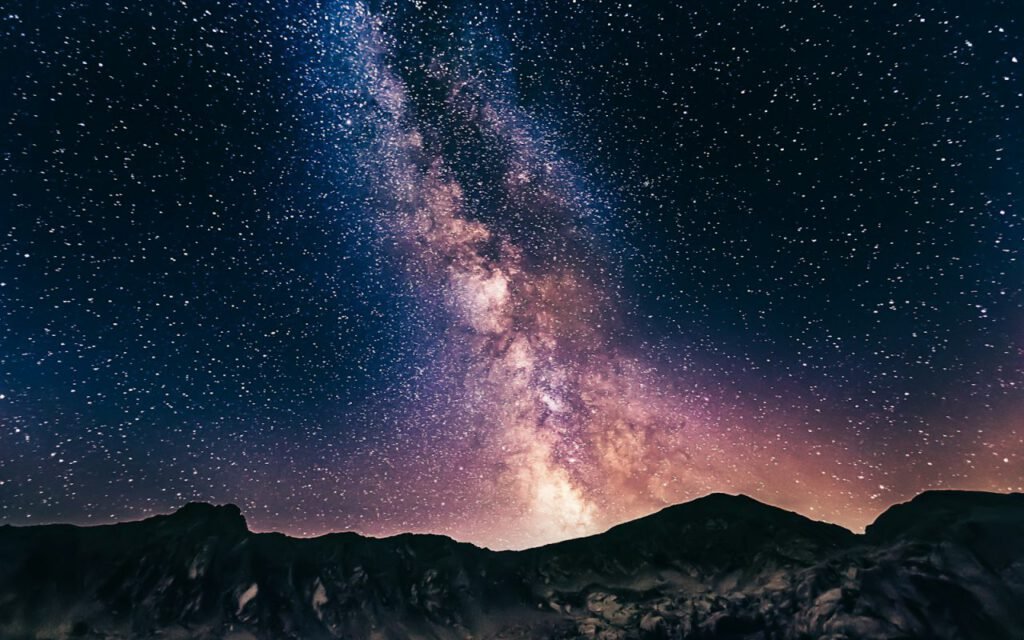

Written by
Lena Ortiz
Lena is an astronomer turned science writer. She has chased three total eclipses and plans to be in Luxor for the fourth.
10Articles
2026Writing since
About a third of the world’s people can no longer see the Milky Way from home because of light pollution. A short drive can change that. For most of human history, the glowing band of our own galaxy was a nightly sight, as familiar as the Moon. It inspired myths, guided travelers and gave generations of children their first sense of how big the universe is. Today, the sky glow from cities and suburbs has washed it out for millions of Americans. The good news is that it has not gone anywhere. With a little planning, you can still stand under it and see it with your own eyes.
What you are actually looking at
The Milky Way is our home galaxy, a vast, flat disk of hundreds of billions of stars, with the Sun sitting about two-thirds of the way out from the center. When you look up and see that soft, cloudy river of light across the sky, you are looking edge-on through the disk. The glow is the combined light of countless distant stars too faint to pick out one by one.
The dark lanes and patches running through it are not empty space. They are clouds of dust that block the light of the stars behind them. In those clouds, new stars are being born. Toward the constellations Sagittarius and Scorpius, low in the southern sky in summer, you are looking toward the bright, crowded center of the galaxy, about 26,000 light-years away.

Find real darkness
Look for an official dark-sky park or any spot far from city lights. Check a light-pollution map before you go. This is the single most important step. You can have perfect weather and perfect timing, but if you are standing in the glow of a city, the Milky Way will be faint or invisible.
Light pollution spreads farther than most people expect. The glow from a large city can brighten the sky dozens of miles away. Free online light-pollution maps use colors to show sky brightness, from bright white and red over cities to deep blue and gray in truly dark areas. Aim for the darkest zones you can reasonably reach.
Where to look in the United States
The country is fortunate to have many excellent dark places, especially in the West. National parks such as Big Bend in Texas, Great Basin in Nevada, Capitol Reef and Bryce Canyon in Utah, and Death Valley in California are known for spectacular night skies. Many have been recognized as official dark-sky parks and host ranger-led astronomy programs. In the East, dark spots are rarer but still within reach, including parts of rural Pennsylvania, northern Maine and the Upper Peninsula of Michigan.
You do not have to travel to a famous park, though. A state park, a rural campground or a quiet farm road a couple of hours from the nearest city may be dark enough for a fine view. Always follow local rules, stay on public land or get permission, and check whether parks are open after dark.
The first time people see it, they always go quiet. Then they ask why nobody told them.
Dr. Lena Ortiz, astronomer
Dr. Lena Ortiz, an astronomer who leads public star parties, has watched that reaction hundreds of times. “Adults especially,” she said. “They grew up near cities and simply never saw it. Then it’s there, stretching from one horizon to the other, and it’s emotional. It’s like discovering a part of the world you didn’t know was missing.”
Let your eyes adjust
It takes 20 to 30 minutes for your eyes to fully adapt. Use a red light, not your phone screen. Human eyes are remarkably good at seeing in the dark, but only after they have had time to adjust. When you step out of a car or a lit building, your pupils widen in seconds, but the deeper chemical changes in your eyes take much longer.
Bright white light undoes that progress almost instantly. A single glance at a phone screen or a car’s headlights can set you back several minutes. That is why astronomers use dim red flashlights, which affect night vision far less. You can buy one cheaply or cover a regular flashlight with red cellophane or tape. Many phones also offer a red-tinted or night mode, though it is still best to keep screen use to a minimum.
A simple viewing trick
To see faint details, try averted vision. Instead of staring straight at a dim patch of sky, look slightly to one side of it. The edges of your vision are more sensitive to faint light than the center, so the Milky Way’s subtle structure, its dark lanes and bright clouds, often pops out more clearly that way.
Plan the perfect night
Timing matters almost as much as location. Here is a simple plan for your first Milky Way trip.
- Check the Moon. A bright Moon washes out the Milky Way. Aim for the days around a new moon, or nights when the Moon sets early or rises late.
- Check the season. In the Northern Hemisphere, summer and early fall offer the brightest view of the galactic core, which rises in the south and southeast in the evening.
- Check the weather. Look for clear skies, low humidity and minimal haze or wildfire smoke.
- Arrive before dark. Get to know your spot in daylight, so you are not stumbling around later.
- Wait for full darkness. True astronomical darkness begins more than an hour after sunset, later in summer.
- Dress warmly. Even summer nights can get chilly, especially in deserts and mountains.
What to bring
- A red flashlight or headlamp with a red setting
- A reclining camp chair or blanket so you can lie back comfortably
- Warm layers, a hat and bug spray
- Water, snacks and a fully charged phone for emergencies
- Binoculars, if you have them
- A printed or downloaded star map, since cell service is often weak in dark areas
Safety comes first. Tell someone where you are going and when you expect to return, watch for wildlife, and be careful driving on dark rural roads, especially late at night when you may be tired.
Binoculars and cameras
No telescope is needed to enjoy the Milky Way. In fact, a telescope’s narrow view would show only a tiny slice of it. Ordinary binoculars, on the other hand, are wonderful. Sweep them slowly along the band of light and you will see it break into countless individual stars, glowing star clusters and soft, fuzzy clouds of gas.
Many people also want to take photos. Modern phones with night modes can capture surprising results if braced on something steady. For sharper images, a camera on a tripod with a wide-angle lens and exposures of 15 to 25 seconds works well. Just remember to spend most of the night simply looking. Dr. Ortiz recommends setting a limit on photo time and putting the phone away for the rest.
Key takeaway: darkness, timing and patience are all you really need. Find a dark spot near a new moon, give your eyes half an hour and look up.
Quick facts
- Best around a new moon
- In the Northern Hemisphere, summer shows the bright galactic core
- No telescope needed — binoculars help
Seeing the Milky Way is one of those experiences that sounds simple and feels profound. You are looking at the galaxy you live in, from the inside, by the light of stars that have been shining for millions of years. It costs nothing but a little time and a drive away from the lights. Pick a night, check the Moon and go find it. Then share the view with someone who has never seen it before.
Written by
Lena Ortiz
Lena is an astronomer turned science writer. She has chased three total eclipses and plans to be in Luxor for the fourth.
10Articles
2026Writing since
Read next
SpaceUniversity Telescope Spots a Comet That Will Be Visible This WinterAstronomers say it may be bright enough to see without binoculars by mid-January. SpaceCommercial Rocket Launch Lights Up the Coast at DawnThousands gathered on the beach for the first launch from the new coastal pad.
 SpaceThe Longest Eclipse of the Century Is Coming: August 2, 2027Up to six minutes of totality across Spain, North Africa and Egypt. Here’s how to plan.
 SpaceSaturn’s Rings Are Made Mostly of Ice — and They ChangeWhy the rings seemed to vanish in 2025, and what they’re really made of.
 SpaceWhy Is Mars Red? The Answer Is RustIron, oxygen and billions of years of dust storms.
 SpaceThe Northern Lights Are Showing Up Farther South. Here’s Why.The Sun’s busy cycle brought auroras to places that rarely see them.
Start the conversation