

 Slow TravelCabin Weekends: How to Find (and Book) the Perfect CabinWhat to look for, how far ahead to book and our checklist for a cozy two-night…
Travel Tips Ella Morgan6 min read
Hiking Safety: The Ten Essentials for Every Trail
What to carry on a day hike, how to read the weather and when to turn around.
Ella Morgan6 min read

Written by
Ella Morgan
Ella has visited 52 national parks and writes every guide after walking the trails herself. She started The Wander Journal from a campervan in 2015.
13Articles
2026Writing since
Most search-and-rescue calls in national parks involve day hikers who were a few hours from the car. Not mountaineers on remote peaks, not backpackers a week into the wilderness, but ordinary people out for a pleasant afternoon who twisted an ankle, lost the trail at dusk or got caught by a storm in a cotton T-shirt. The good news is that the gear that turns a bad afternoon into a story instead of an emergency is not heavy or expensive. The ten essentials fit in a small daypack, and once you build the habit of carrying them, you will stop thinking about it at all.
Best time Every hike · Stay Day hikes · Budget $
Advertisement Sponsored · Skyward Rewards Card60,000 bonus milesAfter $3,000 spent in the first 3 months.Apply now
Sponsored · Skyward Rewards Card60,000 bonus milesAfter $3,000 spent in the first 3 months.Apply nowThe ten essentials
The list has been around for generations, and it has changed shape as gear has improved, but the idea is the same: carry what you would need to get through an unplanned night outside or to find your way back when things go sideways. Here is the list as I pack it today.
- Navigation. A paper map of the area, a compass, and a phone with the map downloaded for offline use.
- A headlamp. With fresh batteries or a full charge. Phone flashlights drain the battery you may need for a call.
- Sun protection. Sunglasses, sunscreen, lip balm and a hat. At altitude the sun is stronger than you expect.
- First aid. A small kit with bandages, blister care, pain relievers, tape and any personal medications.
- A knife. Or a simple multitool, useful for gear repair, first aid and food.
- Fire. Waterproof matches or a lighter, plus a little fire starter, kept dry in a zip bag.
- Shelter. An emergency blanket or lightweight bivy that weighs a few ounces.
- Extra food. More than you plan to eat; a couple of bars or a bag of trail mix.
- Extra water. Plus a way to treat more, such as a filter or tablets.
- Extra clothes. A warm layer and a rain shell, even when the morning is sunny.
None of this needs to be fancy. My own kit lives in a gallon zip bag that moves from pack to pack, so I never leave the trailhead without it. Once a season I open it up, replace anything used or expired, and check the headlamp batteries.

Why both a paper map and a phone map
Phones are wonderful navigation tools until they are not. Cold drains batteries quickly, screens are hard to read in bright sun, and signal disappears in canyons and deep forest. A paper map gives you the big picture at a glance, and it works in the rain. Carry both, know how to read both, and keep your phone in airplane mode to save power when you do not need it.
Packing for the season
The core list stays the same all year, but the details shift with the calendar. In spring, trails can be muddy and creeks run high with snowmelt, so waterproof boots and trekking poles earn their place. Summer calls for more water, more sun protection and an earlier start. Fall brings short days and cold mornings, which makes the headlamp and an extra warm layer even more important. In winter, add traction devices for icy paths, a thermos of something hot and a hat and gloves you can swap when the first pair gets damp. Before any trip, check the park website for closures, wildlife notices and trail conditions, and ask a ranger if anything is unclear.
AdvertisementSponsored · Skyward Rewards Card60,000 bonus milesAfter $3,000 spent in the first 3 months.Apply now
Sponsored · Skyward Rewards Card60,000 bonus milesAfter $3,000 spent in the first 3 months.Apply nowRead the weather
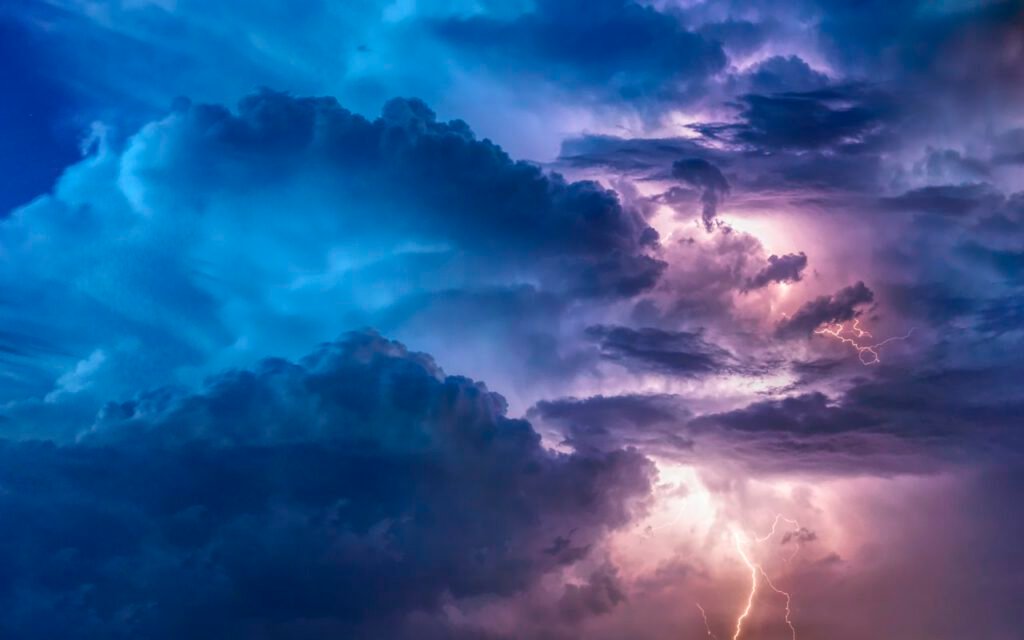
In the mountains, plan to be off summits by early afternoon when storms build. On many summer days the pattern is predictable: clear blue skies at breakfast, puffy white clouds by late morning, and towering dark thunderheads by 1 or 2 p.m. Lightning is one of the most serious hazards on exposed ridges and peaks, and the safest strategy is simply not to be there when it arrives.
Before any hike, check the forecast for the trail itself, not just the nearest town. Elevation changes everything; a pleasant 75 degrees in the valley can mean 50 degrees and wind at the top. Many park visitor centers post the day’s forecast near the entrance, and rangers are happy to tell you what they are seeing. On the trail, keep looking up. Watch for clouds growing taller, a sudden drop in temperature or a shift in wind, and treat thunder as a signal to head down immediately.
Heat is the other big weather risk, especially in desert parks. Start early, rest in shade during the hottest hours and drink steadily rather than all at once. If you feel dizzy, confused or stop sweating, stop, cool down and get help. For anything beyond general guidance, talk with your doctor about how heat and altitude affect you personally.
Know when to turn around
Set a turnaround time before you start and stick to it, even if the summit looks close. This is the hardest rule on the list, because it asks you to make a decision in the parking lot that your tired, excited, almost-there self will want to overrule. That is exactly why it works.
Here is how I set mine. I look at the time it should take to reach the top, add a cushion, and then work backward from sunset or from the time storms usually arrive. If I have not reached my goal by the turnaround time, I turn around. The mountain will still be there next weekend. The view from a little lower down is often just as beautiful, and I get to enjoy it without the nagging worry of a race against the dark.
Tell someone your route and when you expect to be back. It is the simplest safety step there is.
Park ranger Eli Navarro
Ranger Navarro told me that a clear trip plan left with a friend is often the single detail that shortens a search. Write down the trailhead, your planned route, who is with you, what you are wearing and when you expect to be back. Then agree on a time when your friend should call for help if they have not heard from you.
Other good reasons to turn back
- Someone in your group is moving much slower than expected or feels unwell.
- The trail conditions are worse than described, such as snow, ice or high water at a crossing.
- You have used more than half your water before the halfway point.
- Your gut tells you something is off. Trust it.

Key takeaway: The summit is optional; getting back to the car is not. A turnaround time decided in advance protects you from your own enthusiasm.
Don’t miss
If you remember nothing else from this post, remember these four habits. They take almost no time and cost very little, and they cover the most common ways a day hike goes wrong.
- A paper map and a phone map
- A headlamp, even for day hikes
- Twice the water you think you need
- A turnaround time
Small habits, safer trails
Safety on the trail is not about fear. It is about freedom: the freedom to enjoy a long day outside knowing you can handle a surprise. Pack the ten essentials, check the mountain forecast, tell someone your plan and set a turnaround time you will honor. Learn basic first aid if you can; many community centers and outdoor clubs offer weekend courses taught by trained instructors. Then go out and walk. Watch the light change on the peaks, listen to the creek, and come home tired and happy. That is the whole point.
Written by
Ella Morgan
Ella has visited 52 national parks and writes every guide after walking the trails herself. She started The Wander Journal from a campervan in 2015.
13Articles
2026Writing since
Read next
Slow TravelCabin Weekends: How to Find (and Book) the Perfect CabinWhat to look for, how far ahead to book and our checklist for a cozy two-night… Travel TipsHow We Plan a Trip in One Evening (and Stick to the Budget)Our four-step method: pick the season, map the route, book the stays and leave room for…
 Travel TipsThe Carry-On-Only Packing List for Any TripEverything we pack for a week — and the five things we stopped bringing.
 Travel TipsHow to Find Cheap Flights: What Actually Works in 2026Flexible dates, nearby airports and the price alerts we set for every trip.
 Travel TipsWhy We Keep a Travel Journal (and How to Start One)Five minutes a night, a few tickets taped in, and memories that photos don’t keep.
Start the conversation