Why a Daily Walk With the Dog Is Good for You, Too
Thirty minutes, twice a day, in any weather: what dog owners already know about health.
 Rose Ellison6 min read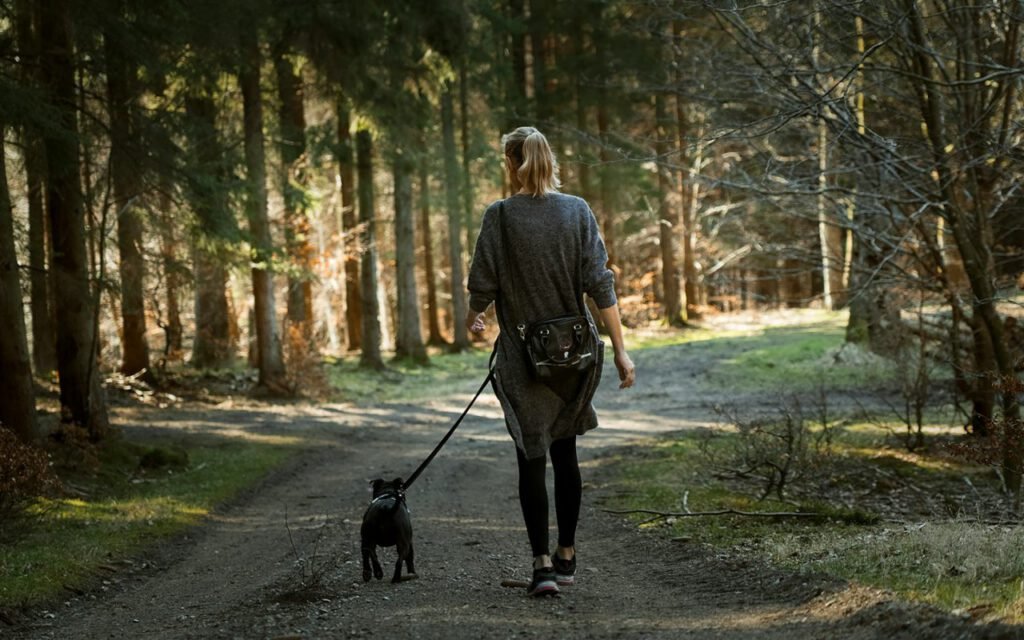

Rose Ellison
Rose founded Slow Sunday in 2016 as a printed zine for her neighbors. She still edits every issue from a desk by the window.



Dog owners walk about 22 minutes more per day than people without dogs. They also talk to more neighbors, sleep better and spend more time outdoors. Anyone who has ever stood at the back door at 6:30 on a February morning, leash in hand and a wagging tail at their knees, understands why. A dog does not accept excuses. It does not care that it is raining, that you are tired or that you have a meeting at nine. It simply needs to go out, and so, it turns out, do you.
We asked a handful of Slow Sunday readers, a veterinarian and a forest therapy guide what they have learned from years of twice-daily walks. Their answers were less about fitness than about rhythm: the quiet structure a dog brings to the day, the small conversations on the sidewalk, and the simple pleasure of noticing the seasons change one block at a time. Here is what they told us, along with a few practical tips for making your own walks easier and more enjoyable, whatever the weather.
 Sponsored · Hearthside CandlesHand-poured in VermontTwelve new fall scents, out now.Shop candles
The best routine
A brisk morning walk and a slow evening one. The morning walk wakes you up; the evening one winds you down. Thirty minutes each, twice a day, adds up to an hour of moderate movement without ever feeling like exercise. For most healthy adults, that is a generous amount of daily activity, though anyone with a heart condition, joint problems or other health concerns should check with a doctor about what is right for them.
The morning walk is about pace. Keep the leash short, swing your arms and aim for a route that gets your heart going a little: a gentle hill, a loop around the park, a few extra blocks. Early daylight on your face can help set your body clock, which many people find makes it easier to fall asleep at night.
The evening walk is the opposite. Let the dog lead. Stop when it wants to sniff a fence post for a full minute. Look up at the sky. Leave the phone in your pocket. Those twenty or thirty minutes become a buffer between the working day and the evening, a time when thoughts settle and the shoulders drop.
Why it sticks
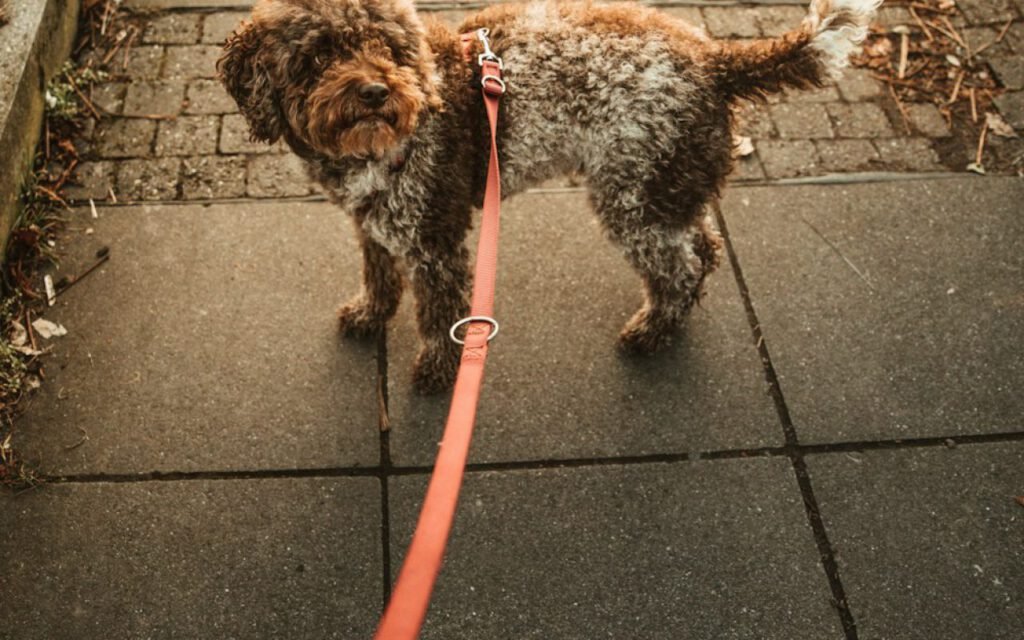
Most exercise plans fail because they rely on motivation. Dog walking relies on obligation, which is far more dependable. Dr. Paul Ramsey, a veterinarian in Madison, Wisconsin, says he sees the effect in his clients all the time. “People tell me they started walking for the dog,” he says, “and they kept walking for themselves.” Adult dogs of most breeds benefit from at least two walks a day, so the habit serves you both. Ask your own vet how much exercise suits your dog’s age and breed.
Sponsored · Hearthside CandlesHand-poured in VermontTwelve new fall scents, out now.Shop candlesIn any weather
Bad weather is just a reason to buy a better coat. The dog doesn’t care.
Dr. Leah Morrison, certified forest therapy guide
Dr. Morrison leads slow, guided walks through the woods outside Asheville, North Carolina, and she believes some of the best walks happen on the days most people stay in. Rain softens the sound of traffic and brings out the smell of earth and leaves. Light snow turns a familiar street into a new place. A cold, clear morning wakes up every sense.
The key is being dressed for it. A waterproof coat with a hood, shoes with good grip and a hat in winter make the difference between a miserable walk and a pleasant one. On icy days, shorten the route and stick to cleared sidewalks. In summer heat, walk early and late, carry water for both of you, and test the pavement with the back of your hand: if it is too hot to hold for several seconds, it is too hot for paws.
Vary the route
New smells for the dog, new sights for you. Try a different path once a week. Dogs experience the world mostly through their noses, and a new route is the canine equivalent of reading a fresh newspaper. A dog that comes home from an unfamiliar walk is often calmer and more tired than one that has trudged the same loop for an hour.
For people, variety keeps walking from becoming a chore. Readers shared some of their favorite ways to mix things up:
- Walk your usual route in reverse, which makes it surprisingly unfamiliar
- Drive ten minutes to a park or trail on Saturday mornings
- Explore a nearby neighborhood you have never walked through
- Take a slow sniff walk, where the dog chooses every turn
- Join a group walk organized by a local shelter or training club
One reader in Ann Arbor, Michigan, keeps a paper map of her town on the fridge and colors in each street after she and her terrier have walked it. Three years in, more than half the map is shaded.

The neighbors you meet
Walk the same streets at the same time every day and something happens: people start to recognize you. First it is a nod, then a comment about the dog, then a real conversation. Many dog owners say they know more of their neighbors by their dog’s name than by their own. These small, regular encounters matter. They make a neighborhood feel friendlier and safer, and for people who live alone or work from home, they can be the most social part of the day.
Be considerate, of course. Always carry bags and clean up after your dog, keep it leashed where the rules require it, and ask before letting it greet another dog or a child. A well-mannered dog on a regular route becomes part of the life of the street.
No dog? Borrow one
Many shelters welcome volunteer dog walkers on weekends. Shelter dogs often spend long hours in kennels, and a walk with a volunteer gives them exercise, attention and practice behaving on a leash, all of which make them more likely to be adopted. Most shelters ask volunteers to attend a short orientation first, and some pair new walkers with calmer dogs until they gain confidence.
You can also offer to walk a friend’s or neighbor’s dog, especially for older owners who find long walks difficult. It is a kindness that benefits everyone involved, including you.
Gear
You do not need much, but a few good things make every walk easier, especially through the darker months:
- A good raincoat
- Reflective gear for winter evenings
- Treats in every pocket
Add a sturdy leash that feels comfortable in your hand, a small light clipped to the collar after dark and a bag dispenser attached to the leash so you never leave without one. A towel by the door saves your floors on muddy days.
It also helps to think of the walk as shared time rather than a task to finish. Talk to your dog, let it pause at its favorite corners and notice what it notices: a squirrel in the oak tree, a new bench in the park, the first crocuses by the mailbox. Several readers told us that the walks they remember best were not the longest or fastest, but the ones where they stopped hurrying and simply paid attention. A dog is very good at teaching that lesson, if we let it.
Key takeaway: Two walks a day, one brisk and one slow, in any weather, on a route that changes now and then. Your dog will be happier, and you probably will be too.
Tomorrow morning, when the alarm goes off and the dog is already waiting by the door, try to see it not as a chore but as an invitation. The world outside is different every day. Your dog already knows that.
Rose Ellison
Rose founded Slow Sunday in 2016 as a printed zine for her neighbors. She still edits every issue from a desk by the window.


Start the conversation