


 Books & IdeasOpinion: Our Libraries Are the Last Free Indoor Places. Fund Them Like ItLibraries now do the work of community centers, job offices and cooling centers. Their budgets haven’t…
Books & Ideas Clara Benson6 min read
Used Bookstores Are My Favorite Libraries
The joy of a $3 paperback with someone else’s notes inside.
Clara Benson6 min read
Written by
Clara Benson
Clara has cooked in four restaurants and written about hundreds more.
8Articles
2026Writing since
I have bought most of my favorite books for under five dollars, in shops that smell like dust and coffee. Not all of them, but most. The poetry collection I carry in my coat pocket cost two dollars and fifty cents. The novel that changed how I think about endings cost three. My single most treasured book, a battered field guide to the birds of the Pacific Northwest with someone’s sightings penciled in every margin, cost a dollar, because the cover was falling off.
The best part is what previous owners leave behind: a ticket stub, a pressed flower, a note in the margin. I love libraries, and I use mine constantly. But used bookstores are libraries of a different kind. Every book on their shelves has already lived a life, and some of them are happy to tell you about it.
Advertisement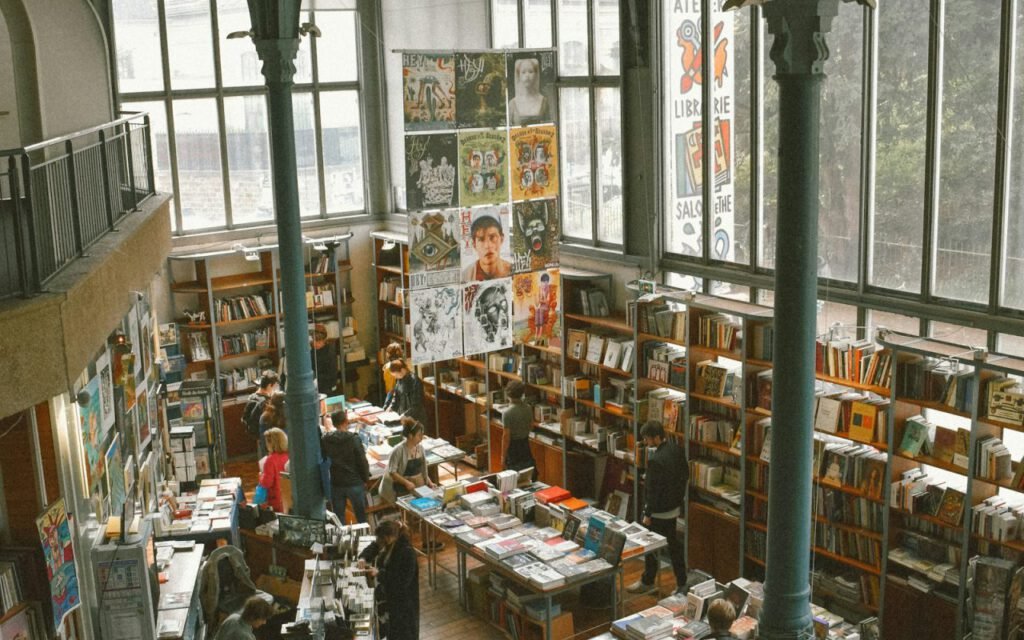 Sponsored · Fernhill BooksIndependent since 1974Free shipping on orders over $35.Shop books
Sponsored · Fernhill BooksIndependent since 1974Free shipping on orders over $35.Shop booksWhy used, not new
I want to be clear that I buy new books too. Authors need to get paid, and independent bookstores are treasures that deserve our support. When a writer I love publishes something new, I buy it new, at full price, and I am glad to.
But used bookstores offer something no other shop does, and it is not just the low prices. It is the randomness. A new bookstore is curated around what is popular and recent. A used bookstore is curated by chance, by whatever people in your town happened to read, love and eventually give away. You never know what you will find. That uncertainty is the whole pleasure.
There is also something quietly satisfying about giving a book a second home. It keeps paper out of the landfill, and it keeps stories in circulation. A book on a shelf is waiting. A book in someone’s hands is alive.
And then there is the pace. Nobody rushes in a used bookstore. There are no bright displays telling you what to buy this week, no loud music, no countdown to a sale. There is usually a cat asleep on a stack of atlases, a radio playing softly behind the counter and an owner who looks up, nods and goes back to their own book. It is one of the last places I know where wandering slowly is not just allowed but expected.
AdvertisementSponsored · Fernhill BooksIndependent since 1974Free shipping on orders over $35.Shop books
Sponsored · Fernhill BooksIndependent since 1974Free shipping on orders over $35.Shop books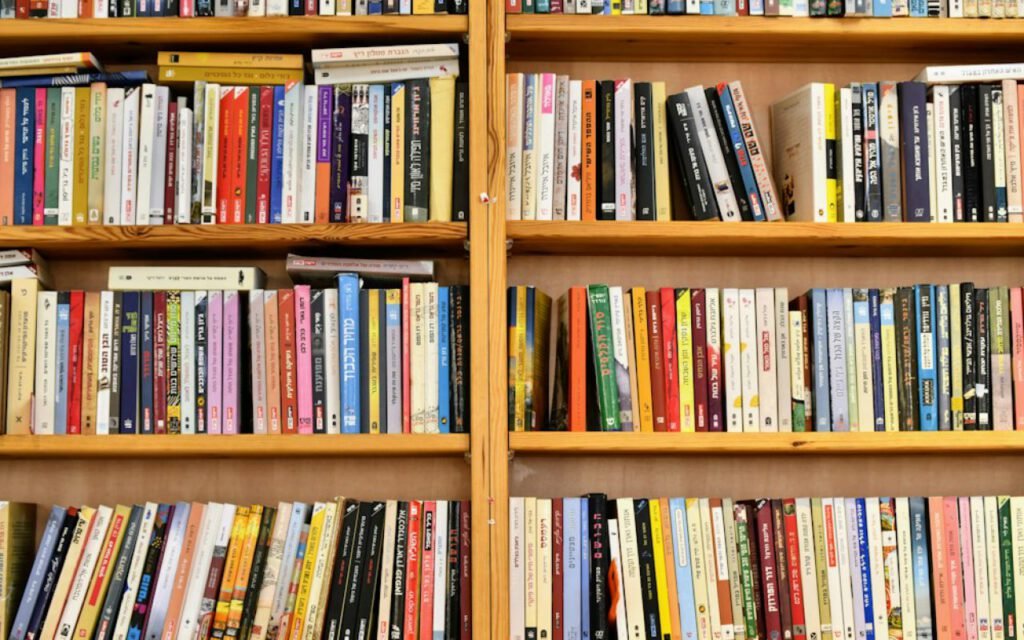
How I browse
Start in the section you never visit. That’s where the surprises are. If you always head straight for fiction, begin with gardening. If you love history, start in science. Wander through cookbooks, travel guides, books on knot tying and woodworking and birds. Some of the best writing I have ever found was hiding in sections I would never have chosen on purpose.
Here are the rest of my browsing habits, developed over twenty years of happy wasted afternoons.
- Go without a list. If you are looking for a specific title, order it online. A used bookstore is for finding what you did not know you wanted.
- Check the bottom shelves. Most people browse at eye level. The bottom shelves are where forgotten treasures wait.
- Open every book. Flip through the pages, check the inside cover, look for inscriptions and bookmarks.
- Read the first page. If a single paragraph pulls you in, buy it. It costs less than a cup of coffee.
- Talk to the owner. People who run used bookstores usually know their stock better than anyone. Ask what they have been reading.
- Budget loosely. I set myself a soft limit of twenty dollars a visit. I break it about half the time.
Two stories in every book
The thing I love most about used books is that they come with history. Inside the covers of my secondhand library, I have found an astonishing collection of objects and messages.
Every used book has two stories: the one printed and the one lived.
Nora
A few of my favorites, gathered over the years:
- A bus ticket from Chicago to Milwaukee, dated 1979, tucked inside a novel about a long journey.
- A pressed four-leaf clover, still green, in a book of Irish folk tales.
- An inscription in a cookbook: “For Margaret, who still can’t boil an egg. Love, Dad.”
- A child’s drawing of a horse, folded in quarters, inside a history of the American West.
- Margin notes in a philosophy text, arguing furiously with the author for three hundred pages, then simply writing “OK, fine” on the last one.
I keep all of these exactly where I found them. They are part of the book now. When I eventually pass these books on, I hope the next reader finds them and wonders, as I did, who Margaret was and whether she ever learned to boil that egg.
What I found last week
A 1962 poetry collection with a grocery list used as a bookmark: eggs, lemons, stamps. I found it on the bottom shelf in the back corner of a shop near the river, wedged between a dictionary and a guide to fixing small engines. It cost four dollars.
The poems are lovely, mostly short pieces about farm life in Iowa by a poet I had never heard of and cannot find much about anywhere. But it is the grocery list that I keep coming back to. It is written in blue ink on a small square of paper, in neat, slanted handwriting. Three items. Eggs, lemons, stamps.
I have spent an unreasonable amount of time thinking about that list. Someone was baking, I think. Lemon bars, maybe, or a lemon pound cake. And they were writing to someone. Stamps, in the age of letters, meant connection. They tucked the list into a book of poems, perhaps while waiting at the store, and then lost it, or forgot it, or simply left it there. Sixty years later, it found me.
I will probably never know who wrote it. But I have decided that whoever it was, they made the lemon bars, they mailed their letters and they finished the book. That is the story I am keeping.
Key takeaway: browse the sections you usually skip, open every book and treat whatever you find inside as part of the story.
Finding a shop near you
Many towns still have at least one used bookstore, though they can be hard to find. They tend to live on side streets, above other shops or in old houses converted into rambling warrens of shelves. Ask at your local library; librarians almost always know. Check community bulletin boards. Friends of the Library sales, church rummage sales and estate sales are wonderful sources too, often with even lower prices.
When you find a good shop, become a regular. Learn the owner’s name. Tell them what you love. A good bookseller will start setting things aside for you, and there is no better feeling than walking in and hearing, “I was hoping you’d come by. I found something you’ll like.”
A library you build yourself
I called used bookstores my favorite libraries, and I mean it. A public library is a gift we share. A used bookstore lets you build a library of your own, one cheap, strange, beloved book at a time, each one carrying the fingerprints of whoever loved it before you.
My shelves at home are full of these books now. Some I have read many times. Some I have never finished. All of them have stories I will never fully know. And every few weeks I go back to the shop by the river, start in a section I never visit and wait to see what finds me next.
Written by
Clara Benson
Clara has cooked in four restaurants and written about hundreds more.
8Articles
2026Writing since
Read next
Books & IdeasOpinion: Our Libraries Are the Last Free Indoor Places. Fund Them Like ItLibraries now do the work of community centers, job offices and cooling centers. Their budgets haven’t… Books & IdeasOpinion: Bring Back the Neighborhood Bus Stop BenchSmall comforts make transit usable for everyone. Start with somewhere to sit.Books & IdeasA Neighborhood Bookstore Celebrates 50 Years With a Block PartyLive music, a used-book sale and readings by local authors — plus the story of how…
 Books & IdeasOpinion: Every Neighborhood Deserves a Library Open on SundaysSunday is the one day families are free. Most of our branches are closed.
Start the conversation