


 Home & LivingThe Five-Minute Morning Routine Doctors Actually RecommendWater, light, a short walk and two other habits that make a measurable difference by noon.
Home & Living Clara Benson6 min read
How to Make a Small Apartment Feel Twice as Big
Mirrors, legs on furniture and one rug instead of three: designers share the tricks that actually work.
Clara Benson6 min read

Written by
Clara Benson
Clara has cooked in four restaurants and written about hundreds more.
8Articles
2026Writing since
We asked three interior designers how they make tight city apartments feel open. Their advice overlapped more than we expected. None of them suggested knocking down walls or buying expensive custom furniture. Instead, they talked about light, sight lines, scale and the quiet discipline of owning fewer things. Whether you rent a 450-square-foot studio in Chicago or a one-bedroom walk-up in San Francisco, the tricks that actually work are surprisingly simple, and most of them cost very little.
Our designers were Olivia Reed, who specializes in small urban homes; Daniel Price, who designs rental-friendly makeovers; and Monica Hale, who works mostly with families living in compact apartments. We visited several of their projects and asked them to share the rules they rely on most.
Advertisement Sponsored · Fernhill BooksIndependent since 1974Free shipping on orders over $35.Shop books
Sponsored · Fernhill BooksIndependent since 1974Free shipping on orders over $35.Shop booksRaise everything up
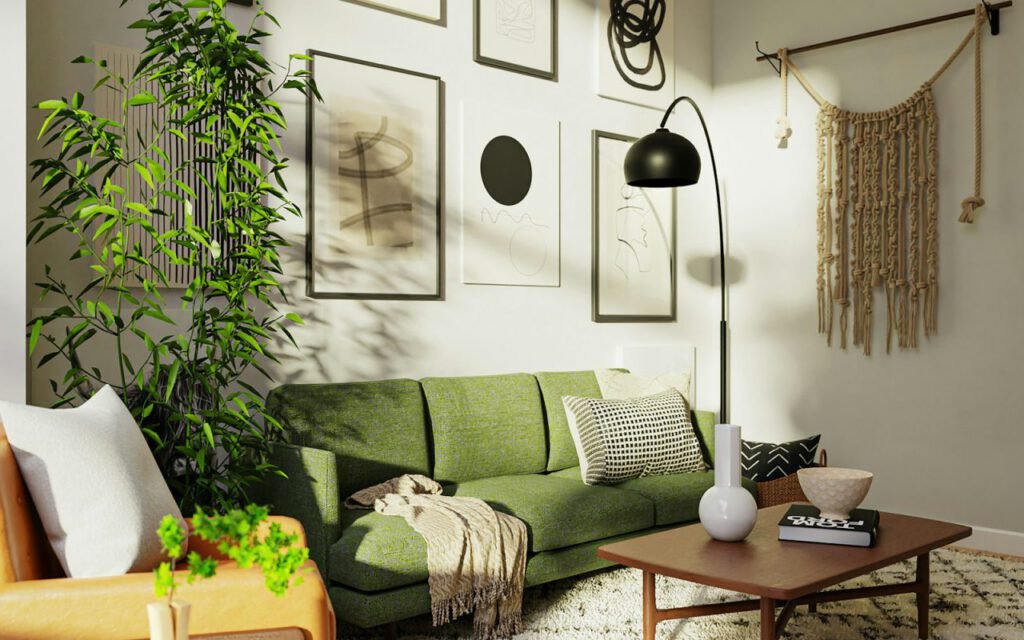
Sofas, beds and dressers on legs let light travel under them. The floor you can see makes the room feel larger. All three designers mentioned this rule first, and it was the one they said surprised clients most.
Furniture that sits directly on the floor creates heavy blocks of visual weight. When light can pass underneath a sofa or a cabinet, the eye reads more open floor space, and the room feels airier. Reed said she often swaps a client’s bulky, skirted sofa for a slimmer model on tall, tapered legs, and the change is noticeable the moment it arrives.
The same idea applies to storage. Wall-mounted shelves, floating desks and nightstands that attach to the wall keep the floor clear. Price, who works mostly with renters, suggested freestanding pieces with open legs as a renter-friendly alternative when drilling into walls is not allowed.
One big rug
A single large rug that reaches under the furniture makes a room read as one space instead of several small ones. Many people do the opposite, scattering two or three small rugs around a room in an effort to add warmth. The result, designers say, is a choppy floor that makes the space feel smaller and busier.
AdvertisementSponsored · Fernhill BooksIndependent since 1974Free shipping on orders over $35.Shop books
Sponsored · Fernhill BooksIndependent since 1974Free shipping on orders over $35.Shop booksHale recommends choosing a rug large enough that at least the front legs of every major piece of furniture sit on it. In a living room, that usually means a rug that extends a few inches past each end of the sofa. In a bedroom, the rug should reach well beyond the sides of the bed, so your feet land on it when you get up in the morning.
Light, solid or subtly patterned rugs tend to work best in small rooms, since they blend with the floor and let other pieces stand out. A busy, high-contrast pattern can work too, but designers suggest keeping the rest of the room calm if you go that route.
Use light and mirrors well
Light is the most powerful tool in a small space. Every designer we spoke with said to start by making the most of natural light, then add layers of lamps for evening.
Natural light
Keep window treatments simple and light. Sheer curtains or light-filtering shades let in more daylight than heavy drapes. Hang curtain rods higher and wider than the window frame, so the curtains sit beside the glass rather than covering it. This also makes ceilings look taller and windows look larger.
Mirrors
A large mirror placed across from or beside a window bounces daylight deeper into the room and creates a sense of depth. Reed prefers one oversized mirror to a cluster of small ones. “A big mirror reads like a window,” she said. “A gallery of little mirrors reads like clutter.” Leaning a tall floor mirror against a wall is a good renter-friendly option.
Lamps
Overhead lighting alone can make a small room feel flat. Designers recommend at least three light sources in a living area: a floor lamp, a table lamp and an accent light, such as a small lamp on a bookshelf. Wall-mounted sconces with plug-in cords save surface space and do not require an electrician.
Clutter shrinks a room faster than square footage does.
Interior designer Olivia Reed
Edit before you decorate
Reed’s line came up in some form with all three designers. Before buying anything new, they suggest taking a hard look at what is already in the apartment. Too many objects, too much furniture and crowded surfaces make even a generous room feel tight.
Here is the editing routine Hale uses with clients:
- Clear every surface, including tables, counters and shelves, then put back only what you use or love.
- Remove any piece of furniture you have to walk around to reach something else.
- Store seasonal items, extra linens and rarely used gear out of sight, in closed bins or under the bed.
- Choose closed storage over open shelving where possible, so visual clutter stays hidden.
- Repeat the process every season, since clutter tends to creep back.
Price added that multipurpose furniture is a small-space hero. A storage ottoman can be a footrest, a seat and a blanket bin. A drop-leaf table works as a desk by day and a dining table for guests. A bed with built-in drawers can replace a dresser entirely.

Rethink the layout
Before buying anything, try moving what you already own. Pull furniture a few inches away from the walls, so the room feels less like a waiting room. Keep a clear walking path from the front door to the windows, since an open line of sight toward natural light makes a space feel longer. In a studio, use a bookshelf, a rug or a curtain to define separate zones for sleeping, working and relaxing without building walls. Price said many of his favorite makeovers involved no new purchases at all, just an afternoon of rearranging and a willingness to try a layout that felt unusual at first.
Color and scale
Light, soft wall colors reflect more light and make walls seem to recede. White, warm off-whites, pale grays and soft greens all work well. But designers were quick to say dark colors are not off-limits. A deep color on every wall can blur the corners of a small room and make it feel cozy rather than cramped. The key is commitment. Half-measures tend to look accidental.
Scale matters just as much as color. Many people choose small furniture for small rooms, but a room full of tiny pieces can look cluttered. Designers suggest fewer, well-proportioned pieces instead. A full-size sofa with slim arms often works better than a loveseat and two chairs.
- Paint the ceiling the same color as the walls, or a shade lighter, to soften the edges of the room.
- Choose glass or acrylic tables, which take up space without blocking the view.
- Hang art a little higher than usual to draw the eye upward.
- Keep a consistent color palette between rooms so the apartment flows as one space.
Key takeaway: Raise furniture, choose one big rug, add a large mirror and edit ruthlessly. Those four changes do more than any new purchase.
Small space, big comfort
The designers agreed on one final point: a small apartment should feel like a refuge, not a puzzle. Start with the free changes, such as clearing surfaces and rearranging furniture, before spending money on new pieces. Then add one improvement at a time and live with it for a week before deciding on the next. With a few smart choices, even the smallest city apartment can feel open, calm and genuinely twice as big.
Written by
Clara Benson
Clara has cooked in four restaurants and written about hundreds more.
8Articles
2026Writing since
Read next
Home & LivingThe Five-Minute Morning Routine Doctors Actually RecommendWater, light, a short walk and two other habits that make a measurable difference by noon. Home & LivingInside the Community Garden Feeding 300 FamiliesVolunteers grow 12 tons of vegetables a year on a former parking lot — and give…
 CultureMeet the Potter Making Bowls for America’s Best KitchensFrom a converted barn in Kentucky, one maker throws 3,000 pieces a year — every one…
 Home & LivingSmart Storage Ideas for Tiny KitchensWalls, doors and the space above the cabinets.