


 CitiesInside the Plan to Turn Empty Downtown Offices Into 1,200 ApartmentsDevelopers say converting three towers will take four years. Neighbors want to know who will be…
Watch any successful plaza and you will see the same thing: people sitting on steps. Office workers with lunch on their knees, teenagers in loose clusters, a grandmother watching a toddler chase pigeons. Very few of them are on the benches that were carefully drawn into the plan. They are on the stairs, the ledges and the edges of planters. Designers are finally building for it.
Essay by Nora Kessler · Series Good Places · Reading time 5 minutes
For decades, many American public spaces were designed to be looked at rather than used. Plazas in front of office towers were wide, hard and empty, with a fountain or a sculpture in the middle and very little shade. Seating, when it existed, was often uncomfortable on purpose, meant to discourage people from staying too long. The results were predictable. Those places stood empty except for people walking quickly through them.
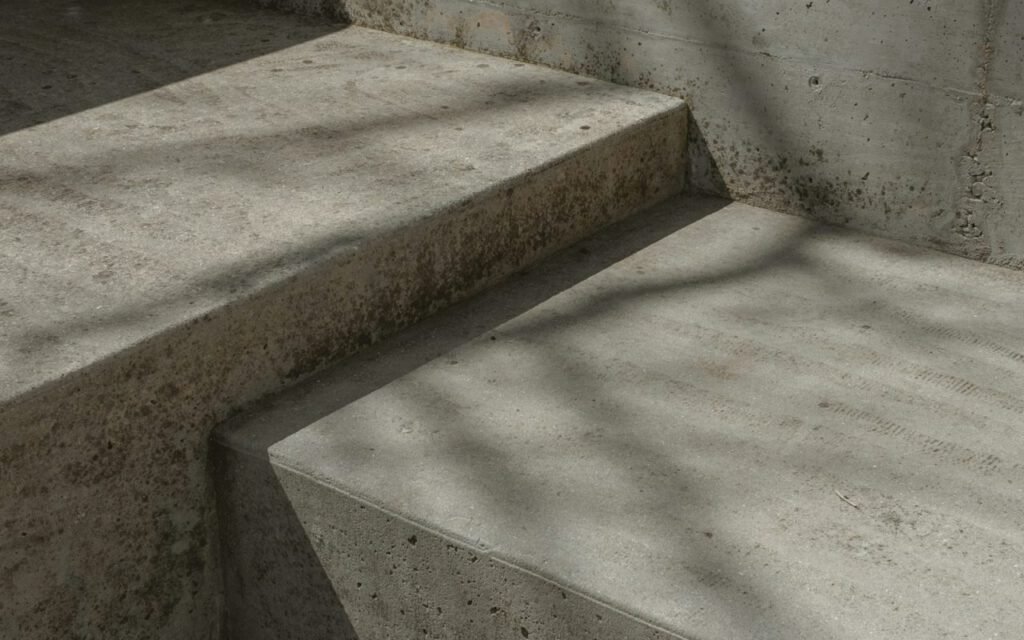
A new generation of landscape architects and urban designers is working from a different starting point. Instead of asking what a space should look like, they ask how people will actually behave in it. The answers are surprisingly simple, and many of them involve concrete steps.
Why steps work
Steps do something benches cannot. They let people choose how close to sit to one another. A bench seats two or three strangers in an awkward row. A wide set of steps can hold one person or two hundred, scattered in whatever arrangement feels comfortable. People can face the street, face each other or face the sun. They can sit, lean, lie down or perch at the edge.
Steps also create a natural audience. A broad stair facing a plaza turns everything happening below into something to watch: a street performer, a lunchtime concert, a kid on a scooter. Urban researchers have long observed that people like to sit where they can see other people, and steps offer the best view in the house.

Seat height everywhere
Steps, ledges and planters at 18 inches become seating without a single bench. That number comes up again and again in conversations with designers. It is roughly the height of a dining chair, comfortable for most adults to sit on and stand up from. Build an edge at that height and people will use it.
People sit where it is easy to sit. That is the whole secret.
Tamara Price, Common Ground Studio
Price, a landscape architect whose firm Common Ground Studio has redesigned plazas in Detroit and Cleveland, calls this “seating by stealth.” Her team looks for every edge in a project, the rim of a planter, the side of a ramp, the top of a retaining wall, and asks whether it could be set at sitting height. Often it costs nothing extra. The wall has to be built anyway.
A few rules designers follow
- Make the treads deep enough to sit on with feet on the step below, usually wider than a standard stair.
- Keep at least one clear path with handrails so people who need support can move through easily.
- Round or chamfer the edges so they are comfortable to sit on and do not chip.
- Pair seating steps with at least a few seats that have backs and arms for people who need them.
- Think about the surface temperature. Dark stone in full sun can get too hot to touch in summer.
That last point about accessibility matters. Steps are wonderful for many people and impossible for some. The best projects combine broad stairs with gentle ramps and a mix of seating types, so wheelchair users, older visitors and parents with strollers all have a comfortable place in the same space.
Shade matters most
In hot cities, a tree is worth more than any sculpture. Every designer we spoke with said the same thing in different words. A plaza without shade is a plaza that empties between noon and four in the afternoon for half the year. With summers getting hotter across much of the country, shade is no longer a nice extra. It is the first thing to plan.

Trees take years to mature, so many projects combine new planting with shade structures, trellises or canopies that do the job while the trees grow. Designers in Phoenix and Houston are experimenting with lightweight shade sails, misting systems and light-colored paving that stays cooler underfoot. Cities including Los Angeles have published guidance encouraging more street trees in neighborhoods that have historically had few.
Placement matters too. Steps that face south catch winter sun, which makes them pleasant in cold months, but they need afternoon shade in summer. Deciduous trees can solve both problems at once, offering cover in July and letting light through in January.
Somewhere to put a coffee
Small details decide whether people stay for five minutes or fifty. A low ledge beside a seating step becomes a table for a coffee cup. A nearby kiosk or food cart gives people a reason to come. Public restrooms, drinking fountains and good lighting after dark all make a space feel cared for. Wi-Fi and a few outlets help too, especially for students and remote workers.
- Start with the paths people already walk and do not block them.
- Put seating where there is something to watch.
- Provide shade before anything decorative.
- Add food, water and restrooms within easy reach.
- Light the space well enough that it feels safe at night.
Movable chairs, made famous in a handful of well-loved city parks, are another tool. They let people create their own arrangement and signal that the space trusts its visitors. Cities sometimes worry they will disappear, but parks that use them generally report that most stay put.

Key takeaway: the most successful public spaces are planned around how people really behave: sitting on edges, seeking shade and watching each other.
Maintenance is design too
A beautiful plaza can decline quickly if nobody looks after it. Designers increasingly plan for upkeep from the first sketch. Concrete steps are popular partly because they are durable and easy to clean, but they still need attention. Joints need sealing, drains need clearing and any chipped edges need repair before they become trip hazards. Planting needs watering, especially in the first few summers while trees establish their roots.
Price says her studio now writes a simple care manual for every public project and walks the city maintenance crew through it before opening day. Some neighborhoods form friends groups that host cleanups, organize events and raise small amounts of money for extras like seasonal flowers. Those groups often become the space’s best advocates, reporting broken lights and pushing for improvements long after the designers have moved on.
Programming helps as well. A farmers market on Saturdays, outdoor movies in August or a weekly lunchtime concert gives people a reason to discover a place, and once they have found a favorite step in the shade, many of them come back on their own.
Designing for people, not photos
There is a temptation in architecture to design for the opening day photograph: a clean, empty plaza with dramatic paving and a single figure walking across it. The spaces that succeed look nothing like that. They look messy, crowded and alive, with people sprawled on every surface.
Concrete steps are not glamorous, but they are generous. They ask nothing of the people who use them and offer a place to rest, eat, talk and watch the city go by. When designers start with that kind of generosity, the rest of the plan tends to follow. And the next time you sit down on a broad set of steps with your lunch, you might notice that somebody thought very carefully about exactly where you would want to be.

Written by
Hana Sato
Hana covers objects, rooms, cities and good type — and the people who make them.
10Articles
2026Writing since
Read next
CitiesInside the Plan to Turn Empty Downtown Offices Into 1,200 ApartmentsDevelopers say converting three towers will take four years. Neighbors want to know who will be… CitiesWhy More US Cities Are Building in WoodNew building codes allow timber towers up to 18 stories. Architects are racing to use them.
 CitiesRooftop Gardens Are Cooling CitiesGreen roofs, shade and fewer heat islands.
 DesignThe Return of the Plaster LampSoft, sculptural and handmade: why designers are falling for plaster lighting.
 CitiesWhy the Old Movie Palace Is Coming BackRestored theaters are drawing crowds again.
 DesignThe Quiet Rise of the Wooden Dining ChairDesigners are returning to simple, honest chairs — and buyers are paying for craft.
 CitiesThe Library Is Open Until 9 p.m. Again — and Students Are Filling ItLonger hours, free tutoring and snacks have turned the main library into an after-school hub.
 DesignColor Is Back: Why Designers Are Choosing Bold Orange FurnitureAfter a decade of beige, saturated colors are returning to living rooms.
Start the conversation