


 AccessoriesThe Art of the Sun HatStyle that protects — how to pick the right brim.
Shopping Ava Monroe6 min read
The 30-Piece Capsule Wardrobe for Fall
Fewer clothes, more outfits — the pieces that do the most work.
Ava Monroe6 min read
Written by
Ava Monroe
Ava has styled shoots for 15 years and still believes the best accessory is a good coat.
9Articles
2026Writing since
A capsule wardrobe is a small collection of pieces that all work together. Thirty well-chosen items can make more than a hundred outfits. That number surprises people the first time they hear it, but the math is simple: when every top goes with every bottom, and every layer works over both, the combinations multiply quickly. Ten tops and five bottoms already make fifty pairings before you add a single jacket, scarf or pair of shoes. Fall is the perfect season to try it, because layering does so much of the work for you.
The goal is not to own less for the sake of it. The goal is a closet where everything fits, everything gets worn and nothing sits on a hanger with the tags still attached. Here is how we build a thirty-piece fall capsule at Muse & Thread, from the first color decision to the final pair of boots.
Start with a palette
Pick two neutrals and one or two accent colors so almost everything matches. This is the step most people want to skip, and it is the one that makes everything else work. Without a palette, you end up with a green sweater that only goes with one pair of pants and a patterned skirt that needs its own special top.
For fall, we like a base of navy and camel, or charcoal and cream. Both pairs flatter most skin tones and look polished together. Then add one or two accents that you genuinely love wearing: rust, olive, burgundy or a soft forest green. Accents should appear on smaller pieces, such as a sweater, a scarf or a single blouse, so they can be swapped out next season without rebuilding the whole closet.
A quick way to test your palette is to pull every item you already own in those colors and lay them on the bed. If most of them can be combined without much thought, you are on the right track. If you find yourself saying “this only goes with that,” narrow the palette further.
Getting dressed should take two minutes, not twenty.
Ava Monroe, stylist
Invest in the workhorses
A great coat, dark jeans and comfortable boots get worn the most — spend there. These are the pieces you will reach for four or five days a week from October through March, which means their cost per wear drops fast. A $300 coat worn a hundred times over two winters costs about $1.50 per wear. A $60 trend jacket worn six times costs ten dollars each time you put it on.
When shopping for workhorses, look for a few signs of quality. Seams should be straight and even. Buttons should be sewn on firmly, ideally with a spare tucked inside. Wool coats should feel dense rather than thin, and the lining should lie flat. Jeans in a dark, even wash look dressier and hide wear better than faded or distressed styles. Boots should be comfortable in the store, not “after they break in.”
On the other end of the scale, basics such as plain T-shirts and camisoles are fine to buy at a modest price. They wear out faster regardless and are easy to replace. Save your budget for the pieces people actually see.
The full 30-piece list
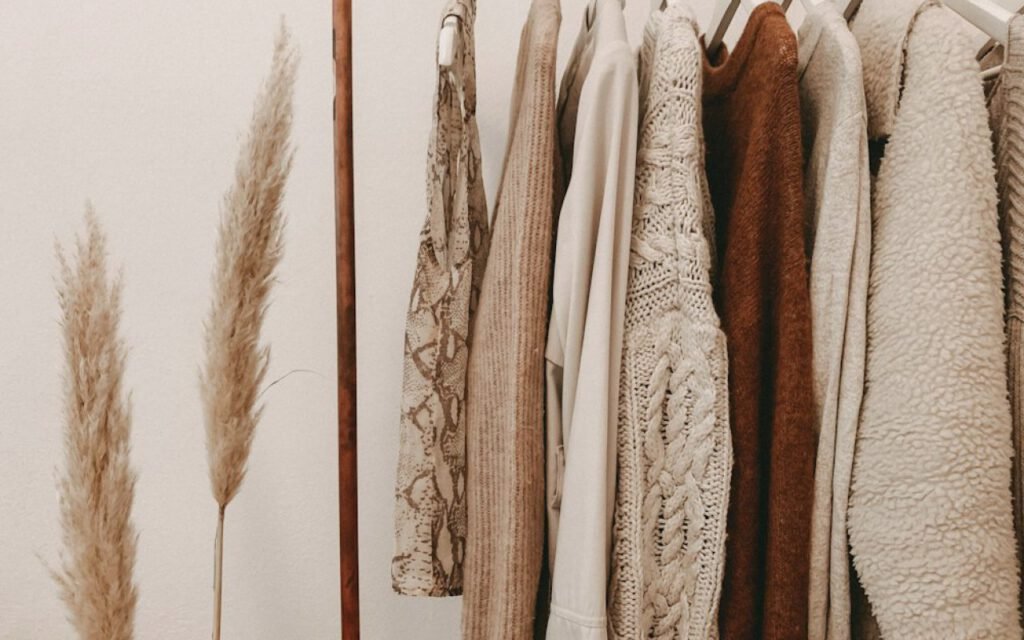
Here is the complete list we recommend for a typical fall capsule. Think of it as a starting template, not a rulebook. If you work in an office, swap a pair of jeans for tailored trousers. If you live in a warm state, trade the second coat for a light jacket.
Start here
- 1 wool coat
- 2 pairs of jeans
- 4 knit sweaters
- 2 pairs of boots
Then build out
- 1 trench or light jacket for warmer fall days
- 1 blazer in a neutral color
- 2 pairs of trousers, one tailored and one relaxed
- 1 midi skirt that works with boots
- 2 dresses: one knit, one that can be dressed up
- 4 long-sleeve tops or tees
- 2 button-down shirts
- 2 cardigans or lightweight layers
- 1 pair of loafers or flats
- 1 pair of clean white sneakers
- 1 crossbody bag and 1 larger tote
- 1 scarf in an accent color
- 1 belt
That adds up to thirty. Notice that accessories count. They are part of the outfit, and keeping them within the palette is what makes the whole capsule feel finished.
How to make it work every morning
Once the pieces are chosen, the daily routine gets easier. A few habits help the capsule stay useful all season.
First, hang outfits rather than single items for the first week or two. Pull together five combinations on Sunday night and hang them at the front of the closet. It trains your eye to see pairings you might have missed.
Second, use the “third piece” rule. Jeans and a sweater are fine. Jeans, a sweater and a camel coat, or a scarf, or a belt, look deliberate. The third piece is what turns basics into an outfit.
Third, keep a short note on your phone of combinations that felt great. On busy mornings, you can simply repeat one. Repeating outfits is not a failure. It is the entire point of a capsule.
Fourth, plan for the weather swings that make fall so tricky. A cold morning can turn into a warm afternoon, especially across the South and the West. Dress in thin layers you can peel off, such as a button-down under a cardigan under a trench, instead of one heavy sweater. Every layer in your capsule should look complete on its own, so nothing feels unfinished when the coat comes off at lunch.
Finally, give the capsule a fair trial. Most people want to add something new within the first two weeks, usually because they have not yet discovered all the combinations. Commit to the thirty pieces for at least six weeks before you buy anything else. Keep a short wish list instead. By the end of the trial, you will know whether that new item is a real gap or just a passing urge, and the list will often shrink on its own.

What to do with everything else
Building a capsule usually means facing a closet full of pieces that do not fit the plan. Do not feel pressure to get rid of everything at once. Box up anything outside your palette that you still love and store it for a season. If you do not miss it by spring, it is probably time to let it go.
Items in good condition can be sold through a local consignment shop or donated. Pieces that are worn out can often go to textile recycling programs, which many cities and counties now offer. Before you shop for anything new, check the box first. You may find a sweater that fits the palette after all.
Key takeaway: a capsule is built on a tight palette, a few excellent workhorses and the freedom to repeat what works.
The payoff
The real benefit of a capsule wardrobe is not a tidy closet, though you will get one. It is the time and attention you get back. Fewer decisions in the morning, fewer impulse purchases on the weekend and fewer clothes that never quite work. You will also learn a great deal about your own style, because when you only own thirty things, you quickly find out which ones you truly love.
Start with your palette this weekend. Pull out your coat, your best jeans and your favorite boots. Then build from there, one considered piece at a time. By the first cold morning of the season, getting dressed should take two minutes, not twenty.
Written by
Ava Monroe
Ava has styled shoots for 15 years and still believes the best accessory is a good coat.
9Articles
2026Writing since
Read next
AccessoriesThe Art of the Sun HatStyle that protects — how to pick the right brim. ShoppingShopping Small: Ten Independent Boutiques We LoveFictional local shops with big personality.
 Sustainable StyleReading Fabric Labels: What Lasts and What Doesn’tNatural fibers, blends and why weight matters.
 ShoppingThe Fall Color Palette: Rust, Olive and CreamEasy ways to wear the season’s warmest shades.
 Sustainable StyleCloset Organization That SticksHangers, folds and the one-in, one-out rule.
 ShoppingHow Clothes Should Fit: A Simple GuideShoulders first, sleeves second, everything else is tailoring.
 BeautyMakeup in Five Minutes: The Everyday EditTinted moisturizer, cheek, brow, mascara, lip.
 BeautyCaring for Wool and CashmereWash less, fold always, and de-pill gently.
Thanks for explaining this so clearly.
Great reporting — please keep following this story.