 Juno Hart6 min read
My second album was recorded in my kitchen. It sounds better than my first, which was made in a real studio. I still find that a little funny. The first record cost me most of my savings, took eleven days in a beautiful room with wood paneling and a vintage console, and I spent every one of those days watching the clock and worrying about money. The second cost a fraction of that, took four months and was made between a refrigerator and a stack of cookbooks. It is the one I am proud of.
Here is how. This is not a gear guide, and I am not an engineer. It is just what worked for me in a small apartment kitchen in East Nashville, with blankets on the walls and a very patient neighbor.
Why the kitchen
I tried every room in the apartment first. The bedroom was too dead and stuffy, with too many soft surfaces, so my voice sounded like it was coming through a pillow. The living room had a big window facing a busy street. The bathroom sounded amazing for about thirty seconds and then just sounded like a bathroom.
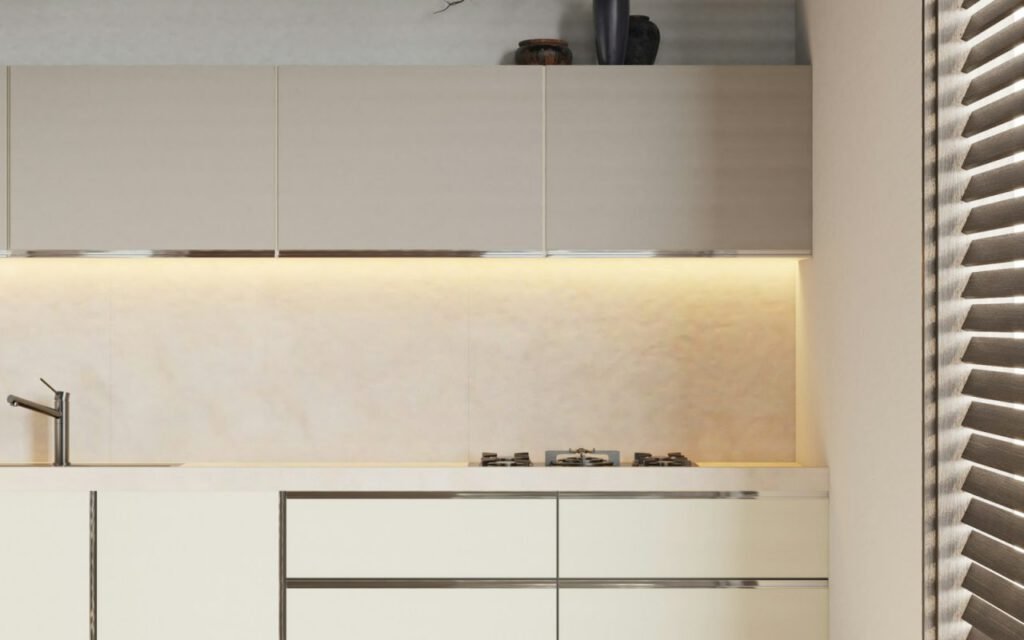
The kitchen was the surprise. It is a small rectangle with a high ceiling, a wooden floor and a tall bookshelf on one wall that I had filled with cookbooks. It had a natural liveliness that made acoustic guitar sound full and warm. It was also the room where I already wrote most of my songs, usually at the little table by the window with a cup of coffee going cold beside me. I felt like myself there, and it turned out that mattered more than anything else.
Treat the room
Moving blankets and a bookshelf soaked up the echoes. Kitchens are full of hard, flat surfaces like tile, cabinet doors, countertops and windows, and those surfaces bounce sound around and create a harsh, ringing quality. You do not need expensive foam panels to fix that. You need soft, heavy things placed in the right spots.
Here is what I did:
- Moving blankets hung from cheap curtain rods on the two walls closest to the microphone. I bought six of them for about $60 total.
- The bookshelf stayed behind me. Books of different sizes break up sound waves naturally, which is exactly what you want.
- A thick rug borrowed from the bedroom went under the microphone stand to calm the floor reflections.
- A blanket over the refrigerator to soften that big flat door. I unplugged the fridge during takes, too, and taped a note to my hand so I would remember to plug it back in.
- Couch cushions propped against the window on the noisiest nights.
I tested by clapping once and listening. A good room for recording gives you a short, natural decay. A bad one rings like a metal bowl. After the blankets went up, the clap just died quietly, and I knew we were close.
The best room is the one where you feel like yourself.
Juno
Keep the setup simple
My gear list for the whole album was short: one good condenser microphone, one dynamic microphone for louder parts, a two-channel audio interface, a pair of closed-back headphones and a laptop. I set up a small desk in the corner and never took it down for four months. Leaving everything plugged in and ready meant that when an idea came, I could press record within a minute.
The simplicity forced better decisions. With only two channels, I could not record everything at once and fix it later. I had to commit. I tracked guitar and vocals separately, then layered a few harmonies and some piano from a friend’s upright, recorded in her living room across town.

Record at night
Fewer cars, fewer birds, more focus. During the day, my street is busy with delivery trucks, a school pickup line and a neighbor who mows his lawn with real enthusiasm. After about 10 p.m. it goes quiet, and the whole apartment seems to settle.
Night recording also changed the songs. I sang more softly, partly to be polite to the people next door and partly because that is how I sing when I am tired and honest. That hush became the sound of the record. People who heard the album often ask what effect I used on my voice. The answer is midnight.
The patient neighbor
None of this would have worked without Mrs. Alvarez, who lives on the other side of my kitchen wall. Before I started, I knocked on her door with a loaf of banana bread and explained what I was planning. She asked one question, “Will there be drums?” and when I said no, she shrugged and told me to go ahead. Over four months she complained exactly once, about a 2 a.m. harmony session, and she was right. She got a signed copy of the vinyl and a thank-you in the liner notes.
Mistakes I kept
Because there was no clock running, I could do as many takes as I wanted, and at first I did far too many. I would sing a verse twenty times trying to make it perfect, and every version got a little stiffer. Eventually I set myself a rule: three takes, then move on. More often than not, the second take was the one, with a small crack in the voice or a squeak on a guitar string that made it feel alive.
A few of those imperfections are still on the record. You can hear a kettle click off faintly at the end of one song, and the refrigerator, which I forgot to unplug one night, hums softly under the last chorus of another. I thought about fixing both. In the end I left them in, because they are part of the story of where these songs were made.
What I would tell anyone trying this
If you are thinking about recording at home, here is my short list:
- Pick the room you love, not the one that looks most like a studio.
- Treat the walls closest to the mic first. That is where most of the problems come from.
- Leave your setup ready so you can record the moment an idea arrives.
- Record when the world is quiet, whatever time that is where you live.
- Talk to your neighbors early. Kindness and baked goods solve a lot.
- Get outside ears for the mix. I mixed rough versions myself and then hired a mixing engineer for the final pass, which was worth every dollar.
Key takeaway: comfort and time beat expensive rooms. A relaxed performance in a treated kitchen will usually sound better than a nervous one in a famous studio.
Back in the kitchen
The blankets came down after the album was finished, and the kitchen went back to being a kitchen. But every time I make coffee at that little table by the window, I think about the songs that were born in that room. I do not know where the next record will be made. Maybe a real studio again, maybe a cabin, maybe right back here next to the fridge. Wherever it is, I will choose the room that feels like home first and figure out the sound second.

Juno Hart
Juno writes quiet songs for loud hearts.



Juno Hart
Juno writes quiet songs for loud hearts.



Start the conversation