 Juno Hart6 min read
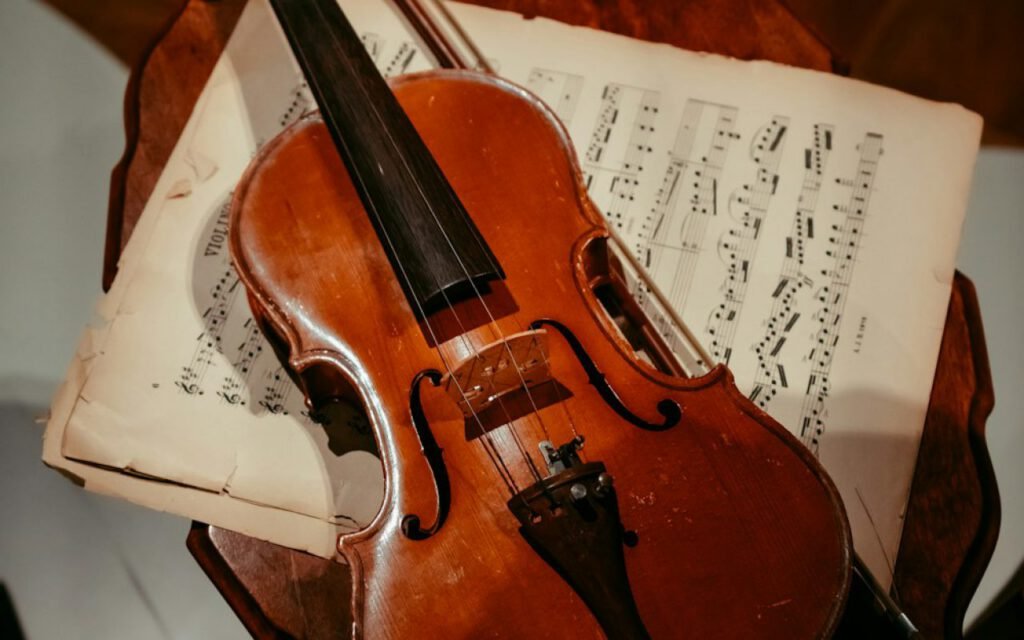
For my new single I worked with a violinist I met at a house concert. Her name is Nora Lindqvist, and she was sitting in the third row of a living room in Madison, Wisconsin, the night I played there last winter. After the show she came up, told me she loved the space in one of my slower songs and said, very casually, that she could hear a violin line in it. I asked her to send me what she heard. Two days later a voice memo arrived, and I listened to it six times in a row.
We wrote her part over voice memos across three states. She was in Wisconsin, I was in Tennessee, and the mixing engineer we eventually brought in was in Colorado. We did not share a rehearsal room until the song was almost finished. Here is how two instruments became one song across hundreds of miles.
How it started
The song was called “Lantern,” a quiet, slow piece I had written about my grandmother’s farmhouse in Kentucky. On my albums it was just guitar and voice, and I had always thought of it as complete. When Nora’s first memo came through, a simple, aching line that floated above the second verse, I realized it had been waiting for something all along.
We started with nothing more formal than texts and voice memos. I sent her a clean recording of my guitar and vocal with a click track underneath. She played along in her apartment, recorded a few ideas on her phone and sent them back with short notes like “too much?” or “this one feels right in the chorus.”
It was slow, and it was wonderful. Without the pressure of a studio clock or someone waiting in the room, we both had time to think. Ideas could sit overnight before we answered them.
Leave space
The best parts happened in the gaps I left in the song. That is the single biggest lesson I took from this collaboration. As a solo songwriter, I tend to fill every bar. When it is just me and a guitar, silence can feel dangerous, so I strum through it.
Working with Nora taught me to stop. In the new version of “Lantern,” I simplified the guitar part dramatically. Where I used to play a full pattern, I now hold a single chord and let it ring. Where I used to sing straight into the next line, I wait a beat. Every one of those pauses became a place where the violin could speak.
What leaving space looked like
- Fewer strums in the verses, so the violin could carry the movement.
- A longer intro, where the violin sets the mood before I sing a word.
- An instrumental break after the second chorus, the first one I have ever written.
- A quieter final verse, with the violin answering each line like a reply.
Collaboration is just listening, set to music.
Juno
Working remotely, step by step
For anyone thinking about collaborating long distance, here is roughly the process we landed on. It is not complicated, and it does not require expensive tools.
- Record a clean guide track with a steady tempo, so the other musician can play in time.
- Share a simple chord chart and lyric sheet, so nobody has to guess the structure.
- Trade ideas as rough voice memos first. Quality does not matter yet. Ideas do.
- Agree on the parts by phone or video call before anyone records final takes.
- Record final parts separately at home, in quiet rooms, and share the files.
- Bring in a mixing engineer to blend everything so it sounds like one room.
We also set one rule early: no one apologizes for an idea. If something did not work, we just said so and moved on. That made it easy to try strange things, and a few strange things ended up in the final song.

Trust the other person
Her first take was better than anything I imagined. I had written a few notes in my own head for where I thought the violin should go, little melodies I could hum but not play. When Nora’s first full recording arrived, it ignored almost all of them. And it was so much better.
It would have been easy to send back a list of changes. Move this note, cut that phrase, follow my melody here. I am glad I did not. Instead, I listened to her take three times, slept on it and wrote back only one note: “Do not change anything in the bridge.” She had found something in the song I did not know was there.
Trusting a collaborator is harder than it sounds, especially with songs that feel personal. But if you invite someone into your music, you have to let them actually bring something. Otherwise you are just hiring a pair of hands to play your ideas, and you lose the magic of a second voice.
Key takeaway: invite collaborators for what they hear, not just what they can play, and then give them room to surprise you.
We also talked openly about credit and money early on, which I recommend to anyone collaborating. Before the final recordings, we agreed in writing how the songwriting credit would be shared for the violin arrangement, how Nora would be paid for her session work and how she would be credited on the release. It took one short phone call and a simple email. Having it settled meant neither of us had to think about it again, and we could focus completely on the music.
Finally in the same room
Six weeks after that first memo, Nora drove down to Nashville for a weekend. We rented a small rehearsal space for an afternoon and played “Lantern” together, live, for the first time. It was strange to see her face while she played the parts I had only heard through headphones. It was even stranger how natural it felt, as though we had been rehearsing for months, which in a way we had.
We recorded one live version that afternoon, just two microphones and the two of us, and it is now the acoustic B-side to the single. You can hear us laugh at the very end, because Nora played a tiny, unplanned flourish on the last note and caught me completely off guard.
What comes next
“Lantern” is out now, and it has become one of my favorite songs to play live. When Nora can join me, we play it together. When she cannot, I leave the spaces in anyway, and somehow the room fills them.
We are already trading voice memos for a second song. It might take months, or it might never come together, and that is fine either way. What I have learned is that the best collaborations do not start with a plan. They start with someone in the third row of a living room saying, “I can hear something there,” and you being brave enough to say, “Show me.”
Juno Hart
Juno writes quiet songs for loud hearts.



Juno Hart
Juno writes quiet songs for loud hearts.

Start the conversation