

You don’t need expensive supplies to make good drawings. Here’s my kit, all under fifty dollars. I get asked about my tools more than almost anything else, usually by someone who has just started drawing and is standing in an art store, overwhelmed by a wall of pens that cost more than lunch. I have been there. My first year of art school, I spent far too much on fancy supplies and then felt too nervous to use them.
Everything here is easy to find at any art store. I am not naming brands, because honestly the brand matters much less than people think. What matters is the type of tool, how it feels in your hand and whether you actually use it. Here is what lives in my bag, with rough prices, and why each piece earned its spot.
The basics
A pencil, a kneaded eraser, a fine black pen and a small sketchbook. If you buy nothing else, buy these four things. Together they cost about twenty dollars, and you could happily draw with nothing else for years.
A pencil (about $2)
I use a simple graphite pencil in a medium-soft grade, something in the HB to 2B range. Softer pencils make darker lines and smudge more easily; harder ones stay light and crisp. A 2B is a lovely middle ground for sketching. One or two pencils is plenty. You do not need a set of twenty grades to start. A small metal sharpener, about a dollar, rounds it out.
A kneaded eraser (about $2)
This is the “one very good eraser” I always mention. A kneaded eraser is soft and squishy, like putty. Instead of rubbing graphite off the paper, it lifts it, which is gentler on the page. You can pull it into a point to erase tiny details, or press it flat to lighten a whole area without erasing it completely. It also lasts for ages. When it gets dirty, you just stretch and fold it until a clean side appears.
A fine black pen (about $4)
Look for a fine-tip pen with archival, waterproof ink, in a size around 0.3 to 0.5 millimeters. Waterproof matters if you ever want to add watercolor on top, because the line will not bleed. I go through one of these every few weeks, so I buy them two or three at a time.
A small sketchbook (about $10)
Pick one small enough to carry everywhere, around five by eight inches or smaller, with paper that is a bit heavier than printer paper. If you plan to use watercolor, look for “mixed media” paper, which handles light washes without buckling too much. The best sketchbook is the one you are not afraid to ruin, so do not buy the most beautiful leather-bound journal in the store. Buy the one that makes you want to scribble.
Good supplies help. Showing up helps more.
Pip
I believe that completely. A great pen in a drawer will never make a drawing. A cheap pencil used every day will make hundreds.
For color
A set of colored pencils and a travel watercolor set. These two add about twenty-five dollars and open up a whole new world.
Colored pencils (about $12)
A set of 24 is the sweet spot. You get a good range of colors without paying for fifteen nearly identical shades of blue. Look for pencils that feel smooth and lay down color without much pressure; cheaper sets can be waxy and scratchy, so test one at the store if you can. Colored pencils are wonderful for building color slowly, layering light over dark, and they travel without any mess.
A travel watercolor set (about $14)
A small pan set with twelve colors and a little built-in mixing area is all you need. Pair it with a water brush, which is a brush with a hollow handle you fill with water, so you can paint on a park bench without carrying a jar. Watercolor teaches you to loosen up, because you cannot control it completely. That is part of the fun.

The full list
Here is everything in one place, with rough prices. Your local store may be a little higher or lower, but the total should land under fifty dollars.
- Graphite pencil (2B) and a small sharpener: about $3
- Kneaded eraser: about $2
- Fine black waterproof pen: about $4
- Small mixed-media sketchbook: about $10
- Set of 24 colored pencils: about $12
- Travel watercolor set with a water brush: about $14
- Binder clip to hold pages open on windy days: about $1
That comes to roughly $46, with a little left over for a coffee while you draw.
What I would skip at first
Art stores are full of tempting things. Here is what I would wait on until you know you really want it:
- Huge pencil sets. You will use four of them.
- Expensive brushes. Learn what shapes you like on cheap ones first.
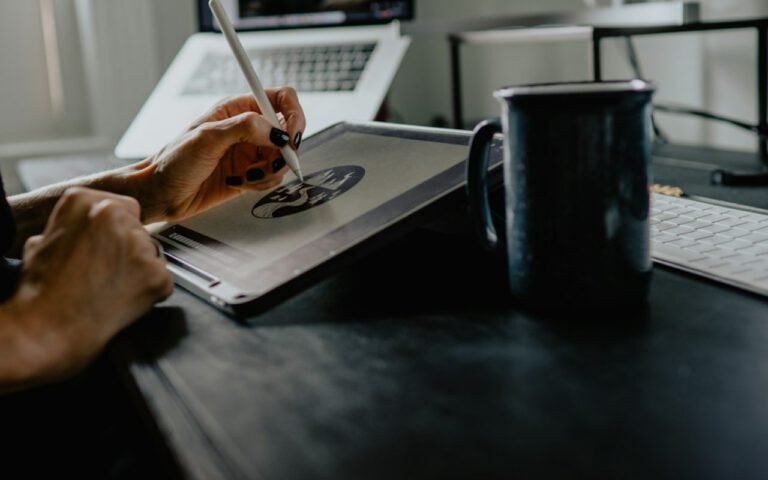
- Drawing tablets. They are great tools, but paper is the best teacher at the start.
- Specialty papers. Fill a basic sketchbook before buying the fancy stuff.
- Anything labeled “professional” when you do not know why yet.
When you find yourself running out of one specific thing, or wishing a tool did something it cannot do, that is the right moment to upgrade. Upgrading because a need appeared is smart. Upgrading because a shelf looked pretty is how drawers fill up with unused supplies.

How I carry it all
The whole kit fits in a zippered pencil pouch that slides into my tote bag or coat pocket. Inside, the pencil, pen, eraser tin and water brush sit in one compartment, and the colored pencils and watercolor set ride flat against the sketchbook. The binder clip lives on the sketchbook cover so I always know where it is. Keeping everything together in one small bag is a big part of why I actually use it. If I had to gather supplies from three different drawers before I could draw, I would draw much less. When the pouch is already packed, sketching on a lunch break or at a bus stop becomes the easy choice instead of a project. I also tuck a folded paper towel inside for blotting the water brush, and a small pencil stub as a backup in case I lose the main one, which happens more often than I would like to admit.
Caring for your kit
A few small habits keep these supplies working for a long time. Put the cap back on your pen every single time, even if you are only pausing for a minute; dried tips are the number one reason pens die early. Keep the kneaded eraser in a small tin so it does not pick up lint from your bag. Let your watercolor set dry open before closing it, so the pans do not get moldy. And store colored pencils flat in their tin or a soft case; a dropped pencil can break inside the wood and snap every time you sharpen it.
Key takeaway: four basic tools and a little color are all you need. Spend the rest of your energy on drawing, not shopping.
Go draw something
My professional work uses a few more tools than this, but I still carry this exact kit every day, and most of my favorite sketchbook pages were made with it. If you are just starting, take this list to the store, stay under fifty dollars and then go draw the nearest ordinary thing. Your coffee cup is waiting. So is the view from your kitchen window. The supplies are the easy part. The good part starts when you open the first page.

Pip Moreno
Pip draws picture books, murals and happy little packages.




2 Comments
Sharing this with my friends.
Saved this one for later. Really useful.