How to Make Vet Visits Easier for Your Cat
A calmer carrier means a calmer cat.
 Dr. Emily Hart6 min read
Dr. Emily Hart
Emily has cared for Portland pets since 2012.

Many cats only see their carrier on vet day — so they learn to fear it. The carrier comes out of the closet, the cat vanishes under the bed, and by the time everyone is in the car, both of you are frazzled. A few small changes make a big difference, and most of them cost nothing more than a little time and a handful of treats.
Cats are creatures of routine and territory. They feel safest in places that smell familiar and where they can see what is coming. A vet visit breaks almost every one of those rules at once: a strange box, a moving car, unfamiliar smells and sounds, and people handling them in a new room. The good news is that you can soften each of those moments, one step at a time.
Leave the carrier out
Put a soft blanket and a treat inside so it becomes a nap spot, not a trap. The goal is simple: you want your cat to think of the carrier as just another piece of furniture, ideally one with good memories attached.
Start a few weeks before your next appointment if you can. Set the carrier in a room where your cat already likes to spend time, take off the door or prop it open, and add something that smells like home, such as a T-shirt you have worn or the blanket from their favorite chair. Then let your cat explore on their own schedule.
Build good associations
Drop a few treats inside the carrier every day, or feed meals right next to it and then inside it. Some cats walk in within a day; others need a couple of weeks. Either is fine. Once your cat steps in calmly, try closing the door for a few seconds, then open it and reward. Slowly stretch that time out. You are teaching your cat that the door closing does not always mean a trip.
Pick the right carrier
The best carriers for vet visits are sturdy, easy to clean and open from both the top and the front. A carrier with a removable top half is even better, because many cats can stay in the bottom half during their exam, which feels much safer than being pulled out through a small door.
We have a cat-only waiting area and exam room for exactly this reason.
Daniel, veterinarian at Maple & Paw Animal Hospital
Daniel explains that barking dogs and unfamiliar smells can push a nervous cat over the edge before the exam even starts. “A quiet room with no dogs, a bit of calming scent and a table with a soft towel changes the whole visit,” he says. “Cats tell us very clearly when they feel safe. We just have to listen.”
Cover it in the car
A light towel over the carrier cuts down on stress during the drive. Many cats feel calmer when they cannot see the world rushing past the window, and the towel adds a layer of familiar smell. Leave a gap at one end for airflow and peek in at red lights if you want to check on your passenger.
A few more car tips help:
- Secure the carrier on the floor behind the front seat or belted on the back seat, so it does not slide or tip.
- Keep the car quiet, with the radio low and the temperature comfortable.
- Drive gently, taking corners and stops slowly.
- Practice short trips around the block that end back at home with a treat, so the car does not always mean the vet.
- Skip breakfast if we ask, but otherwise a light meal a few hours earlier is usually fine and may help with motion upset.
At the hospital
Once you arrive, keep the carrier covered and off the floor if you are waiting. Cats feel safer up high, so a chair or bench beside you is better than setting them down where dogs can sniff. Our cat-only waiting area is designed with this in mind, with raised shelves for carriers and a gentle feline calming scent in the air.
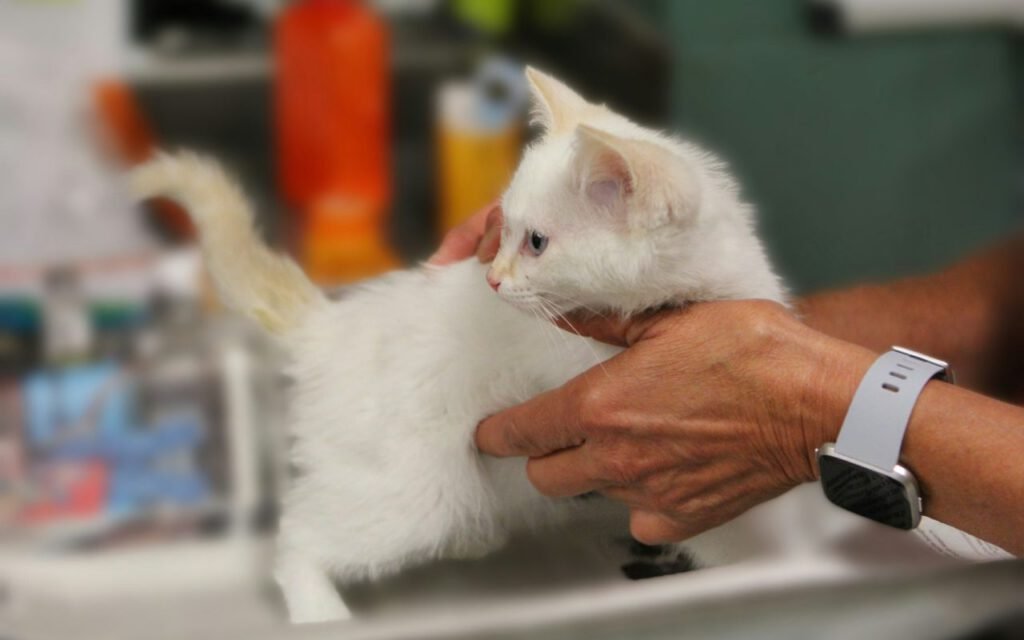
In the exam room, our team will often let your cat come out on their own, or examine them in the bottom half of the carrier. We use soft towels, slow movements and plenty of breaks. If your cat needs something like a blood draw or vaccines, we do our best to keep it short, and we always welcome your help in comforting them.
For very anxious cats
Some cats are frightened no matter how much preparation you do, and that is okay. If your cat becomes extremely stressed, hides for days afterward or reacts strongly at the clinic, talk to us before the next visit. Your veterinarian may suggest a medication to ease anxiety that you give at home before the trip, or other options that suit your cat. Never give your cat human medication or a calming product without checking with us first.
Key takeaway: Start early. A carrier that lives in the house, a towel in the car and a calm cat-only room can turn a stressful trip into a manageable one.
Ask about a home visit
For some cats, especially seniors and cats with medical conditions that make travel hard, a visit at home can be a better fit for certain kinds of care. Ask our front desk whether a home visit makes sense for your cat. Not every test or treatment can be done outside the hospital, but routine checkups, vaccines and quality-of-life conversations often can.
Whether you come to us or we come to you, it helps to keep a short list of notes about your cat. Write down changes in appetite, litter box habits, sleep, grooming and mood, along with any questions you want to ask. Cats often behave differently at the clinic than they do at home, so your observations give our team a much clearer picture of how your cat is really doing day to day.
After the visit
When you get home, open the carrier in a quiet room and let your cat come out when they are ready. If you have more than one cat, keep the returning cat in a separate room for a little while. Cats can carry clinic smells that confuse their housemates, and a short break helps everyone settle. Rubbing a clean towel on both cats and swapping it can help them smell like family again.
Offer a favorite meal or treat and plenty of quiet time. Most cats are back to normal within a few hours. If your cat seems unwell, stops eating or behaves very differently after a visit, call us so we can check in.
Why regular visits still matter
It can be tempting to skip checkups for an indoor cat who seems perfectly healthy. But cats are experts at hiding illness, and many common problems, such as dental disease, kidney changes and weight gain, are easier to manage when they are caught early. A yearly exam, or twice-yearly visits for senior cats, gives us a chance to spot those changes before they become serious.
Making those visits easier is a team effort, and you are the most important member of the team. With a little practice at home and a gentle approach at the hospital, many families find that their cat’s vet day goes from dreaded to simply ordinary. If you have questions about preparing your cat, give us a call. We are always happy to talk cats.


Start the conversation