

Every course runs as an eight-week cohort with a fixed start date. That one design choice shapes nearly everything about how learning works at SkillForge Academy. You are not buying a library of videos and hoping you find time to watch them someday. You are joining a group of people who start together, move through the material at roughly the same pace and finish together, with a mentor who knows your name and your work.
We built the program this way because we kept seeing the same pattern with self-paced courses: a burst of enthusiasm in week one, a slow fade by week three and a half-finished course gathering dust by week six. Cohorts fix that by adding structure, accountability and real human feedback, while still respecting the fact that most of our students have jobs, families and busy evenings. Here is what a week looks like, and how the whole eight weeks fits together.
Watch on your schedule
Short video lessons and exercises you can do any time. Each week opens on Monday morning with a new module. A typical module contains six to ten short videos, most of them under ten minutes, plus reading notes, practice exercises and one larger weekly project.
You can work through that material whenever it suits you. Some students watch a lesson on the train to work. Others save everything for a long Saturday morning with coffee. Parents often tell us they do their exercises after the kids are in bed. The only expectation is that you finish the week’s core lessons before the second live session, so you can make the most of the time with your mentor.
We keep the videos short on purpose. Shorter lessons are easier to fit into real life, easier to rewatch when something does not click and easier to remember. Every lesson ends with a quick exercise so you practice the idea right away instead of just nodding along.

Meet live twice a week
Evening workshops and office hours with your mentor and classmates. The live sessions are the heart of the cohort. They happen on video, in the early evening Eastern time, with recordings posted the next morning for anyone who cannot make it.
The Tuesday workshop
Tuesday is a hands-on workshop, usually about ninety minutes long. Your mentor works through a real example related to that week’s module, then splits the cohort into small breakout groups of four or five to tackle a short challenge together. This is where many students say the material finally makes sense, because they see someone else’s approach and get to explain their own.
The Thursday office hours
Thursday is more open. Bring a question, a bug you cannot fix, a design you are unsure about or a project you want reviewed. Your mentor works through as many as possible, often sharing a screen so everyone can learn from each example. Quiet students are welcome to just listen. Plenty of people pick up the answer to their own question by hearing someone else ask it.
Cohorts start every eight weeks — seats are limited so mentors can give real feedback.
Leo, SkillForge Academy mentor
A week, day by day
Every student’s week looks a little different, but here is a common rhythm that works well for people with full-time jobs:
- Monday: The new module opens. Watch the first two or three lessons and skim the reading notes.
- Tuesday: Attend the live workshop in the evening, or watch the recording on Wednesday.
- Wednesday: Finish the remaining lessons and the short exercises.
- Thursday: Bring questions to office hours and start the weekly project.
- Weekend: Complete and submit the weekly project by Sunday evening.
Most students spend between six and ten hours a week on the course, including live sessions. Weeks with bigger projects can run a little longer. If life gets busy, which it always does at some point, talk to your mentor. It is far better to ask for a few extra days than to quietly fall behind.
Feedback in real time
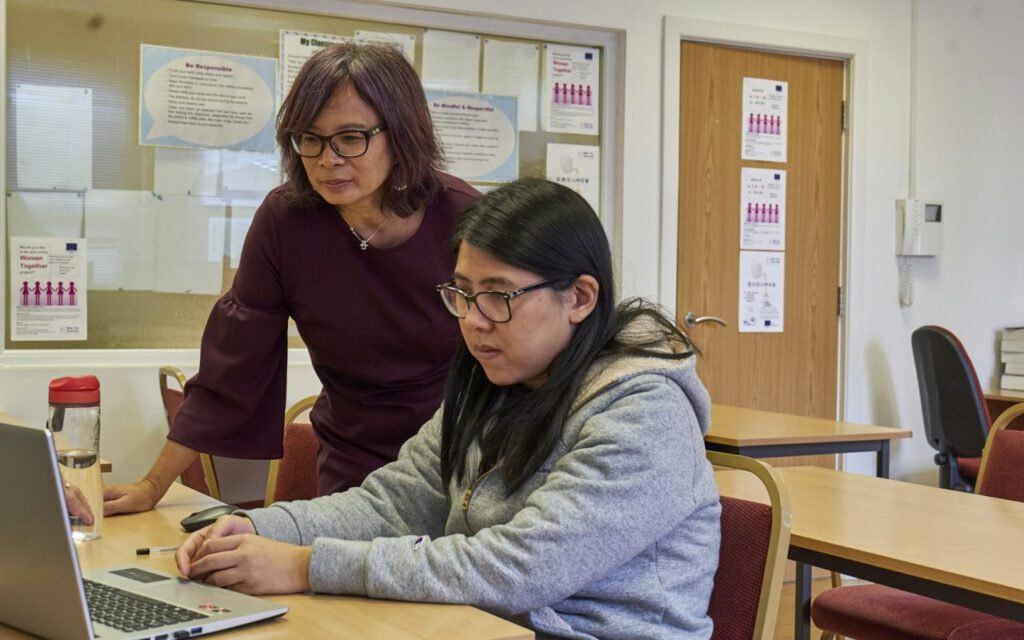
Lessons on your time, feedback in real time. Every weekly project you submit gets written feedback from your mentor, usually within two business days. That feedback is specific. Instead of “Great job,” you will see notes such as “Your second screen has three competing buttons; try making one clearly primary” or “This function works, but it will be easier to test if you split it in two.”
This is the main reason we limit seats. A mentor can give careful, thoughtful feedback to a group of twenty to twenty-five students. Beyond that, feedback inevitably becomes shorter and more generic. We would rather run more cohorts than let any single one get too big.
Learning from classmates
Feedback does not only come from mentors. Each cohort has a shared discussion space where students post work in progress, ask questions and help each other. In week four, every student also takes part in a structured peer review, giving and receiving feedback on a project using a simple checklist. Many graduates say learning to give useful feedback taught them as much as receiving it.
Key takeaway: you set your own pace inside each week, but you never work alone or wait weeks for someone to look at your work.
How the eight weeks fit together
The cohort follows the same broad arc across every subject, whether you are learning design, code or data skills. Here is how it typically unfolds:
- Weeks one and two: Foundations. Core concepts, tools and a few small wins to build confidence.
- Weeks three and four: Practice. Larger exercises and the first peer review.
- Weeks five and six: Building. You start your final project, with extra check-ins from your mentor.
- Week seven: Polish. Refine the final project based on feedback.
- Week eight: Showcase. Each student presents their project in a short live session, and the cohort celebrates.
After the final week, you keep access to every lesson and recording, so you can return to the material whenever you need a refresher. Graduates are also invited to an alumni group that meets monthly for talks, portfolio reviews and job search support.
Is a cohort right for you?
Cohorts are not for everyone, and we would rather you choose the right format than sign up and feel frustrated. A cohort is probably a good fit if you like having deadlines, enjoy learning with other people and want regular, personal feedback on your work. It may be harder if your schedule changes wildly from week to week or if you need to move much faster or much slower than a group.
If you are unsure, look at the next start date on the course page and the weekly time estimate for the subject you are interested in. Then look honestly at your calendar for those eight weeks. If you can protect six to ten hours a week, you are very likely to do well.
Joining the next cohort
Because cohorts start every eight weeks and seats are limited, popular courses can fill up before the start date. Enrolling early gives you time to complete a short welcome module, meet your classmates in the discussion space and set up any tools you need before week one begins.
Whatever you decide to learn, the structure stays the same: short lessons on your own schedule, two live sessions a week, real feedback on every project and a group of people moving forward with you. That combination is what turns good intentions into a finished course, and a finished course into a new skill you can actually use.

Maya Chen
Maya has taught design online since 2017.






Start the conversation