Homework Without Tears: A Routine That Works
A regular time, a quiet spot and the right amount of help.
 Owen Blake6 min read
Homework goes more smoothly with a predictable routine and a parent who helps without taking over. That sounds simple until it is 7:30 p.m. on a Tuesday, your third grader is crying over a page of subtraction, dinner dishes are still in the sink and you have just realized the science project is due tomorrow. Almost every family goes through seasons like this. The good news is that a few steady habits can turn homework from a nightly battle into a short, ordinary part of the day.
This guide is for parents of elementary and early middle school kids. It covers when and where homework works best, how much help is the right amount, what to do when a child gets stuck and when it is time to talk to the teacher. None of it requires special supplies or hours of your evening. It mostly requires consistency, a bit of patience and a snack.

Same time, same place
A snack, then homework at the kitchen table, before screens. That simple order works for many families because it removes the daily negotiation. When homework always happens at the same time and in the same spot, children stop asking whether they have to do it now. It is just what happens after school.
The exact time can vary. Some kids need to run around outside for half an hour first; others focus best right after they walk in the door. Pay attention to when your child is most settled and build the routine around that. What matters most is that it is predictable.
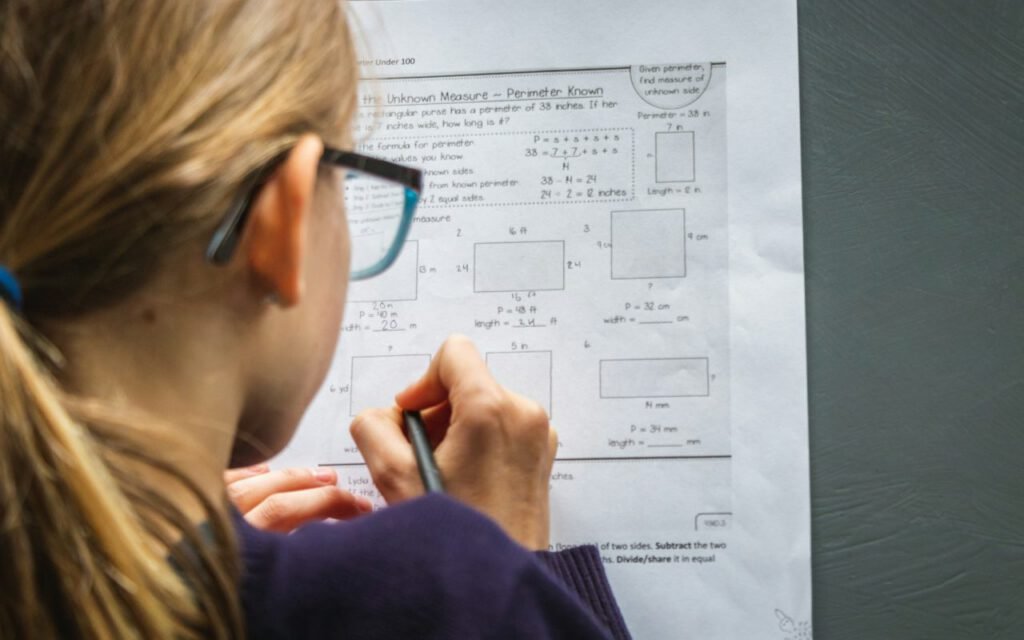
The place matters too. A kitchen table works well for younger kids because a parent is nearby while cooking or tidying, close enough to help but not hovering. Older kids may prefer a desk in a quiet corner. Either way, the spot should have good light, a clear surface and as few distractions as possible. Phones and tablets stay in another room unless they are needed for the assignment.
Set it up for success
A little preparation prevents a lot of frustration. Kids lose momentum quickly when they have to hunt for a pencil, a ruler or a missing worksheet. A few small steps can help:
- Keep supplies in one box: pencils, an eraser, a ruler, crayons, glue, scissors and some blank paper.
- Have your child empty their backpack as soon as they get home, so papers do not get lost.
- Look at the assignments together for a minute and decide what to do first.
- Start with something easy to build momentum, or the hardest task while energy is high, whichever suits your child.
- Keep a simple calendar for longer projects and tests.
For bigger assignments, like a book report or a science fair project, break the work into small pieces and spread them over several days. “Choose a topic” on Monday, “find three facts” on Tuesday and “draw the poster” on the weekend feels far more manageable than “do the project.” Write each small step on a sticky note and let your child peel it off when it is done. That small moment of finishing something is surprisingly motivating.
Help, don’t do
Ask questions that lead them to the answer rather than giving it. This is the hardest part for many loving parents. When a child is frustrated, it is tempting to just show them the answer so everyone can move on. But homework is practice, and teachers use it to see what a child understands. If a parent does the hard parts, the teacher gets the wrong picture.
Instead, try questions like these: “What is the problem asking you to find?” “What did you do on the example in class?” “Can you draw a picture of it?” “Which part are you stuck on?” Often just talking it through helps a child find their own way. If they are still stuck, it is fine to work through a similar example together, then let them try the original problem on their own.
If homework regularly takes much longer than the teacher expects, tell them. It is useful information.
Marcus Hale, elementary school teacher
Teachers generally want to know when an assignment is causing tears or taking far too long. It might mean the child needs extra help, the instructions were not clear or the workload needs adjusting. A short, friendly note or email is all it takes.
Handling frustration
Even with a great routine, there will be hard nights. A child who is tired, hungry or stuck can melt down over a single tricky question. When that happens, stopping for a short break often helps more than pushing through. A five-minute walk around the block, a glass of water or a quick stretch can reset everyone’s mood.

Your tone matters, too. Children pick up quickly on a parent’s frustration, so try to keep your voice calm and encouraging, even if you are tired. Praise effort rather than just results: “You kept going even though that one was hard” teaches persistence. And remember that it is okay for homework to come back with mistakes. Those mistakes help the teacher know what to teach next.
Different kids, different needs
Some children need more movement, so they might do math standing up or take short breaks every ten minutes. Others need total quiet. Some do best with a written checklist they can tick off. If your child has a learning difference, attention challenges or a known diagnosis, their teacher or school counselor can suggest strategies that fit them, and may be able to adjust assignments.
Key takeaway: a predictable time and place, ready supplies and a parent who asks questions instead of giving answers make homework shorter and calmer for everyone.
Quick tips
Here is a short list to keep on the fridge:
- Keep supplies in one box
- Break big tasks into small pieces
- Talk to the teacher if it takes too long
- Offer a snack before starting
- End with something positive, even if it was a tough night
Ending on a positive note does not mean pretending everything went perfectly. It can be as simple as “I liked how you checked your spelling” or “Tomorrow we will try the hard ones first.” Children who feel good about the end of homework are more willing to start again the next day.
Making it last all year
Routines tend to slip after the first few weeks of school, during holidays and when sports seasons start. That is normal. When things get bumpy, go back to the basics: same time, same place, snack first, help without taking over. Check in with the teacher at conferences about how homework is going and whether your child seems to understand the material.
Above all, try to remember the bigger goal. Homework is not just about this week’s spelling list. It is a chance for children to practice working on their own, managing their time and asking for help when they need it. Those habits will serve them well long after they have forgotten how to spell “necessary.” With a steady routine and a calm parent nearby, those habits grow a little stronger every night.
This article is general information, not medical advice. Talk to your own doctor or midwife about your family.

Owen Blake
Owen covers toddlers, big kids and the art of getting everyone out the door on time.







2 Comments
Sharing this with my friends.
Saved this one for later. Really useful.