

Night and rain both shrink what you can see. On a dry afternoon you can read the road a quarter mile ahead, spot a brake light three cars up and notice a cyclist drifting toward the lane long before it matters. After dark, or in a steady downpour, that picture shrinks to whatever your headlights and wipers can clear. The road has not changed, but the amount of information reaching your eyes has, and every decision you make depends on that information.
Give yourself more time to react. That single idea is the heart of every lesson we teach about night and wet-weather driving at GreenLight. Slower speeds, longer gaps and earlier signals all buy you the same thing: a few extra seconds to see a problem, understand it and respond calmly. Below is the approach our instructors use with new drivers, and it works just as well for anyone who has been driving for years but still tenses up when the sky turns dark.
Why the dark and the wet feel so different
Your eyes need time to adjust when you leave a bright parking lot or a well-lit gas station. For the first minute or two, the road ahead looks darker than it really is. Oncoming headlights then shrink your pupils again, and the cycle repeats. Older drivers often notice this more, but even teenagers with perfect eyesight see less contrast at night.
Rain adds its own problems. Water on the windshield scatters light, so every headlight and streetlight turns into a starburst. Lane markings disappear under a sheet of water. Puddles hide potholes. And the first rain after a dry spell is often the slipperiest, because oil and dust that built up on the pavement rise to the surface before they wash away. Southern California drivers learn this the hard way every fall.

Put night and rain together and you get the toughest everyday conditions most drivers will ever face. The good news is that a handful of habits make a huge difference, and none of them requires special equipment or years of experience.
Double the following distance
Four seconds behind the car ahead instead of two. That is the rule we drill into every student, and it is the most important habit on this page. To measure it, pick a fixed object such as a sign or an overpass. When the car in front passes it, start counting: one thousand one, one thousand two, and so on. If you reach the object before you hit four, ease off the gas until the gap opens up.
Why four? Wet pavement can take much longer to stop on than dry pavement, and at night you will likely notice the hazard later than you would in daylight. Extra space covers both problems at once. It also gives you room to steer around something instead of braking hard, which is safer on a slick road.
- Light rain or dark, dry roads: at least four seconds.
- Heavy rain or fog: five or six seconds, and lower your speed.
- Behind large trucks: add more, since their spray can blind you completely.
- If someone tailgates you: widen the gap ahead even further so you can brake gently.
Speed matters as much as space. Posted limits are set for good conditions. When the road is wet, driving a few miles per hour under the limit is not timid, it is smart. If the cars around you are going faster, let them pass and keep your own pace.
If it feels too stormy to drive, it probably is. Wait it out.
Rosa, GreenLight senior instructor
Rosa says that line to almost every student during the rainy season, and she means it. Pulling into a parking lot and waiting twenty minutes for a cell to pass is a perfectly good driving decision. Nobody earns a medal for pushing through a downpour.
Lights and wipers
Headlights on whenever wipers are on. It is the law in California, and many other states have similar rules. Daytime running lights are not enough, because on many cars they do not turn on your taillights, which means drivers behind you may not see you at all in the gray of a storm.
Use your high beams on dark, empty roads, and switch back to low beams when you see oncoming traffic or come up behind another car. In fog or heavy rain, stick with low beams; high beams bounce off the water in the air and make visibility worse. If your car has fog lights, use them only when visibility is truly poor and turn them off once it clears.
A quick visibility check before you leave
Most visibility problems start before the car moves. Take a minute in the driveway to set yourself up for success:
- Clean the inside and outside of the windshield. A thin film on the inside glass causes most of that nighttime glare.
- Check your wiper blades. If they streak, chatter or leave bands of water, replace them. They are inexpensive and easy to swap.
- Make sure every headlight, taillight and brake light works. Ask a family member to stand behind the car while you test them.
- Top off the washer fluid so you can clear road spray quickly.
- Dim your dashboard lights slightly so your eyes stay adjusted to the dark road.

Handling the surprises
Even with good habits, rain and darkness can throw a curveball. Knowing what to do ahead of time keeps a scary moment from turning into a crash.
Hydroplaning
When your tires ride up on a layer of water, the steering suddenly feels light and the car may drift. Do not slam the brakes or jerk the wheel. Ease your foot off the gas, keep the steering wheel pointed where you want to go and wait for the tires to grip again. The best prevention is slower speed and good tire tread. Try to drive in the tracks left by the car ahead, where some water has already been pushed aside.
Flooded roads
Never drive through water when you cannot see the road beneath it. A few inches of moving water can push a car sideways, and you cannot tell how deep a puddle is from the driver seat. Turn around and find another route, even if it adds time to your trip.
Glare from oncoming cars
Look toward the right edge of your lane, using the white line as a guide, until the car passes. You will still see the road ahead in your peripheral vision without staring straight into the lights.
Tired eyes
Night driving is more tiring than it feels. If you notice yourself yawning, drifting or missing exits, pull over somewhere safe and rest. Opening the window or turning up the radio does not fix fatigue.
How we teach it at GreenLight
Many students finish their required hours without ever driving after sunset or in a storm. We think that is a gap worth closing. Once a student is comfortable in daylight, we schedule at least one evening lesson, and when the forecast calls for light rain, we often keep the lesson on the calendar rather than canceling it. With an instructor and a dual-brake car, a wet road becomes a classroom instead of a fear.
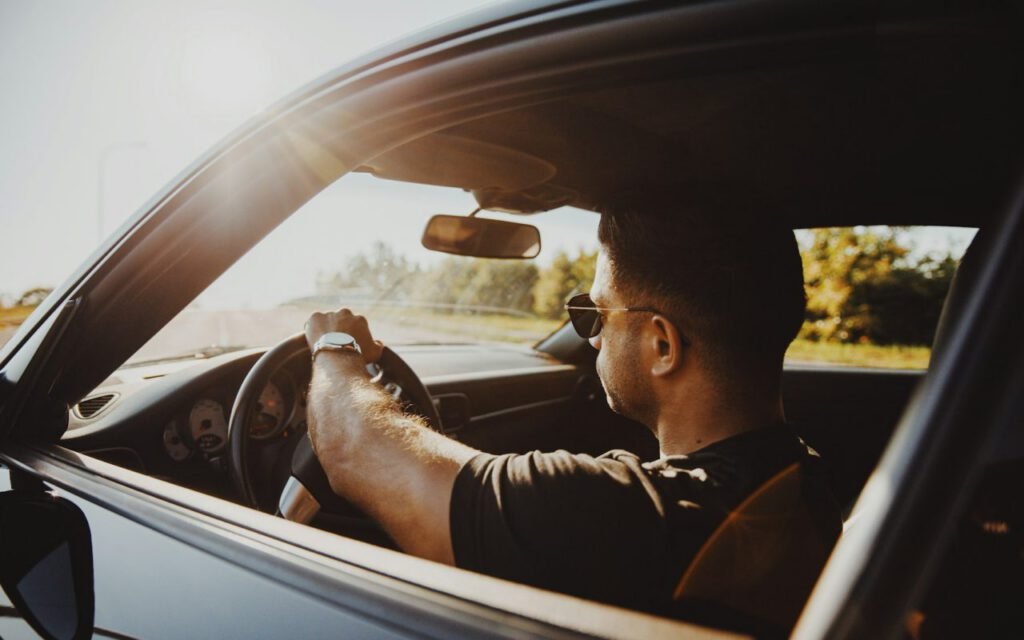
During those lessons we practice measuring the four-second gap, switching between high and low beams, scanning road edges for pedestrians in dark clothing and choosing a safe place to pull over. Parents who ride along often say they picked up a few habits themselves.
Key takeaway: more space, less speed. Almost every tip here comes back to giving yourself extra time to see and react.
Drive the conditions, not the clock
The hardest part of driving in the dark or the rain is rarely the steering. It is resisting the pressure to keep up with traffic, arrive on time or prove you can handle it. Leave a few minutes early, keep four seconds of space, turn on your lights with your wipers and remember Rosa’s advice: when it feels too stormy, waiting is the right call. If you would like to practice these skills with one of our instructors, our team is happy to set up an evening or rainy-day lesson that fits your schedule.

Tom Nguyen
Tom teaches freeway and parking skills.


Start the conversation