Are Pest Treatments Safe for Kids and Pets?
What we use, where we use it and how long to wait.
 Nicole Hart6 min read

Nicole Hart
Nicole knows every Florida bug by name.

It is the first question most families ask us, and it should be. Before a technician ever opens a sprayer, parents want to know whether their toddler can crawl on the living room rug that afternoon, and pet owners want to know whether the dog can go out in the yard after lunch. Here is our honest answer, along with exactly what we use, where we use it and how long to wait. If you only read one post on our blog before booking a service, we hope it is this one.
The short version is this: modern pest control, done carefully by a licensed technician who follows the product label, is designed to keep exposure for people and pets very low. That does not mean “anything goes.” It means the right product, in the right place, in the right amount, with a few simple precautions from your family. Every product we use is registered for residential use and applied according to its label directions, which is the law and also simply good practice.
Targeted, not blanket
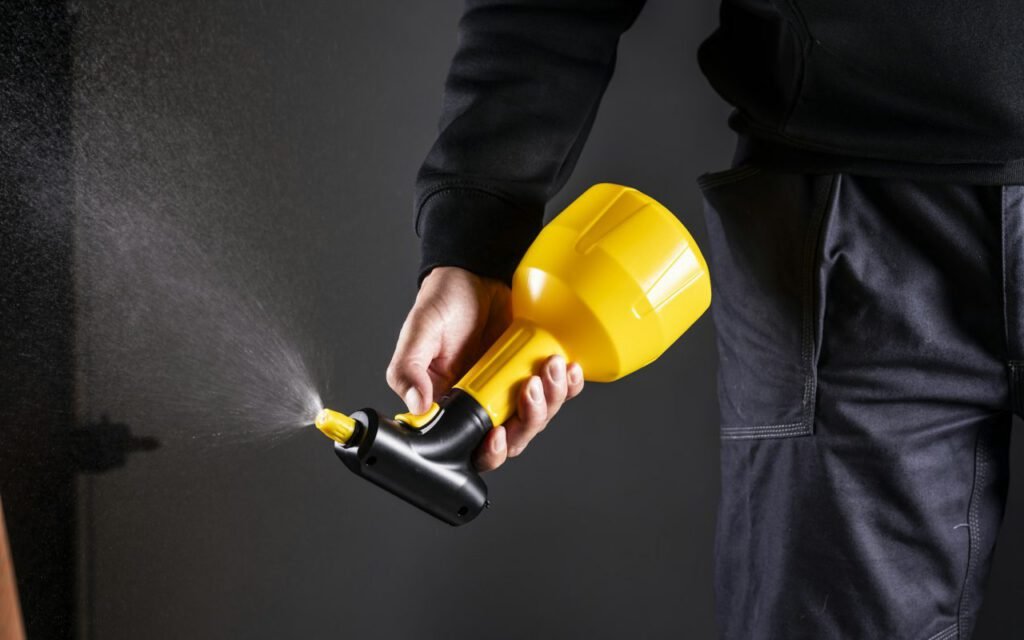
Most of our treatments go into cracks, wall voids and the outside perimeter — not where kids and pets play. That approach is the biggest reason our services are both effective and family-friendly. Pests like roaches, ants and spiders spend most of their time hidden in tight spaces, along edges and inside walls. Treating those spots directly puts the product where pests travel, while keeping it away from floors, countertops and toys.
Many of our indoor treatments are gels and baits rather than sprays. A gel bait is a small dot of material placed inside a cabinet hinge, behind an appliance or deep in a crack. Pests find it, eat it and carry it back to their nest. Bait stations, small sealed plastic containers, keep the bait inside where curious hands and noses cannot easily reach it.
Outside, we focus on a band around the foundation, door frames, window edges and eaves. This is the barrier that stops most insects before they ever get inside. We do not spray lawns or play areas as part of our standard quarterly service unless you specifically ask for a yard treatment, and even then we will talk through timing and precautions first.
Ask your technician to walk you through every product they use. Ours always do.
Nicole
Dry time
For liquid treatments outdoors, we ask that pets and children stay off for about 30 minutes until it dries. On hot, sunny Florida days, that can happen faster. On cool, humid mornings it can take a little longer, and your technician will let you know if they recommend waiting more. Once a treated surface is dry, the product has settled into it and is much less likely to transfer to paws, hands or clothing.
For indoor crack-and-crevice treatments and gel baits, there is usually no need to leave the house at all. You may want to keep kids and pets in another room while the technician works, simply so they are not underfoot. Some specialty services, such as fumigation for drywood termites or certain bed bug treatments, require everyone to leave the home for a set time. We will always explain those requirements in writing well before the appointment.
Before, during and after a visit
A few simple steps make every visit smoother and safer for the whole household. We send this checklist to every new customer:
- Before: Tell us about everyone in the home, including babies, pregnant family members, people with asthma or allergies and every pet, including fish, birds and reptiles.
- Before: Put away pet bowls, toys and outdoor cushions near the areas being treated.
- During: Keep kids and pets inside, or in a separate area, while the technician treats the exterior.
- During: Ask questions. Your technician can show you the product label and explain where each one is going.
- After: Wait until outdoor treated areas are dry before letting kids or pets back out, usually about 30 minutes.
- After: Do not wipe away gel bait placements or move bait stations. They work best right where they were placed.

Special cases we plan around
Some households need extra care, and we are happy to adjust our approach. Fish tanks are a common example. Many products can be harmful to aquatic life, so we ask that aquariums be covered and air pumps turned off briefly during indoor treatments near them. Birds have sensitive respiratory systems, so we usually recommend moving them to another room or treating that area with bait products only.
Families with newborns, pregnant family members or anyone with a respiratory condition may prefer to schedule exterior-only service, or to be out of the house for a few hours on the day of an interior treatment. If you have specific health concerns, we encourage you to check with your doctor or veterinarian, and we are glad to share product labels and safety data sheets so they can review them.
Lower-impact options
Chemical treatment is only one tool. Our technicians also use a range of non-chemical methods, often called integrated pest management. That can include sealing gaps around pipes and doors, recommending moisture fixes, using sticky monitoring traps to track activity and suggesting changes to storage and landscaping. In many homes, these steps reduce the amount of product needed over time.
Common myths we hear
One myth is that a strong smell means a treatment is stronger or more dangerous. In reality, many modern products have little or no odor at all, and smell is not a good measure of either safety or effectiveness. Another is that more product works better. It does not. Using more than the label allows is not only against the rules, it can actually make baits less attractive to pests. A third myth is that pest control means spraying every room. In most homes, careful placement in a handful of hidden spots does far more good than a broad spray ever could.
What to do if you are worried
Accidents are rare, but it is smart to know what to do just in case. If a child or pet comes into contact with a wet treatment or gets into a bait station, stay calm, keep the product label handy and contact the national Poison Control hotline or your veterinarian right away for guidance. Then call us, and we will help you with product details and next steps.
If you ever notice anything unusual after a service, such as a strong odor that does not fade or a pet acting strangely, let us know immediately. We would much rather answer ten questions than have a customer feel uneasy about anything we did in their home.
Our promise to families
We have kids and pets too. Most of our technicians go home every night to a dog on the couch or a toddler at the dinner table, and that shapes how we work. We use the least product needed to get the job done, we put it where pests live instead of where families live and we explain every step along the way.
If you are still not sure whether our service is right for your household, call us and ask for a free consultation. We will walk through your home, talk through your concerns and build a plan that works for everyone under your roof, including the four-legged members.
Key takeaway: Professional pest control focuses on targeted placements, labeled products and short dry times. Share details about your household, ask questions and keep kids and pets off outdoor treated areas for about 30 minutes.
Nicole Hart
Nicole knows every Florida bug by name.

Start the conversation