Skip the resort town. Three small towns on the old mountain highway offer a quieter weekend and better pie. We spent two nights and roughly 90 miles on a two-lane road that once carried most of the traffic over the pass, before the interstate took it away. What it left behind is a string of towns that never got the condo developments or the $40 valet parking, and a weekend that moves at the speed of a slow drive.
The route connects three places, each with its own reason to stop: a hot springs town, a trail town with a restored theater, and a farm town with a diner that bakes six kinds of pie every morning. You can do it in either direction. We started at the bottom of the grade on a Friday afternoon and worked our way up.
Arrive by sunset and soak in the public hot springs, open until 10 p.m. Day passes are $12. The pools sit at the edge of town beside a creek, fed by a spring that comes out of the ground at about 120 degrees and is cooled before it reaches the soaking pools. There are three of them, ranging from a warm 98 degrees to a toasty 106, plus a cold plunge that most visitors try exactly once.
The springs are run by the town, not a resort, and it shows in the best way. The changing rooms are simple, the lifeguard knows half the swimmers by name and the only food for sale is a cooler of soda and a basket of granola bars. Bring your own towel and flip-flops, and plan to arrive before 6 p.m. on summer weekends, when the line can stretch into the parking lot.
We stayed the night at a 12-room inn two blocks away, built in 1911 as a boarding house for railroad workers. Rooms start at $135 and include breakfast, which on our visit meant thick slices of French toast and coffee from a local roaster.
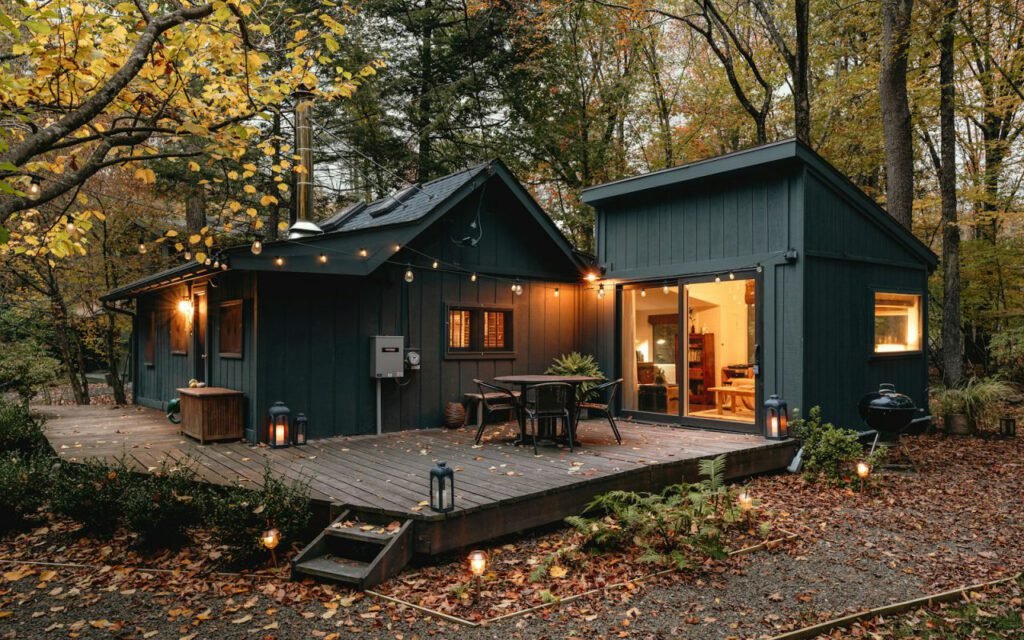
Lodging along the old highway is small, simple and often family run.
Saturday: the trail and the theater
Hike the four-mile loop to the lake in the morning. In the evening, catch a classic film at the restored 1920s theater on Main Street. The drive between the first and second towns takes about 40 minutes and climbs steadily through aspen groves, with two pullouts worth stopping at for the view down the valley.
The lake loop
The trailhead sits at the end of a gravel road just north of town, with parking for about 30 cars. The loop gains around 800 feet, most of it in the first mile and a half, before leveling out along a ridge with views of the peaks to the west. The lake itself is small and clear, ringed by boulders that make good lunch spots. Plan on two and a half to three hours at an easy pace.
Start early. Afternoon thunderstorms are common in the mountains in summer, and rangers recommend being off exposed ridges by 1 p.m. Carry more water than you think you need, wear sturdy shoes and check trail conditions with the local ranger station before you go.
The theater
The town’s single-screen theater opened in 1924 and was restored a decade ago by a group of residents who raised the money with bake sales and a lot of patience. It shows one classic film each Saturday night, with tickets at $8 and popcorn made in a machine older than most of the audience. On our visit, the film was a 1950s western, and the crowd cheered for the hero as if they had never seen it before.
People come for one night and stay for three. We hear it every week.
Innkeeper Sarah Whitman
Whitman runs a six-room lodge across the street from the theater with her husband, Dan. Rooms run $150 a night, and guests get a pass for free coffee at the bakery next door. She says many visitors plan a quick stop on their way somewhere else and end up canceling the rest of the trip.
The four-mile lake loop climbs quickly, then rewards hikers with long views.
Sunday: the pie stop
The third town sits at the top of the pass in a wide valley of hay fields and cattle ranches. It has a feed store, a post office, a church and a diner that opens at 6 a.m. and usually sells out of pie by 2 p.m. The owner, a former schoolteacher named June Albrecht, bakes six varieties every morning, rotating with the seasons: strawberry rhubarb in early summer, peach in August, apple and pumpkin once the leaves turn.
We ordered a slice of sour cherry with a scoop of vanilla ice cream and a cup of coffee, and it came to $7.50. It was the best pie we have had all year, with a crust that shattered under the fork and a filling that tasted like actual fruit rather than syrup. Whole pies are $24 and can be ordered a day ahead.
“I make them the way my grandmother did,” Albrecht said. “Lard and butter in the crust, not too much sugar in the filling. People drive two hours for it, so I figure I’d better not change anything.”
Planning your weekend
The old highway is open year-round, but the best time to go is from late May through early October, when the trails are clear of snow and the pie menu is at its most varied. Winter brings its own appeal, with the hot springs at their most magical in falling snow, but some of the road’s higher stretches can close during storms. Check the state road report before you leave.
Total driving: about 90 miles on two-lane road, plus the drive to the start
Hot springs: $12 day pass, open until 10 p.m.
Lodging: $135 to $150 a night at small inns and lodges
Theater: $8 tickets, one classic film every Saturday night
Pie: $7.50 a slice with ice cream, whole pies $24
Cell service is spotty between the towns, so download a map before you go and keep a paper one in the glove box. Fill the gas tank in the first town; the next station is more than 50 miles up the road. Most businesses take cards, but the theater and the diner both prefer cash.
Key takeaway: You do not need a resort to have a restful mountain weekend. A two-lane road, a public pool fed by a hot spring and a good slice of pie will do the job for far less money.
The road home
By Sunday afternoon, we had spent less than $500 for two people, including lodging, meals, the springs and the movie. More important, we had not checked our phones in two days, partly by choice and partly because there was no signal. The interstate was waiting at the bottom of the pass, with its billboards and its traffic, and it felt like returning from somewhere much farther away than 90 miles.
What stayed with us most was the pace. Nobody in these towns seemed in a hurry, and after a day or so, neither were we. We lingered over breakfast, let a rancher’s cattle cross the road without honking and spent an extra hour at the lake simply because there was no reason to leave. That kind of slowness is hard to find on a busy weekend near any city, and it is the real reason to make the drive.
We are already planning a return trip for October, when the aspens turn gold and June Albrecht switches to apple. This time we will take Sarah Whitman’s advice and book three nights instead of two.







 Food & TravelThe Farmers Market Is Moving Indoors for Winter — and Staying Open WeeklyForty vendors will set up in the old train depot every Saturday from November to April.
Start the conversation