Eighty percent of Americans can no longer see the Milky Way from home. We wanted to remember what it looked like, so we drove to one of the darkest places in the lower 48. The trip took four hours from the nearest city, the last forty minutes on a two-lane road with no other headlights in sight, and when we finally stepped out of the car and looked up, nobody said a word.
Best time: New moon, May through September. Stay: 2 nights. Budget: Low, with campsites and simple motels nearby.
Certified dark-sky parks keep their lights low and shielded. Many are in southern Utah, where the air is dry and the towns are far apart. The certification comes from an international nonprofit that reviews outdoor lighting, nighttime sky quality and public education programs. Parks that earn the designation agree to keep artificial light to a minimum, use shielded fixtures that point downward and offer programs that teach visitors about the night sky.
For our trip, we chose a remote park in the canyon country of southern Utah, a place known for its red rock formations by day and its inky skies by night. The nearest town of any size is more than an hour away, and on a clear, moonless night, the sky is dark enough that the Milky Way casts a faint glow on the ground.
Before we left, we checked three things: the moon calendar, the weather forecast and the park’s schedule of ranger programs. We timed our visit for the days around the new moon in early June, when the sky would be at its darkest and the core of the Milky Way would rise in the late evening.
Southern Utah’s dry air and wide-open spaces make it one of the best stargazing regions in the country.
The first hour
It takes your eyes about 30 minutes to adjust. Put your phone away, use a red light and wait — the sky keeps getting fuller. That was the hardest part of the night: resisting the urge to check our phones, take pictures or turn on a flashlight to find the snacks.
We arrived at the park’s viewing area about an hour after sunset. At first, the sky looked impressive but familiar, with the brightest stars and a few constellations we recognized. Then, slowly, more stars appeared. Faint ones filled the gaps between the bright ones. The Big Dipper became crowded with neighbors. And a pale band of light began to stretch from one horizon toward the other.
Using a red flashlight is important. White light, even from a phone screen, resets your night vision and forces your eyes to start adjusting all over again. Many dark-sky parks ask visitors to cover their headlights with red film or turn them off completely in viewing areas, and rangers will gently remind anyone who forgets.
What we saw
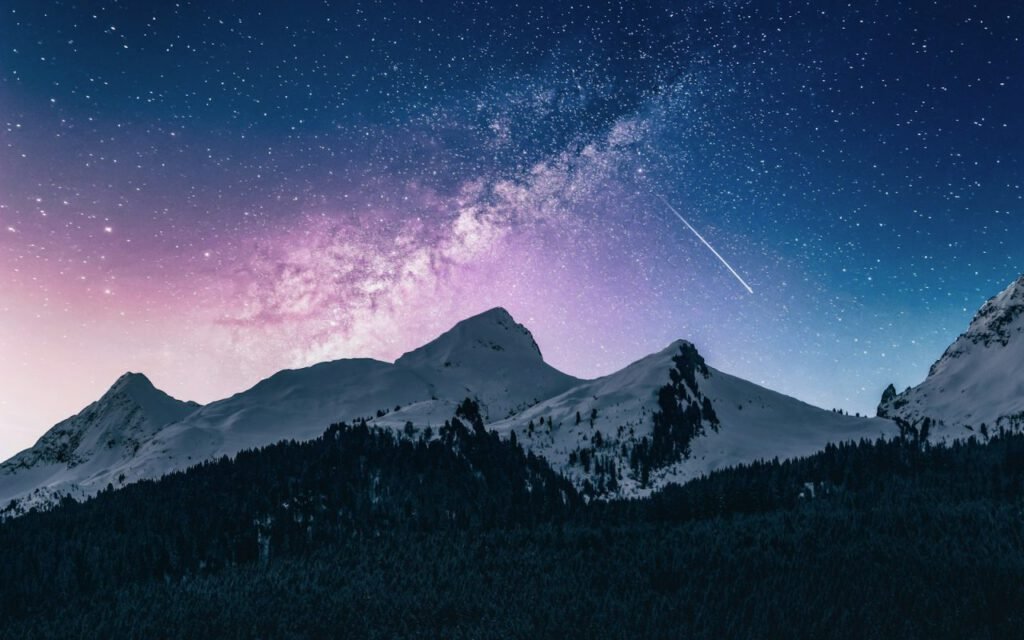
The Milky Way rising over the canyon rim, three meteors and a satellite crawling across the stars. Nobody spoke for a long time. Around 11 p.m., the bright core of our galaxy cleared the cliffs to the southeast, a glowing cloud of light streaked with dark lanes of dust. It looked less like a photograph and more like weather, as if a storm made of stars were slowly moving across the sky.
We counted three meteors in the first hour, each one a quick white streak that disappeared before anyone could point. A satellite drifted silently overhead, steady and unblinking, then faded as it passed into Earth’s shadow. Through a borrowed pair of binoculars, we could pick out star clusters, a few faint smudges that the ranger later told us were distant galaxies and the four largest moons of Jupiter, which looked like tiny points of light lined up beside the planet.
On a moonless night, the core of the Milky Way rises over the canyon rim late in the evening.
The ranger program
On our second night, we joined a ranger-led program at the park’s amphitheater. About 40 visitors gathered on benches as the ranger used a green laser pointer to trace the constellations and tell the stories behind their names. Afterward, volunteers set up telescopes, and we waited in line to see the rings of Saturn, a sight that drew audible gasps from children and adults alike.
Check the moon calendar before you book. A full moon washes out all but the brightest stars.
Night-sky ranger Tom Ellis
Ellis, who has led night programs at the park for six years, said many visitors arrive without realizing how much the moon affects what they will see. “People drive hundreds of miles and show up on a full moon,” he said. “It’s still beautiful, but the Milky Way basically disappears. Plan around the new moon and you’ll see the sky the way people saw it for most of human history.”
Don’t miss
If you are planning your own trip to a dark-sky park, these were the things that made the biggest difference for us. Pack warm layers, even in summer, since desert nights can cool off quickly once the sun goes down.
A ranger-led night sky program
A red flashlight
A blanket and a thermos
A night around the new moon
A pair of binoculars for star clusters and the moons of Jupiter
A free sky map or stargazing app set to night mode before you arrive
As for lodging, we split our two nights between a campground inside the park and a small family-run motel in the nearest town. Camping meant we could walk straight from our tent to a dark viewing spot, while the motel offered a hot shower and a real bed. Either works, but book early for new moon weekends, which fill quickly in summer.
We also recommend scouting your viewing spot in daylight. Knowing where the trail goes, where the drop-offs are and where you parked will make the walk back in the dark much safer. Stay on marked trails, carry water and let someone know your plans, especially in remote areas with no cell service.
Key takeaway: Plan your trip around the new moon, give your eyes at least 30 minutes to adjust and bring a red light. The darker the sky, the more the Milky Way will reward your patience.
Why darkness is worth the drive
Driving home, we talked about how rarely we look up. In most cities and suburbs, light from streetlamps, parking lots and buildings scatters into the atmosphere and creates a glow that hides all but the brightest stars. Children growing up in those places may never see the Milky Way at all unless someone takes them somewhere like this.
Dark-sky advocates say the problem is fixable. Shielding outdoor lights, pointing them downward, using warmer bulbs and turning off lights that are not needed can make a real difference, and many towns near dark-sky parks have adopted lighting rules to protect the view. Some of those towns now welcome a steady stream of visitors who come specifically for the night sky, filling motels and diners that once struggled.
For us, two nights under the stars were enough to change how we think about the dark. We came home with sore necks, a few blurry photos and a new habit of stepping into the backyard on clear nights, turning off the porch light and waiting. We can only see a handful of stars from home. But now we know what is up there, and we are already looking at the moon calendar for our next trip.









Thanks for explaining this so clearly.
Great reporting — please keep following this story.