




 CampingRock Climbing: How to Start SafelyGyms, guides and the knots you must know.
Written by
Mira Shah
Mira climbs, coaches beginners and believes in the partner check above all else.
8Articles
2026Writing since
Walk into a climbing gym for the first time and it can feel like stepping into a different world. Walls covered in colorful holds rise toward the ceiling, chalk dust floats in the air and people are hanging upside down from overhangs while friends cheer from below. It looks intimidating, but climbing gyms are friendly places to try climbing with rental gear, and nearly everyone there remembers their own nervous first visit. Here is what to expect, what to bring and how to fit right in from day one.
Before you go
Most gyms ask new visitors to sign a waiver, and many let you do it online before you arrive. That saves time at the front desk. Check the gym’s website for beginner hours, intro classes and pricing. A day pass usually runs about $20 to $35, and rental shoes and a harness add a few dollars more. Many gyms offer a first-visit package that bundles everything together with a short orientation.
Wear comfortable athletic clothes that let you move freely. Stretchy pants or shorts and a fitted T-shirt work well. Avoid baggy clothing that can snag and jewelry that can catch on holds. Bring a water bottle, a small snack and a hair tie if you have long hair. That is really all you need.
Climbing shoes are meant to fit snugly, more snug than your everyday sneakers. Staff will help you find the right size. They should feel tight but not painful. If your toes are crushed and throbbing, try a half size larger.
Bouldering
Short walls without ropes, great for beginners with padded floors. Bouldering is the easiest way to start because you do not need a partner, a harness or any rope skills. You simply pick a route, called a problem, and climb it. Walls are usually 12 to 15 feet tall, and thick foam pads cover the floor below.
Problems are marked with colored holds or tape, and each one has a grade showing its difficulty. Start with the easiest grades, often labeled V0 or VB in many gyms, and work your way up slowly. Every gym sets its routes a little differently, so the same grade can feel easy in one place and hard in another.
Falling safely
Because there is no rope, knowing how to fall is part of bouldering. Before you start, look at the pads below and make sure no one is in your landing zone. When you come off the wall, land on both feet with your knees bent, then roll back onto your bottom and back. Keep your arms in instead of reaching out to catch yourself. When you finish a problem, climb down as far as you can before jumping. Your knees will thank you.
Roped climbing
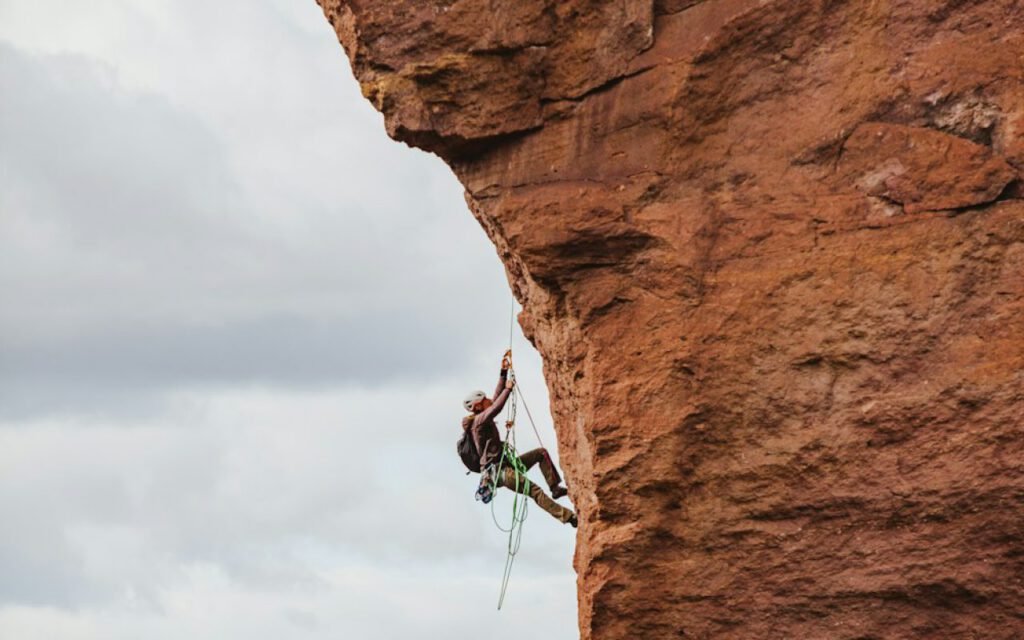
The taller walls in a gym are climbed with ropes. In top-rope climbing, the rope runs from the climber’s harness up to an anchor at the top of the wall and back down to a belayer, the partner on the ground who manages the rope. If the climber slips, the belayer holds them in place. It is the most common way beginners try roped climbing.
Many gyms also have auto-belay stations, devices mounted at the top of the wall that take in rope as you climb and lower you gently when you let go. They are a great option if you come alone. Staff will show you how to clip in and run through a check before every climb. Always double-check that you are clipped to your harness belay loop before you leave the ground.
If you want to belay a friend, most gyms require a class and a belay test first. These classes are usually short and inexpensive, and they teach you how to tie in, operate a belay device and use clear commands. It is a skill worth learning well.
Etiquette
Don’t walk under climbers and take turns on popular routes. Those two rules cover most of what you need to know to be a good gym neighbor. A falling climber, or even a dropped chalk bag, can injure someone below. Always look up before walking near a wall, and give climbers plenty of space.
Everyone in the gym was a beginner once. Ask for beta.
Climbing instructor (fictional)
Beta is climber slang for information about how to climb a route, such as which hold to use or where to put your feet. Most climbers are happy to share, and asking is one of the best ways to meet people. Just read the room. Someone deep in focus on a hard project may prefer to work it out on their own. A few more gym habits to keep in mind:
- Wait your turn when a route is busy, and do not hop on a wall next to someone if your paths could cross.
- Keep the floor pads clear of water bottles, bags and phones.
- Brush off holds you used heavily with chalk, especially on popular problems.
- Keep your shoes on the mats and off the bathroom floor.
- Cheer for others. Gym culture is friendly and supportive.
Key takeaway: Look up before you walk, share the walls fairly and do not be shy about asking for advice.
Making the most of your first session
Beginners tend to climb hard for twenty minutes and then run out of energy. Pace yourself instead. Warm up with easy problems, rest a few minutes between climbs and focus on technique rather than reaching the top. Your forearms will tire quickly at first. That pumped feeling is normal and fades with practice.
Watch your feet. The most common beginner mistake is pulling with the arms while the feet dangle. Look down, place your feet carefully on the holds and push up with your legs. Keep your arms straight when you can and your hips close to the wall. You will climb longer and feel much stronger.
Here is a simple plan for a first visit:
- Take the orientation or intro class, even if it feels basic.
- Warm up with five or six of the easiest boulder problems.
- Try the auto-belays or a top-rope session with staff help.
- Rest, drink water and watch how others move on the wall.
- Finish with a few easy climbs and some gentle stretching.
Most people are sore the next day, especially in the forearms, back and shoulders. Give yourself a day or two of rest before your next visit. Fingers and tendons adapt slowly, so build gradually and listen to your body. If something hurts sharply or for a long time, take a break and check with a medical professional.

From the gym to the crag
For many climbers, the gym is just the beginning. As you gain strength and skills, you might want to try climbing on real rock. That is a big step with new risks, from loose holds to weather and anchors. The safest way to make the move is with a certified guide or a course from an established climbing school. Many gyms host outdoor clinics or can recommend local guides.
Until then, enjoy the gym for what it is: a welcoming, social place to challenge yourself, meet new friends and have a lot of fun. Bring a friend, rent some shoes and give it a try. You might find a new favorite way to spend a winter evening.
Written by
Mira Shah
Mira climbs, coaches beginners and believes in the partner check above all else.
8Articles
2026Writing since
Read next
CampingRock Climbing: How to Start SafelyGyms, guides and the knots you must know. CampingStargazing at Camp: What to Look For TonightThe Milky Way, planets and meteor showers.
 CampingWinter Camping BasicsStay dry, eat often and bring a warm water bottle.
 ClimbingBouldering Grades, ExplainedV0 to V-whatever — and why grades vary.
 HikingLayering for Cold-Weather HikesBase, mid, shell — and no cotton.CampingCross-Country Skiing for BeginnersGroomed trails, rental gear and a lesson.ClimbingClimbing Shoes: How Tight Is Too Tight?Snug, not painful — especially for beginners.
 ClimbingYour First Outdoor Climbing DayHire a guide, check the rock, respect the crag.
 ClimbingWinter Stargazing: Cold Nights, Clear SkiesThermos, red light and the best constellations.
2 Comments
Sharing this with my friends.
Saved this one for later. Really useful.