



 CampingRock Climbing: How to Start SafelyGyms, guides and the knots you must know.
Written by
Mira Shah
Mira climbs, coaches beginners and believes in the partner check above all else.
8Articles
2026Writing since
Winter nights are long and often clear, perfect for stargazing. By six o’clock the sky is fully dark across much of the country, the summer haze is gone and the cold, dry air makes the stars look sharper than at any other time of year. You do not need a telescope, a remote observatory or an astronomy degree to enjoy it. You need a dark spot, warm clothes, a little patience and a sense of where to look. This Basecamp guide covers all four, so you can trade an evening on the couch for a sky full of glittering winter stars.
Why winter skies shine
There are a few reasons winter is such a good season for the night sky. Cold air holds less moisture, so there is often less haze to blur the view. Long nights mean you can start stargazing right after dinner instead of waiting until close to midnight, which is a big bonus for families with kids. And the winter sky is packed with some of the brightest stars and easiest constellations to recognize.
There is also less competition for good spots. Summer campgrounds and dark-sky parks can be busy, but on a frosty January evening you may have an entire overlook to yourself. The silence is part of the experience. Snow dampens sound, and on a still night you can hear your own breath and the occasional owl.
Finding a dark spot
Light pollution is the biggest obstacle to good stargazing. Even a short drive away from town can make a dramatic difference. Look for parks, open fields, lakeshores or overlooks with a wide view of the sky and few lights nearby. Many state parks and national parks offer ranger-led night sky programs in winter, and some are certified dark-sky places with especially low light pollution.
Always check access before you go. Some parks close gates at sunset, and winter roads may not be plowed. Choose a spot you can reach safely and legally after dark. Scout it in daylight if you can, so you know where to park and where the ground is flat.
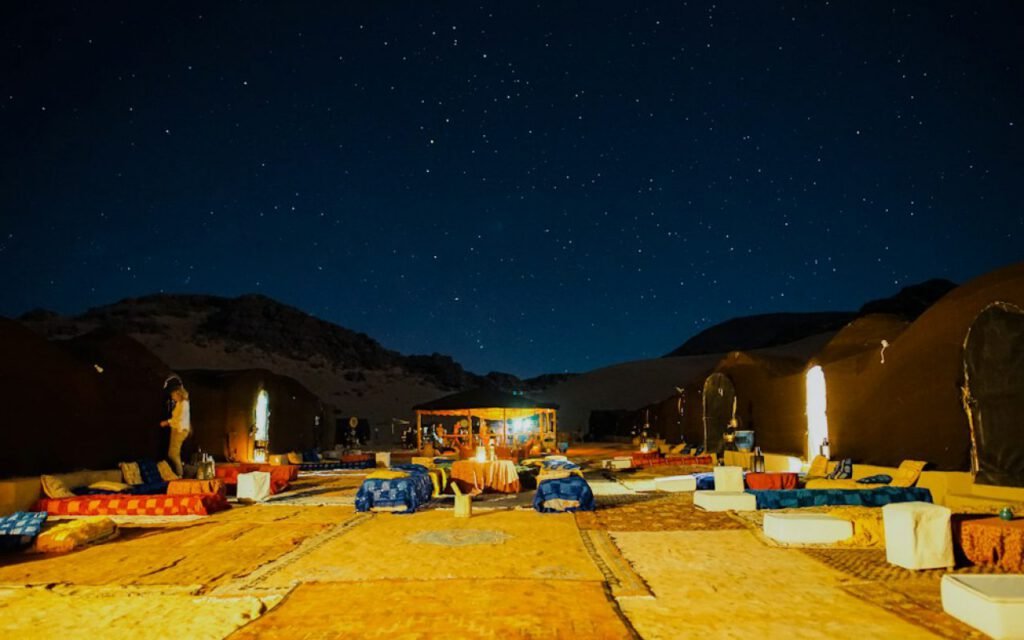
Dress warmer than you think
Standing still gets cold fast. This is the most important rule of winter stargazing, and the one first-timers most often ignore. On a hike, your body produces plenty of heat. Lying on a blanket staring upward, you produce almost none. A night that feels mild during the walk from the car can feel bitter after thirty minutes of stillness.
A thermos of cocoa is the best stargazing gear money can buy.
Our outdoors editor
Dress like you are going to sit in the snow for an hour, because you are. Here is a simple layering checklist we use for winter night outings:
- A synthetic or wool base layer on top and bottom.
- A warm fleece or wool midlayer.
- A puffy insulated jacket and insulated pants or snow pants.
- Warm wool socks and insulated boots, ideally a half size roomy.
- A warm hat that covers your ears, plus a neck gaiter or scarf.
- Mittens or thick gloves, with thin liner gloves for using a phone or star chart.
- A closed-cell foam pad or camp chair so you are not sitting directly on cold ground.
Bring a sleeping bag or heavy blanket to drape over your legs, and keep hand warmers in your pockets. And yes, pack that thermos of cocoa or tea. A warm drink makes a long session feel cozy instead of punishing.
Look for Orion
The hunter is easy to spot in winter skies. Orion is the signpost of the winter sky across the Northern Hemisphere, and once you find it, the rest of the season’s highlights fall into place. Look toward the south in the evening for three bright stars in a short, straight row. That is Orion’s Belt. Above and below the belt, four brighter stars form the hunter’s shoulders and knees.
The reddish star at Orion’s upper left shoulder is Betelgeuse, and the bright bluish-white star at the lower right is Rigel. The color difference is easy to see with the naked eye on a clear night, and it is a great first lesson in how stars vary.
Using Orion as a guide
- Find Sirius: follow the line of the belt down and to the left to reach Sirius, the brightest star in the night sky.
- Find Aldebaran: follow the belt up and to the right to a reddish star in the face of Taurus, the bull.
- Find the Pleiades: keep going past Aldebaran to a small, tight cluster of stars, sometimes called the Seven Sisters.
- Find the Orion Nebula: below the belt, look for the fuzzy middle star of Orion’s Sword. That glow is a vast cloud of gas where new stars are forming, visible even in binoculars.
Once you have these landmarks, you can spend the rest of the evening exploring outward from them.
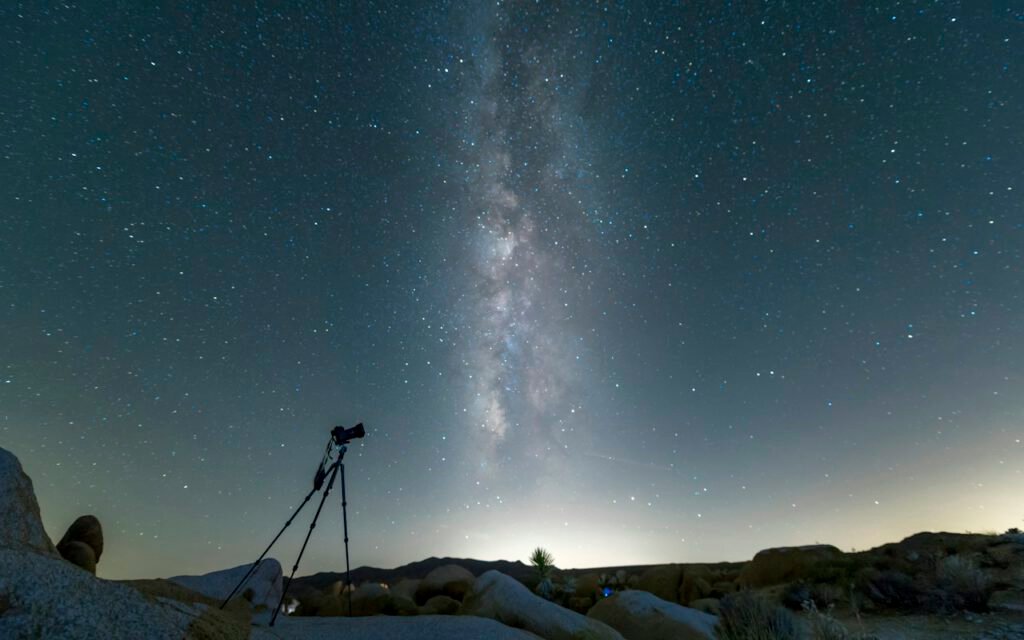
Simple gear that helps
The best stargazing tool is your own eyes, given time to adjust. It takes around twenty to thirty minutes for your eyes to fully adapt to darkness. Every glance at a bright phone screen resets that clock, so turn your screen brightness all the way down or use a red-light mode. A headlamp with a red setting lets you walk safely and read a chart without ruining your night vision.
A pair of ordinary binoculars opens up the sky dramatically. They gather much more light than your eyes, revealing star clusters, the Orion Nebula and craters on the moon. Rest your elbows on your knees or a car roof to keep them steady. A printed star chart or a planisphere, a rotating star wheel, is a low-tech, battery-free way to learn constellations.
Check the moon phase before you go. A bright full moon washes out faint stars, while the days around a new moon offer the darkest skies. A crescent moon can actually be lovely to look at through binoculars, especially along the edge where shadows are long.
Key takeaway: warm layers, a dark spot, red light and a pair of binoculars will take you further than an expensive telescope on your first winter nights.
Stay safe and comfortable
Winter nights carry real risks, especially in remote areas. Tell someone where you are going and when you plan to return. Check the forecast for wind and temperature, not just cloud cover; wind chill can make a calm-looking night dangerous. Keep your car fueled, carry an emergency kit and avoid icy overlooks or frozen lakes unless you are sure they are safe.
Watch each other for signs of getting too cold, such as uncontrollable shivering, clumsy hands or confusion, and head back to warmth early rather than late. Shorter sessions with a warm-up break in the car are perfectly fine. The stars will still be there after a cup of cocoa.
Winter stargazing is one of the quietest, most memorable ways to spend a cold evening outdoors. Pick a clear night this week, bundle up more than you think you need and go find Orion. Once you have seen the winter sky from a truly dark spot, the glow of the city will never look quite the same.
Outdoor activities carry real risks. Check conditions, tell someone your plan and know your limits.
Written by
Mira Shah
Mira climbs, coaches beginners and believes in the partner check above all else.
8Articles
2026Writing since
Read next
CampingRock Climbing: How to Start SafelyGyms, guides and the knots you must know. CampingStargazing at Camp: What to Look For TonightThe Milky Way, planets and meteor showers.
 ClimbingClimbing Gyms: A Guide to Your First VisitShoes, chalk and bouldering grades.
 CampingWinter Camping BasicsStay dry, eat often and bring a warm water bottle.ClimbingBouldering Grades, ExplainedV0 to V-whatever — and why grades vary.
 HikingLayering for Cold-Weather HikesBase, mid, shell — and no cotton.CampingCross-Country Skiing for BeginnersGroomed trails, rental gear and a lesson.ClimbingClimbing Shoes: How Tight Is Too Tight?Snug, not painful — especially for beginners.
 ClimbingYour First Outdoor Climbing DayHire a guide, check the rock, respect the crag.
Start the conversation