


 LifeHoneybees Dance to Give DirectionsThe waggle dance tells sisters where the flowers are — and how far.
Life Priya Raman6 min read
The Toughest Animal on Earth Is Smaller Than a Grain of Sand
Tardigrades can survive freezing, boiling and even space.
Priya Raman6 min read

Written by
Priya Raman
Priya studied octopus behavior before switching to writing. She keeps a microscope on her kitchen table.
9Articles
2026Writing since
Tardigrades, also called water bears, are eight-legged animals about half a millimeter long, or roughly 0.02 inch — small enough that a few could stand on the head of a pin. Under a microscope, they look like chubby, slightly clumsy cartoon bears, lumbering along on stubby legs tipped with tiny claws. Yet these little creatures have earned a reputation as some of the toughest animals ever studied. They can survive drying out almost completely, extreme cold, high doses of radiation and even a trip outside a spacecraft. And they might be living in a patch of moss near your front door.
Meet the water bear
Tardigrades were first described in the 1700s by naturalists peering through early microscopes. The name means “slow stepper,” which suits their unhurried gait. Scientists have since identified more than a thousand species, and they turn up almost everywhere: in ocean sediments, freshwater ponds, soil, leaf litter, mountain lichens and the damp mosses growing on rooftops and sidewalk cracks.
Their bodies are simple but well equipped. They have a mouth with sharp stylets for piercing plant cells or tiny prey, a gut, muscles, a simple nervous system and four pairs of legs. Most feed on the juices of algae, moss and plant cells, while some eat other microscopic animals. They need a thin film of water around their bodies to be active, which is why damp moss suits them so well.
Survival mode
When their home dries out, they curl into a dried-up “tun” state and nearly stop their metabolism. This is the secret behind most of their legendary toughness.
As the moss around them dries, a tardigrade pulls in its legs and head, loses most of the water in its body and shrinks into a tiny, wrinkled barrel. In this state, its metabolism slows to a tiny fraction of normal, so low that it can be hard to measure at all. It does not eat, move or grow. It simply waits.
Scientists have found several tools that seem to help them survive. Some tardigrades produce special proteins that form a glass-like gel inside their cells as they dry, protecting delicate structures from damage. Others make a protein that appears to shield their DNA from harm. Some species also produce sugars that help stabilize their cells. When water returns, the tun soaks it up, and within minutes to hours the animal can unfold, stretch its legs and walk away as if nothing happened.
Tough, not invincible
It is easy to exaggerate tardigrades’ powers, and the internet often does. They are not immortal. In their active state, they are fairly delicate and can be killed by many ordinary stresses. Their extreme survival records come mostly from the dried tun state, and even then, survival rates drop with time and harsh treatment. They are best thought of as champions of waiting out bad conditions, not as indestructible super-creatures.
Researchers have revived some tardigrades after keeping them dried or frozen for years in the lab, and in one well-known case animals recovered after spending decades frozen in a sample of Antarctic moss. Those are impressive results, but scientists stress that recovery is never guaranteed, and many individuals do not make it.
Scoop up some wet moss, add a microscope and you have a weekend adventure.
Dr. Priya Raman, biologist
Dr. Priya Raman, a biologist who runs science workshops for families, says tardigrade hunts are among her most popular events. “Kids find one and they lose their minds,” she said. “It’s a real animal, with legs and claws and a face, living in a scrap of moss they walked past every day.”
Into space
Space is about as hostile as an environment gets for living things: no air, no liquid water, bitter cold in shadow and harsh radiation from the Sun and deep space. That made it a natural test for an animal famous for surviving the extremes.
In 2007, tardigrades exposed to open space on an orbiting experiment survived and later reproduced. Researchers sent dried tardigrades into low Earth orbit and exposed some of them directly to the vacuum of space, along with cosmic radiation. Others were exposed to vacuum plus the Sun’s ultraviolet light.
When the animals returned and were rehydrated, many of those exposed to vacuum and cosmic radiation recovered and went on to lay eggs that hatched normally. Unfiltered ultraviolet light was much harder on them, and survival among that group was low. Even so, the experiment made tardigrades the first animals known to survive direct exposure to open space.
The results interest scientists for practical reasons. Learning how tardigrade proteins protect cells could one day help with storing vaccines and medicines without refrigeration, preserving biological samples or protecting cells from damage. That research is still at an early stage, but it shows how studying an obscure creature can lead to useful ideas.

Find your own water bears
You do not need a lab to see tardigrades. A basic microscope that magnifies about 40 to 100 times is enough, and even a simple student model will do. Here is a simple way to try it at home with kids or on your own.
- Collect some moss. Look for small clumps growing on rocks, rooftops, tree bark or old walls. Dry, crunchy moss is fine. Take only a small pinch.
- Soak it. Place the moss in a shallow dish and cover it with rainwater or bottled water. Let it sit for several hours or overnight.
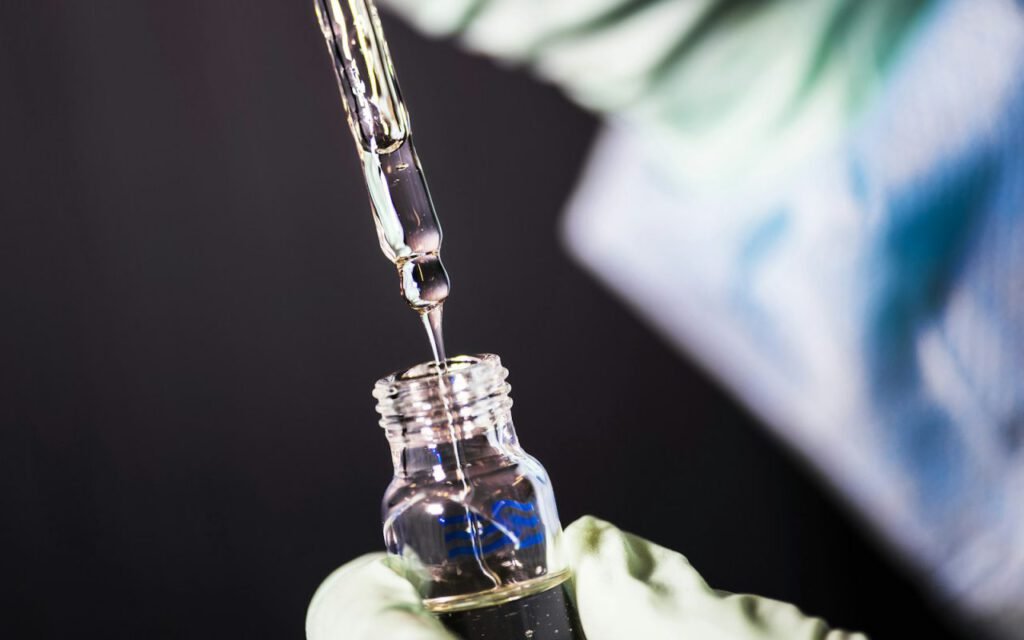
- Squeeze and collect. Gently squeeze the moss over the dish, then use a dropper to pull water from the bottom where the sediment settles.
- Search slowly. Put a few drops in a clear dish or on a slide and scan at low magnification. Look for a slow, plump, eight-legged shape.
- Be patient. It can take several tries. If you find nothing, try moss from a different spot.
When you are finished, return the moss and water outdoors. Wash your hands after handling soil and moss, and keep small children supervised around microscope slides and glass.
Common lookalikes
Moss water is full of tiny life, so first-time hunters often get excited about the wrong creature. Rotifers are a frequent mix-up. They are similar in size but have no legs; instead, they spin a crown of tiny hairs at one end and often move like an inchworm. Nematodes are thin, wriggling worms that whip back and forth. Mites have legs but move quickly and look more like tiny spiders. A tardigrade, by contrast, is plump, slow and clearly walks on eight short legs. Once you spot that unmistakable stroll, you will never confuse it again.
Key takeaway: tardigrades are real, common and wonderfully strange, and you can find them with nothing more than moss, water and a cheap microscope.
Quick facts
- Found in moss, soil and oceans worldwide
- Can survive near-total dehydration
- You can find them with a cheap microscope
Tardigrades are a good reminder that some of the most remarkable life on Earth is hiding in plain sight. While we look up at the stars, a tiny animal in a patch of rooftop moss is quietly holding records for survival. All it takes to meet one is a little curiosity, a lot of patience and a willingness to look very, very closely.
Written by
Priya Raman
Priya studied octopus behavior before switching to writing. She keeps a microscope on her kitchen table.
9Articles
2026Writing since
Read next
LifeHoneybees Dance to Give DirectionsThe waggle dance tells sisters where the flowers are — and how far. Big IdeasBirds Are Dinosaurs. Really.Feathers, wishbones and a 150-million-year family tree.
 LifeThree Hearts and Blue Blood: Meet the OctopusOne of the smartest animals on Earth is built nothing like us.
 Big IdeasDo Trees Talk? What the Science Really SaysFungal networks connect roots — but scientists are still debating what that means.
Start the conversation