Why I Collect Old Typewriters
Heavy, loud and still working after 80 years.
 Walter Hayes7 min read

Walter Hayes
Walter taught history for 34 years and now writes about local history, genealogy and antiques.

I own nine typewriters. My wife says that is eight too many. She may have a point. They sit on shelves in my study, on a side table in the hallway and, in one case, on top of the piano, where it is absolutely not allowed to stay but somehow always ends up. They’re heavy. They’re loud. And every single one of them still works.
Each one still works, and each one has a story. Some I found at estate sales for a few dollars. One came from a church rummage sale in a box marked “Misc. Office.” One was a gift from a former student who remembered me tapping out quizzes on a battered portable in the 1980s. Together they make up a small, noisy museum of the machines that wrote much of the twentieth century, and I’ve grown fonder of them every year.
 Sponsored · Rootline DNAFind your family storyDNA kit and family-tree builder.Start now
How it started
My first typewriter wasn’t a collectible. It was a tool. When I started teaching, the school had one shared machine in the front office, and teachers lined up after the last bell to type tests and handouts. I bought my own secondhand portable that first fall so I wouldn’t have to wait. It was mint green, it weighed about as much as a bowling ball and its “e” key stuck in humid weather, which in Georgia meant roughly eight months a year.
I used it for nearly fifteen years, until the school got its first computers. Then it went into a closet and stayed there. Decades later, after I retired, I pulled it out, cleaned it up and typed a letter to my sister. The sound of those keys, the little bell at the end of each line and the satisfying slam of the carriage return took me straight back to my first classroom. I was hooked all over again.
Built to last
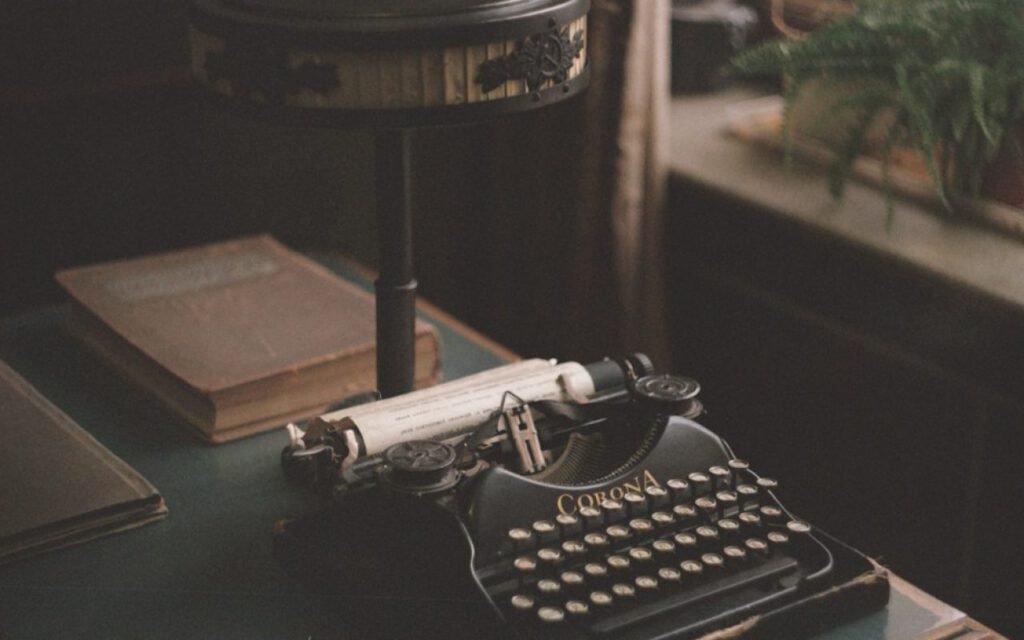
Many of these machines are older than me and still type crisp letters. That’s the thing that amazes me most. My oldest typewriter was made in the 1920s, a big black office model with glass-topped keys and gold lettering on the frame. It has outlived the company that made it, the office it was built for and probably everyone who ever typed on it professionally. Give it a fresh ribbon and it types as cleanly as the day it left the factory.
Typewriters from that era were built with steel frames, cast-iron bases and hundreds of carefully fitted parts. They were meant to be used eight hours a day for decades and repaired, not replaced, when something wore out. In a world of devices that seem to need replacing every few years, there’s something deeply reassuring about a machine that refuses to quit.
My little collection
Here’s a quick tour of the nine, roughly from oldest to newest:
- The black office giant. A 1920s desktop model, so heavy I need help moving it.
- The gray portable. A 1930s machine in a cloth-covered case, perfect for letters.
- The schoolhouse machine. A 1940s model with a tag from a county school system still riveted to the back.
- The traveler. A slim 1950s portable that once belonged to a newspaper reporter, according to the seller.
- The mint green one. My original classroom typewriter, sticky “e” and all.
- The two-tone beauty. A 1950s portable in cream and coral, my wife’s favorite.
- The student’s gift. A 1960s portable in a hard case, given to me by a former student.
- The electric. A 1970s electric model with a humming motor and a very confident attitude.
- The mystery machine. A small portable with no maker’s name I can identify. I’m still researching it.
A typewriter makes you mean every word.
Walter
Why I still type on them
People sometimes ask why I bother. I have a perfectly good computer, after all, and I’m writing this blog on it. The answer is that a typewriter changes the way you write. There’s no delete key. There’s no spell check. There’s no little notification popping up to distract you. Every word you type is a small commitment, and that makes you slow down and think before you strike the keys.
I write all my letters on typewriters now. My grandchildren get typed birthday notes, and my old friends get typed replies to their emails, mailed in envelopes with real stamps. Some of them have started writing back the same way. A retired colleague named Dorothy Pembrook bought a portable after receiving three of my letters and now sends me one every month, typed in a bright purple ribbon she’s very proud of.
The pleasures of noise
I’ll admit the noise is part of the appeal. The clack of the typebars, the ding of the bell, the ratchet of the platen as you roll in a new sheet: it’s a kind of music. My wife calls it “the racket from the study.” But she’s also been known to sit in the next room with her coffee and listen while I type, and I’ve seen her smile when the bell rings.
Caring for them
Clean the keys, oil sparingly and replace the ribbon. That’s most of it. Typewriters are remarkably forgiving machines, and most of the ones you’ll find in estate sales or antique shops only need some gentle cleaning to work again. Here’s my basic routine:
- Dust it out. Use a soft brush and a can of compressed air to clear dust and eraser crumbs from the insides.
- Clean the typefaces. A stiff brush and a small amount of cleaner made for the purpose will remove old ink from the letters.
- Wipe the body. A damp cloth with a little mild soap is usually enough for the outside. Dry it right away.
- Oil sparingly. A tiny drop of light machine oil on the carriage rails is plenty. Too much oil attracts dust and gums up the works.
- Replace the ribbon. Universal ribbons fit most machines, and a fresh one makes an enormous difference.
- Cover it. Keep a cover or a cloth over the machine when you’re not using it to keep dust out.
For anything beyond the basics, such as a broken spring or a carriage that won’t advance, I’d recommend finding a typewriter repair shop. They’re rarer than they used to be, but they still exist, and the people who run them are often delighted to see an old machine come through the door. I take mine to a gentleman named Mr. Vernon Teague, who has been fixing typewriters for more than fifty years and can diagnose most problems by sound alone.

Where to find one
If you’re curious about trying a typewriter yourself, you don’t need to spend much. Estate sales, church rummage sales, thrift stores and antique malls are all good hunting grounds. Look for a machine whose keys move freely, whose carriage slides smoothly and whose case isn’t badly rusted. Don’t worry too much about a dried-out ribbon. That’s the easiest thing to replace.
Ask the seller if you can try typing a line or two. A good machine will feel solid and responsive. If a few keys stick, that’s often just old dirt and can be cleaned. If the carriage won’t move at all, it may need professional help.
Key takeaway: A typewriter rewards a little care with decades of faithful service, and it makes you think about every word you write.
Nine and counting
My wife has made me promise not to buy a tenth typewriter. I’ve agreed, mostly. But I’ve noticed that she’s started pointing out typewriters to me at estate sales, just to “see what they cost.” I suspect she’s getting attached to the racket from the study. And honestly, I can’t blame her. There’s nothing quite like the ring of that little bell at the end of a line, telling you that you’ve said something worth saying and it’s time to start the next one.
Walter Hayes
Walter taught history for 34 years and now writes about local history, genealogy and antiques.


Start the conversation