
Reading a Town Through Its Old Buildings
Cornerstones, ghost signs and rooflines tell the story.
 Walter Hayes6 min read
You don’t need a textbook to learn a town’s history. You need comfortable shoes. A good pair of walking shoes, a free afternoon and a willingness to look a little silly staring up at the tops of buildings will teach you more about a place than most of the local history books I’ve read, and I’ve read a great many.
Here’s how I read a street like a book. I’ve used this method in our own downtown, in county seats across the South and in towns I visited on vacation without knowing a soul. The buildings are always talking. Most of us just haven’t learned their language yet.
 Sponsored · Rootline DNAFind your family storyDNA kit and family-tree builder.Start now
Look up
Dates are carved over doorways. Faded paint on brick shows old businesses. Those are the two clues I tell everyone to start with, because they’re easy to spot once you begin looking, and they anchor everything else.
Many commercial buildings from the late 1800s and early 1900s have a decorative top called a cornice or a parapet, and builders loved to put the year of construction right there in the center. Sometimes it’s carved into stone, sometimes molded in pressed metal, sometimes spelled out in contrasting brick. You’ll also find the names of original owners up there. On our Main Street, a building that’s been a phone store, a dress shop and a pharmacy still says “Tolliver Bros. 1904” across the top in letters a foot tall.
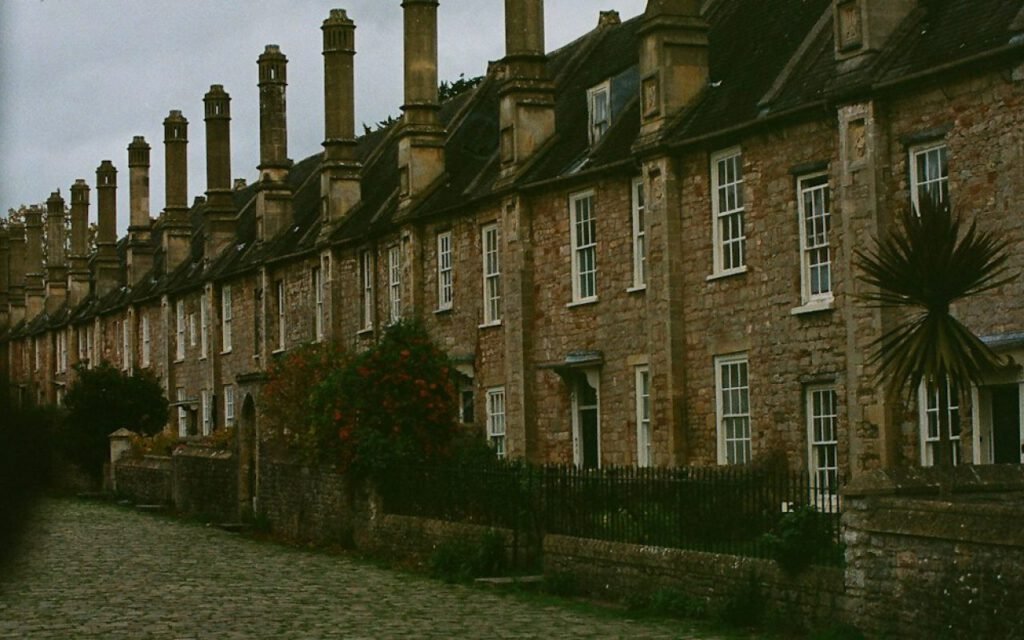
Ghost signs
Then there are the ghost signs, my favorite clue of all. Before billboards and neon, merchants painted advertisements directly onto brick walls. Over the decades the paint has faded, been painted over or been partly hidden by newer buildings. On a damp morning or in low light, they swim back into view: a soda brand, a mule dealer, a dry goods store, a hotel promising “Rooms $1.”
Sometimes you’ll see two or three signs layered on top of one another, each from a different decade. Those layers are a timeline of the building’s life, written in paint. I keep a notebook just for ghost signs, with the location, the words I can make out and my best guess at the date.
The past is still standing. You just have to notice it.
Walter
Read the rooflines and windows
Once you’ve found the dates, look at the overall shape of the buildings. Architectural styles came and went in waves, and even a rough sense of them helps you guess a building’s age when there’s no date to read.
- Tall, narrow windows with arched tops often point to the Italianate style, popular in the decades after the Civil War.
- Heavy stone and wide, round arches suggest Romanesque Revival, common on banks and courthouses in the late 1800s.
- Columns and symmetry usually mean Neoclassical, a favorite for post offices and banks in the early 1900s.
- Sleek lines, rounded corners and glass block are signs of the Art Deco and Streamline styles of the 1930s and 1940s.
- Flat, plain facades covered in metal panels are often 1960s “modernizations” hiding older buildings underneath.
That last one is worth a moment. In the 1960s and 1970s, many towns tried to look modern by covering old storefronts with metal screens or new facades. If you see a building with a flat metal front, look at the sides and the back. You’ll often spot old brick, arched windows and even a ghost sign peeking out. Several towns near me have peeled those covers off in recent years and found beautiful original fronts still intact.
Look down
Old paving bricks, iron coal-chute covers and hitching posts are still out there. Most people never notice them, because most people walk with their eyes on their phones. Slow down and look at your feet.
Many towns paved their streets with brick in the early 1900s, and some of those bricks are still in place, especially in alleys or in patches where newer asphalt has worn away. Look closely and you may find a maker’s name stamped into the brick. Near the sidewalk edge, you might spot round iron plates set into the concrete. Those are coal-chute covers, from the days when coal was delivered right into a building’s basement. Some even have the name of the foundry that cast them.
Look at the thresholds of old shops, too. Some still have the original owner’s name set into the entry floor in small tiles, a little welcome mat that has outlasted the business by eighty years. I once found the word “Pharmacy” spelled out in blue and white tile under a doormat at a shop that now sells candles. The clerk had never noticed it, and she was delighted when I showed her.
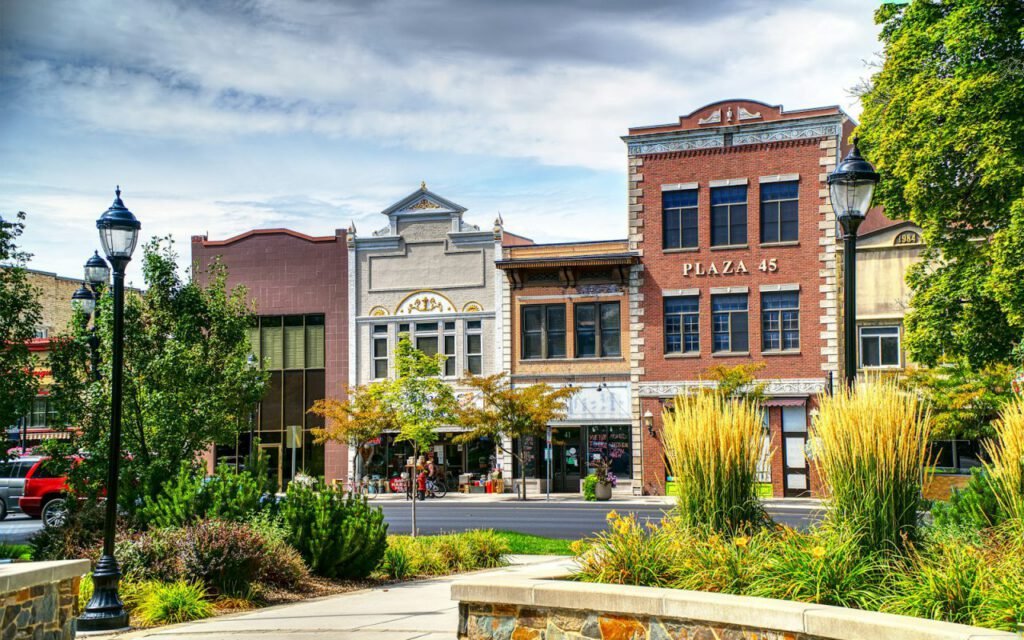
Along older curbs you might find iron rings or short stone posts. Those are hitching posts, where horses and mules were tied while their owners shopped. In front of one old hardware store in our town there’s a granite step built into the curb. That was a carriage step, to help ladies in long skirts climb down from a buggy without stepping in the mud.
Walk the side streets and alleys
Main Street is the showpiece, but the side streets and alleys often hold the real story. That’s where you’ll find the back doors of stores, old loading docks, livery stables turned into garages and the small houses where shop owners and workers once lived. Fire insurance maps from the late 1800s and early 1900s, which many state libraries have digitized, will show you what every building was used for. I like to print one, carry it along and compare it to what’s standing today.
Here’s a simple walking plan I use in a new town:
- Start at the courthouse, depot or oldest church, usually the heart of the original town.
- Walk one side of Main Street looking up, then cross and walk back looking down.
- Turn onto each side street for at least one block.
- Duck into the alley behind Main Street, if it’s safe and public.
- Finish at the library or historical society and ask about what you saw.
That last step is important. Librarians and local historians love an eager visitor, and they’ll often fill in the blanks your walk left open. A volunteer named Mrs. Opal Reece once spent an hour with me explaining a ghost sign I couldn’t decipher. It turned out to be an ad for a long-gone local tonic that promised to cure “all ailments of man and beast.”
Practice makes a better reader
The more streets you walk, the faster you’ll see the patterns. You’ll recognize the same style of cast-iron storefront from one town to the next, because many were ordered from catalogs and shipped by rail. You’ll start to guess a building’s age within a decade or two before you even find the date. And you’ll begin to see your own hometown with fresh eyes, which is perhaps the best gift of all.
Key takeaway: Look up for dates and ghost signs, look down for bricks and iron, and always ask a local.
Bring a notebook, a camera and someone curious to walk with. Pick a sunny morning, start at the oldest corner you know and take your time. The buildings have been waiting more than a century to tell their stories. They can wait for you to finish your coffee. But don’t wait too long. Every year, a few more of them come down, and their stories go with them.

Walter Hayes
Walter taught history for 34 years and now writes about local history, genealogy and antiques.





Start the conversation