 Priya Nair6 min read
One of the most common surprises for new solar owners is that panels alone do not keep the lights on when the grid goes down. We hear it after almost every Santa Ana wind event, when a customer calls to ask why their house went dark on a bright, sunny afternoon. The answer is a safety rule, and once you know how it works, you can decide whether backup power is worth adding for your home.
This guide walks through exactly what happens during an outage with a standard solar system, what changes when you add a battery, and how to plan for the circuits that matter most to you.
Without a battery: the system shuts off
A standard grid-tied solar system is designed to switch off within seconds of a grid outage. This is called anti-islanding, and it exists to protect utility line workers. If your panels kept sending power into the lines while crews were repairing them, they could be seriously hurt by a line they believed was dead.
So when the power goes out on your street, your inverter senses the loss of grid voltage and stops producing. Your home goes dark like every other house on the block, even if the sun is shining. When the grid comes back, the inverter waits about five minutes to confirm the power is stable, then starts up again on its own. You do not need to do anything.

With a battery: your home becomes an island
Adding a home battery changes the picture. A battery system includes a device that disconnects your home from the grid the moment an outage starts. With the house safely separated, your solar panels and battery can keep running together, powering your home without sending anything into the street.
The switch takes a fraction of a second to a few seconds, depending on the equipment. Most customers notice a blink at most. Clocks on the microwave might reset, but the refrigerator, Wi-Fi and lights carry on.
Panels recharge the battery during the day
This is the part people like best. During a multi-day outage, the panels refill the battery each morning while also running your home. On a clear day, a typical 7-kilowatt system can make 30 to 35 kWh, far more than a careful household uses. That means a battery can keep essential loads going for days, not hours, as long as the sun cooperates.
During the last public safety shutoff, one of our customers in Alpine ran her fridge, well pump and internet for three days and still had a half-full battery each night.
Priya Nair
Whole home or essential circuits?
Battery backup comes in two common setups. Which one fits depends on your budget and how you live.
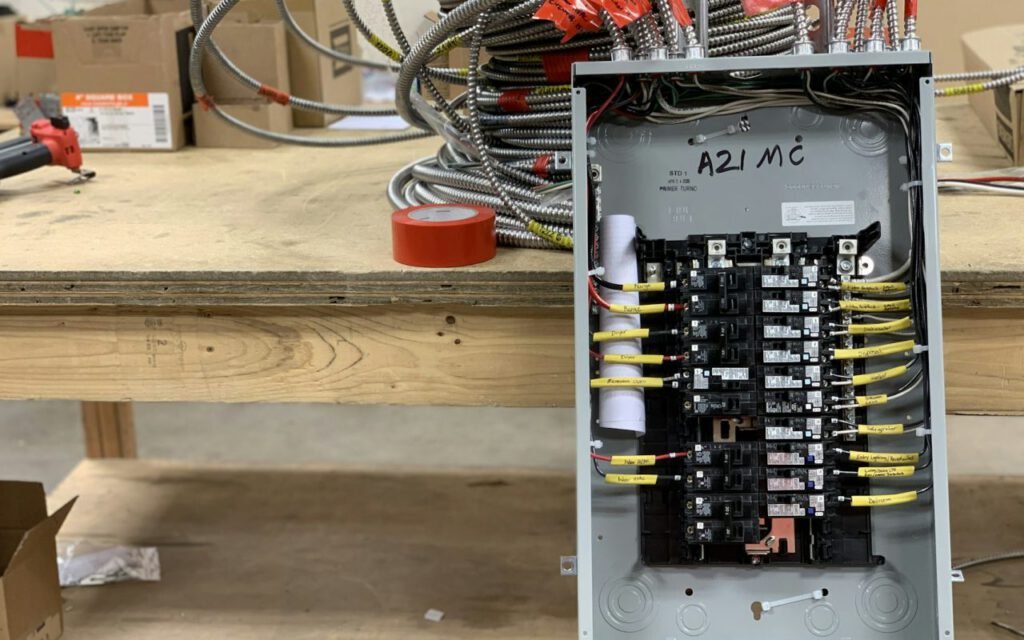
- Essential loads panel. We move your most important circuits, such as the fridge, a few lights, outlets for phones and internet, and the garage door, into a smaller backup panel. Only those circuits stay powered. This stretches the battery much further and is the most common choice.
- Whole-home backup. The battery backs up your entire main panel. It is more convenient, but large loads like central air, an electric range or an EV charger can drain a battery in a few hours. Whole-home setups usually call for two or more batteries.
A single battery of around 13 kWh can typically run a fridge, LED lighting, a gas furnace fan, internet equipment and phone charging for 24 hours or more without any sun. Add a few sunny days and that becomes open-ended.
How much energy common items use
Planning gets easier when you know roughly what each item needs. These are rough daily figures for a typical San Diego home:
A modern refrigerator uses about 1 to 2 kWh per day. A Wi-Fi router and modem use about 0.3 kWh. Ten LED bulbs on for five hours use about 0.5 kWh. A gas furnace blower uses 2 to 4 kWh on a cold night. A well pump might use 2 to 5 kWh. Central air conditioning, on the other hand, can use 20 to 30 kWh on a hot afternoon, which is why we usually leave it off the backup list unless a home has several batteries.
Planning ahead for outage season
Whether or not you have a battery, a little preparation goes a long way:
Know your settings. Most battery systems let you reserve a portion of the battery for backup only. Ahead of a forecast wind event or heat wave, raising that reserve to 80 or 100 percent means the battery is full when you need it.
Label your backup outlets. We mark backed-up outlets during install, but a quick check with your family helps. Everyone should know which outlets will work in the dark.
Keep a small kit. Even with backup, a flashlight, a battery radio and a printed list of important phone numbers are worth having.
Never use a generator without proper equipment. If you add a portable generator, it needs a correctly installed transfer switch or interlock. Plugging one into a wall outlet can feed power back onto the lines and is dangerous.
Can I add a battery to my existing system?
Yes, in most cases. Many of our battery jobs are for customers whose panels went up years ago. We check your inverter, your main panel and your available wall space, then design around what is already there. The install usually takes one day, plus a utility sign-off.
There are two common ways to add storage. With an AC-coupled battery, the battery gets its own inverter and works alongside your existing system without replacing anything. With a DC-coupled setup, we swap your current inverter for a hybrid unit that manages panels and battery together. AC-coupled is usually simpler for older systems, while DC-coupled can be a little more efficient when your old inverter is near the end of its life anyway. We will explain which fits your home and why.
Where the battery goes
Most batteries mount on a garage wall or an exterior wall on the shady side of the house. They need clearance around them and should stay out of direct afternoon sun, which matters in hot inland neighborhoods like Santee and Ramona. Batteries are quiet, though you may hear a soft fan on very warm days. We avoid bedrooms and living spaces, and local code sets rules about where they can go, so we plan the spot during the site visit.
What a battery does on normal days
A battery is not just for emergencies. On a regular day it charges from extra midday solar and powers your home through the evening, when buying from the grid costs the most. Most systems let you pick a mode: save the most money, keep the most backup, or a balance of both. Many customers run a money-saving mode most of the year and switch to full backup when a wind or heat warning shows up in the forecast.
If outages are a real worry where you live, especially in the backcountry or along the inland canyons, a short conversation can tell you which loads matter most and how much battery would cover them. Call us at 555-0142 or email hello@sunlinesolar.example and we will put together an outage plan that fits your home and your budget.

Priya Nair
Priya has designed solar systems in San Diego since 2011.


Priya Nair
Priya has designed solar systems in San Diego since 2011.




3 Comments
This explains exactly what happened to us during the last wind event. Battery is now on our list.
The energy-per-item numbers were really helpful for planning our essentials panel.
Good reminder about the generator transfer switch. Too many people skip that.