


 Road TripsRoute 66 in Ten Days: Chicago to Santa MonicaNeon motels, slow diners and the stretches of the old road that still feel like 1955.
Road Trips Ben Carver6 min read
Van Life for a Week: How to Plan Your First Campervan Trip
Renting, routes, where to sleep legally and what we wish we had packed.
Ben Carver6 min read

Written by
Ben Carver
Ben has driven Route 66 four times and photographs every mile marker that still has a story.
9Articles
2026Writing since
A rented campervan turns a road trip into a moving cabin. You wake up beside a lake, cook breakfast with the back doors open and decide over coffee where you will sleep that night. The first night can feel strange; by the third, you will not want to give it back. We have now taken four van trips across the West and the South, each one a little smoother than the last. Here is everything we learned about renting, routes, where to sleep legally and what we wish we had packed the first time.
Best time: spring or fall. Stay: seven days. Budget: moderate.
Advertisement Sponsored · Skyward Rewards Card60,000 bonus milesAfter $3,000 spent in the first 3 months.Apply now
Sponsored · Skyward Rewards Card60,000 bonus milesAfter $3,000 spent in the first 3 months.Apply nowRenting the right van
Look for a fridge, a fixed bed and a roof fan. Skip the bathroom — it adds cost and is rarely worth it. Those three features matter far more than any fancy interior. A fridge means fresh food for days. A fixed bed means no folding and unfolding every night and morning. A roof fan keeps the van livable on warm evenings and helps with condensation on cold ones.
Van rental companies range from large national fleets to small local outfits with a handful of hand-built vans. The big companies tend to be cheaper and have more pickup locations, while the smaller builders often have better layouts and more character. Read the reviews carefully, and pay attention to what is included. Some rentals come with bedding, cookware and camp chairs; others charge extra for each.
Questions to ask before you book
- Is there a mileage limit, and what does each extra mile cost?
- Are bedding, towels and kitchen gear included?
- How much fresh water does the van hold?
- Is there a second battery for the fridge and lights, and how is it charged?
- What happens if the van breaks down far from town?
Ask about insurance too. Your own auto policy may not cover a rental camper, so call your insurance agent before you go to find out what is and is not included.
Planning the route
The biggest mistake first-time van travelers make is driving too much. A van is slower than a car, it handles wind poorly and setting up camp takes longer than checking into a motel. Aim for no more than three or four hours of driving a day, and plan at least one or two days where you do not move at all.
AdvertisementSponsored · Skyward Rewards Card60,000 bonus milesAfter $3,000 spent in the first 3 months.Apply now
Sponsored · Skyward Rewards Card60,000 bonus milesAfter $3,000 spent in the first 3 months.Apply nowStart with a loop rather than a one-way trip, since one-way rentals often carry hefty drop-off fees. Pick a region with lots of public land and good camping options. The Southwest, the Pacific Northwest, the Rockies and the Southern Appalachians are all excellent for a first trip.
A sample first week
For a first trip, a loop of about 600 to 800 miles over seven days is plenty. Spend night one at a full-service campground close to the rental base so you can learn the van. On days two and three, drive a few hours to a national forest and stay two nights in the same spot, hiking, reading and cooking slowly. Day four is for moving on, with a stop at a small town for laundry, groceries and a diner lunch. Nights five and six belong to a state park with showers and a lake, and day seven is a short, easy drive back to return the van clean and on time. Most rental companies charge a cleaning fee if the van comes back dirty, so leave an hour on the last morning to sweep, wipe the counters and empty the water tanks as instructed. Keep fuel stops in mind too. Vans burn more gas than a car, and stations can be scarce on back roads, so top off the tank whenever it drops below half.
Where to sleep
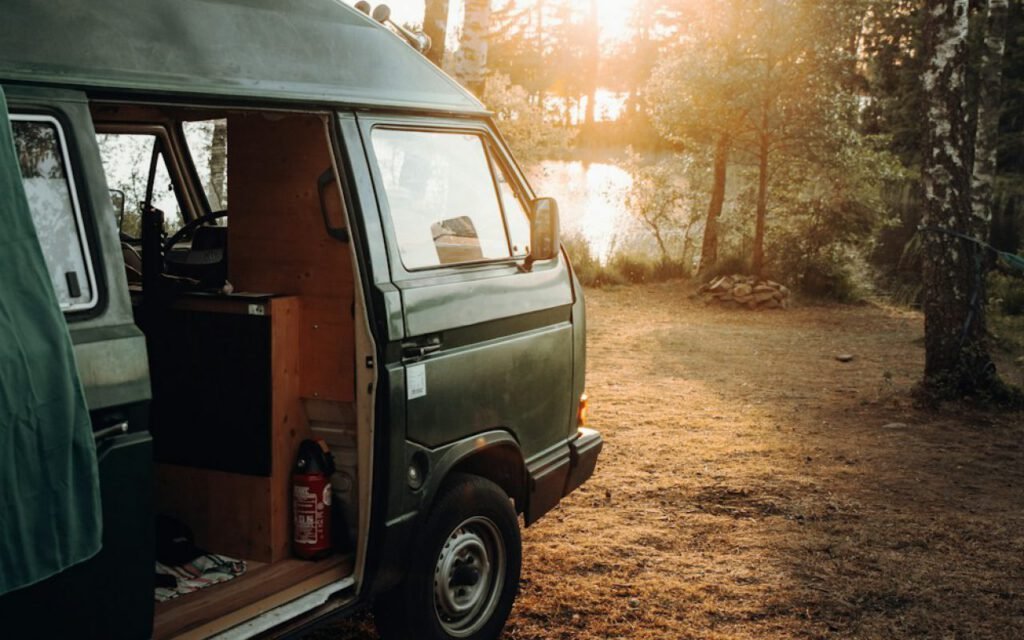
National forests and BLM land allow free dispersed camping in many areas. Book state-park campgrounds for showers every few nights. That combination gives you the best of both: quiet, free nights under the stars, and regular stops for a hot shower, fresh water and a place to empty the trash.
Dispersed camping
Dispersed camping means camping outside a developed campground, usually on a dirt road in a national forest or on land managed by the Bureau of Land Management. It is free, often beautiful and sometimes completely empty. The rules vary by area, so check with the local ranger district before you go. In general, stay on existing pullouts, camp at least 200 feet from water, keep your stay within the posted limit and pack out everything you bring in.
Campgrounds
State parks and national park campgrounds cost more but offer showers, restrooms and often electric hookups. Popular ones book months in advance, especially on weekends, so reserve the nights you know you want.
Book your first night at a campground with hookups so you can learn the van before going off-grid.
Van traveler Jess Moreno
We wish we had heard Jess’s advice before our first trip. We drove straight to a remote forest road, arrived after dark and spent an hour figuring out the water pump with a flashlight. A first night with power, lights and a campground host nearby takes away all that stress.
Cooking on the road
One-pot dinners, a cooler for the second day and a big water jug. Keep it simple. A van kitchen is tiny, and the less you need to wash, the happier you will be. Our favorite meals were pasta with jarred sauce and fresh vegetables, tacos with canned beans and a rotisserie chicken, and big breakfast scrambles with whatever was left in the fridge.
A few things made van cooking much easier:
- Plan meals for three days at a time, then restock at a grocery store.
- Use the cooler for overflow when the small fridge fills up.
- Carry an extra jug of water, about five gallons, for cooking and washing dishes.
- Pack a small wash basin and biodegradable soap.
- Eat out every few days. A diner breakfast is a treat after a few mornings of camp coffee.
Always check for fire restrictions before lighting a campfire, especially in the West in late summer and fall. Many areas ban open fires during dry periods, and some ban camp stoves outside of designated sites.
Key takeaway: do less. Fewer miles, simpler meals and more nights in one spot make a first van trip feel relaxing instead of rushed.
What we wish we had packed
Rental vans come with the basics, but a few extras made our later trips far more comfortable:
- A headlamp for each person
- Earplugs and an eye mask for bright campgrounds
- A small broom and dustpan for the endless sand and leaves
- Quick-dry towels and a clothesline
- A paper road atlas for places with no cell signal
- Leveling blocks so the bed is not on a slope
Don’t miss
The moments that made our van trips unforgettable were small and simple: a sunrise from the back doors, a national forest camp with no one around, a diner breakfast every few days and laundry day in a small town, where we chatted with locals while the dryers spun.
Your first van trip will have a learning curve. You will forget to latch a cabinet, bump your head on the ceiling and wonder why you packed three pairs of shoes. By the third night, though, the van will feel like home. Rent the simple one, drive less than you think and let the road make the plans.
Written by
Ben Carver
Ben has driven Route 66 four times and photographs every mile marker that still has a story.
9Articles
2026Writing since
Read next
Road TripsRoute 66 in Ten Days: Chicago to Santa MonicaNeon motels, slow diners and the stretches of the old road that still feel like 1955.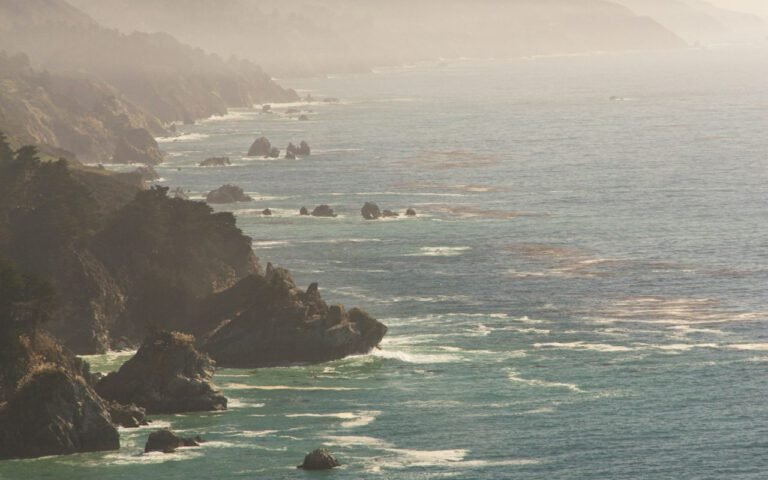 Coasts & LakesBig Sur on Highway 1: The Most Beautiful Drive in AmericaNinety miles of cliffs, redwoods and pull-offs — and why you should drive it north to…
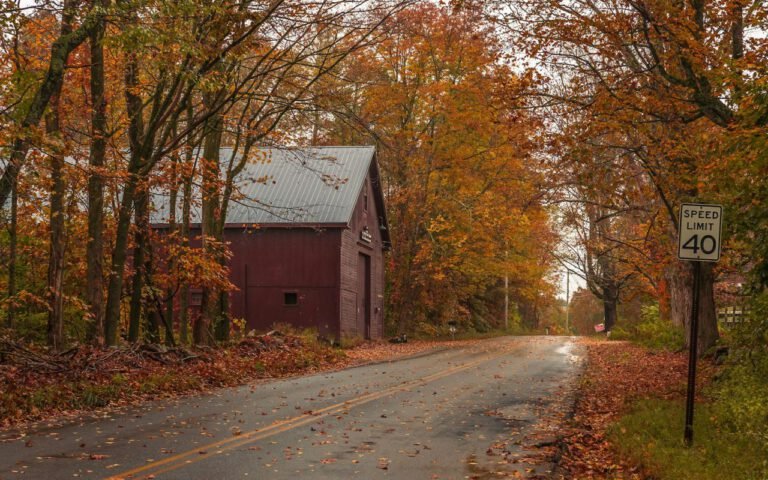 Road TripsNew England Fall Foliage Drive: Seven Days of ColorVermont back roads, covered bridges and the week the leaves usually peak.
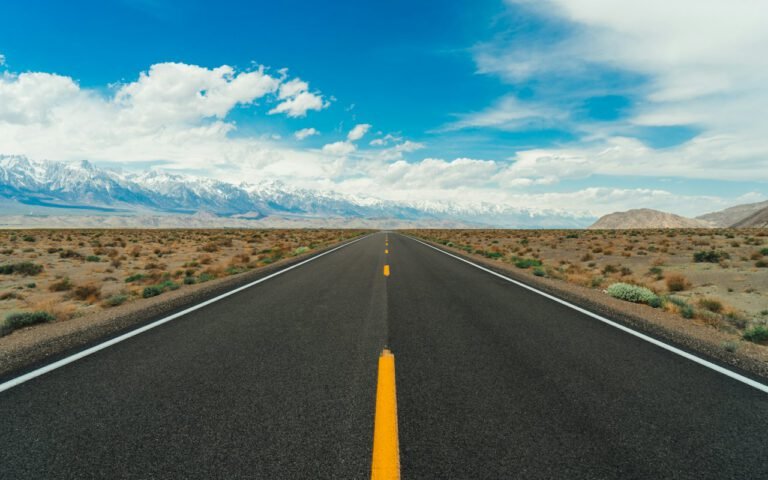 Road TripsThe Desert Southwest Loop: Ten Days, Five ParksZion, Bryce, Capitol Reef, Arches and the Grand Canyon in one big circle from Las Vegas.
Start the conversation